Summary
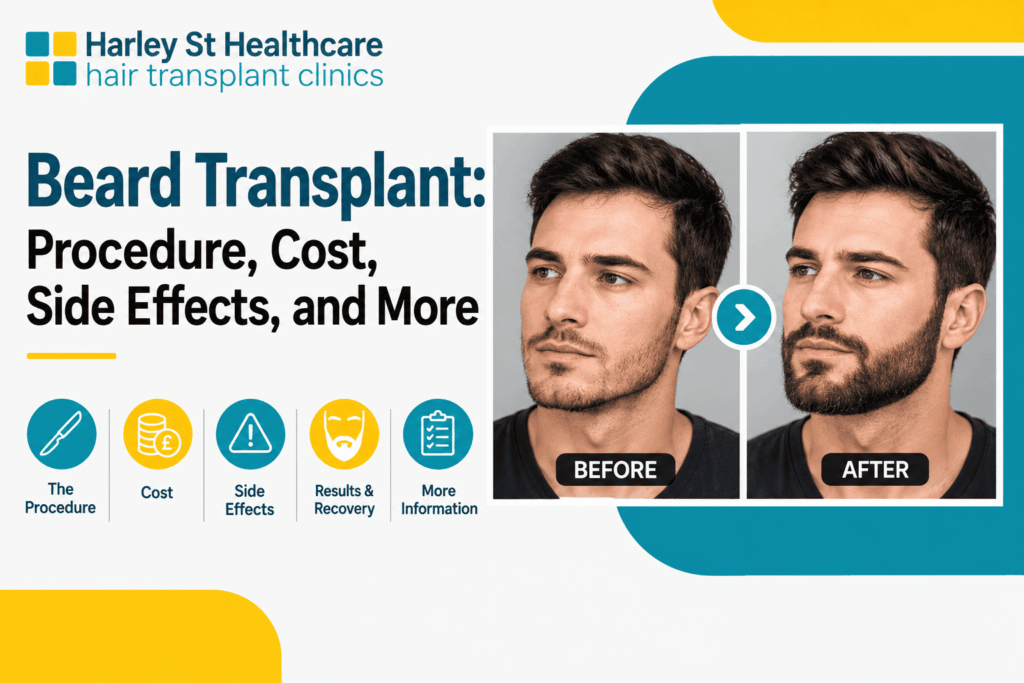
A beard transplant is a hair restoration procedure that moves healthy hair follicles from a donor area, usually the scalp, to areas of the face with sparse, patchy or limited beard growth. The beard transplant procedure is designed to create natural-looking facial hair by carefully placing individual grafts according to the direction and shape of existing beard growth. The beard transplant cost varies depending on the number of grafts, treatment area, technique and clinic. Like any surgical procedure, there can also be temporary beard transplant side effects, including swelling, redness, tenderness and scabbing.
Table of Content
ToggleWhat Is a Beard Transplant?
A beard transplant is a form of hair transplantation used to improve facial hair density and coverage. It can be considered by people with naturally sparse facial hair, patchy beard growth or areas where beard hair is missing.
The procedure can be used to improve different parts of the face, including:
- Cheeks
- Jawline
- Chin
- Moustache
- Sideburns
- Areas affected by scarring
The aim is to create facial hair that looks natural and complements the individual’s facial structure.
How Does a Beard Transplant Procedure Work?
The beard transplant procedure generally involves removing individual hair follicles from a suitable donor area and placing them into carefully prepared recipient sites on the face.
A typical treatment involves several stages.
1. Consultation and Beard Design
Before treatment, the clinician assesses the existing beard, donor hair and desired outcome. The proposed beard shape and density can then be planned.
This stage is particularly important because beard hairs grow at different angles and directions from scalp hair. Correct positioning helps create a natural appearance.
2. Donor Hair Extraction
Suitable follicles are usually taken from a donor area on the scalp. With follicular unit extraction (FUE), individual follicular units are removed using specialised instruments.
The number of grafts required depends on the size of the treatment area and the desired density.
3. Preparation of the Recipient Area
Small recipient sites are created in the areas requiring additional beard growth. Their positioning, angle and direction need to be carefully considered.
4. Graft Placement
The harvested follicles are then placed into the prepared sites. Individual placement allows the clinician to control the direction and distribution of the transplanted hairs.
The procedure can take several hours depending on the number of grafts and the size of the treatment area.
How Much Does a Beard Transplant Cost?
The beard transplant cost can vary significantly between patients because there is no single treatment size or graft requirement.
Factors that can affect the price include:
- Number of grafts required
- Size of the treatment area
- Beard density desired
- Donor hair availability
- Technique used
- Clinic and practitioner
- Complexity of the treatment
- Location of the clinic
Someone requiring a small number of grafts to fill a few gaps may have a different cost from someone seeking fuller coverage across the cheeks, jawline and moustache.
For this reason, an individual consultation and treatment plan are generally needed before an accurate price can be provided.
When comparing prices, it is also important to understand what is included. A quoted price may cover different elements such as consultation, procedure, aftercare and follow-up appointments.
What Are the Side Effects of a Beard Transplant?
Understanding beard transplant side effects is an important part of deciding whether the procedure is suitable.
Temporary effects can include:
- Redness
- Swelling
- Tenderness
- Small scabs around the transplanted follicles
- Mild discomfort
- Temporary numbness
- Itching during healing
These effects generally occur around the treated areas and usually improve as the skin heals.
As with other surgical procedures, there can also be risks such as infection, bleeding, scarring or poor growth. Following the aftercare instructions provided by the treating clinic can help support the healing process.
Anyone experiencing unusual or worsening symptoms after treatment should contact their medical provider for advice.
What Is Beard Transplant Recovery Like?
Recovery varies between individuals, but the initial healing period generally involves some redness, swelling and small scabs around the transplanted follicles.
Patients are normally given specific instructions about washing the face, protecting the treated area and returning to normal activities.
The transplanted hairs do not immediately produce the final result. Some of the newly transplanted hair may shed during the early stages before new growth begins.
New beard growth develops gradually, so patience is important.
When Will You See Beard Transplant Results?
Beard transplant results develop over time rather than immediately after treatment.
The transplanted follicles need to go through their natural growth cycle. New hair growth can therefore take several months to become noticeable, with further changes occurring as the hairs mature.
The final appearance depends on factors including:
- Number of successful grafts
- Donor hair quality
- Hair characteristics
- Placement and direction
- Healing
- Individual growth response
A realistic treatment plan should account for these factors rather than promising an identical outcome for every patient.
Is a Beard Transplant Permanent?
Transplanted hair follicles are intended to provide long-term hair growth. However, the longevity and appearance of the result can vary between individuals.
The quality of the donor area, characteristics of the transplanted follicles and the individual’s natural hair-loss pattern can all influence the long-term outcome.
A consultation can help explain what can realistically be achieved based on the available donor hair.
Who Is a Good Candidate for a Beard Transplant?
A beard transplant may be suitable for adults who have:
- Sparse or patchy beard growth
- Uneven facial hair
- Areas with little or no beard growth
- Scarring affecting beard growth
- Sufficient donor hair
- Realistic expectations about the outcome
People experiencing unexplained or sudden facial hair loss should have the cause assessed before considering cosmetic transplantation.
Conclusion
A beard transplant can provide a long-term option for people who want to improve sparse, patchy or uneven facial hair. The beard transplant procedure involves carefully harvesting suitable follicles and placing them into areas where additional beard growth is required.
The beard transplant cost depends on factors such as graft numbers, treatment area, technique and clinic. Meanwhile, potential beard transplant side effects can include temporary redness, swelling, tenderness, itching and scabbing, with less common surgical complications also possible.
Because every beard and donor area is different, a professional consultation is the best way to establish whether treatment is appropriate, how many grafts may be required and what results can realistically be expected.
Frequently Asked Questions
The cost varies depending on the number of grafts, treatment area, technique, clinic and individual treatment requirements. An assessment is normally needed for an accurate quote.
The procedure is generally performed using local anaesthesia to minimise discomfort. Some tenderness or sensitivity may occur during the recovery period.
Common temporary effects can include redness, swelling, tenderness, itching and small scabs around the treated areas.
Treatment time depends on the number of grafts and the size of the area being treated. Larger procedures generally take longer than small patch-filling treatments.
Growth occurs gradually. Some transplanted hairs may shed initially before new growth develops as the follicles progress through their natural growth cycle.