Summary
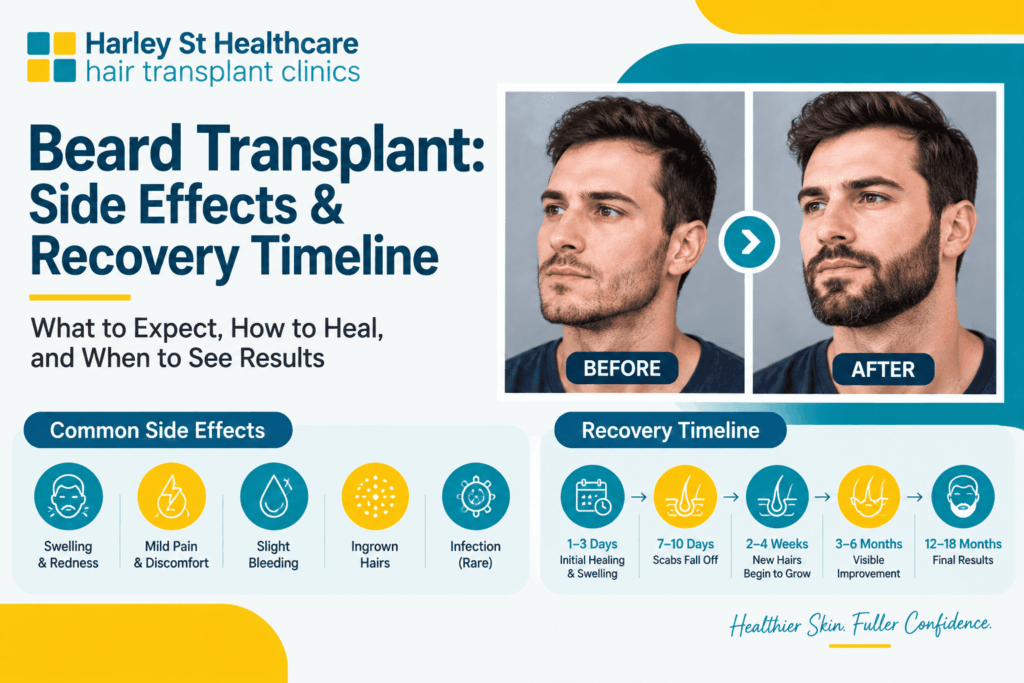
Beard transplant recovery usually involves temporary redness, swelling, tenderness, scabbing and itching around the treated areas. These effects generally improve as the skin heals, but the transplanted hairs also go through a natural growth cycle. Some hairs may shed after transplantation before new growth develops. Understanding the beard transplant recovery timeline can help patients know what to expect during the first few days, weeks and months following treatment.
Table of Content
ToggleWhat Happens After a Beard Transplant?
A beard transplant involves moving hair follicles from a donor area, commonly the scalp, to areas of the face where additional beard growth is required.
Although the procedure is designed to provide long-term hair growth, the skin and transplanted follicles need time to recover.
The immediate recovery period may involve visible changes to the face, while the final beard result develops much more gradually.
Knowing the difference between normal healing and symptoms that require medical attention is an important part of recovery.
Common Beard Transplant Side Effects
Some temporary beard transplant side effects are expected during the early healing period.
Redness
Redness around the recipient areas is common after the follicles have been implanted. The skin may appear more noticeable immediately after treatment, particularly around the individual graft sites.
This usually reduces as the skin heals.
Swelling
Some patients experience swelling around the treated areas. Depending on the procedure, swelling can sometimes extend beyond the immediate treatment area.
Following the clinic’s aftercare instructions can help support a comfortable recovery.
Scabbing
Small scabs can form around the transplanted follicles as the tiny recipient sites heal.
These should generally be allowed to heal naturally rather than being picked or scratched, as disturbing the area can interfere with recovery.
Tenderness and Discomfort
The treated areas may feel tender or sensitive after the procedure. The level of discomfort varies between individuals.
Your clinician may provide specific advice about managing discomfort and caring for the treated skin.
Itching
Itching can occur during the healing process. Although it can be tempting to scratch the area, patients should follow their aftercare instructions and avoid unnecessarily touching the transplanted follicles.
Temporary Numbness
Some temporary changes in sensation can occur around areas that have been treated. Sensation generally improves as the area recovers.
Beard Transplant Recovery Timeline
Everyone heals at a different rate, so the following timeline should be considered a general guide rather than a fixed schedule.
First 24–48 Hours
During the first couple of days, the treated areas may appear red and swollen.
The skin may feel sensitive, and small signs of the transplantation procedure can be visible around individual grafts.
This is the stage when following the clinic’s instructions particularly carefully is important.
Patients are generally advised to avoid unnecessary touching or pressure on the transplanted area.
Days 3–7
During the first week, redness and swelling should gradually begin to settle.
Small scabs may become more noticeable around the transplanted follicles. These are part of the healing process and should not normally be forcibly removed.
The clinic may provide specific instructions about washing the face and caring for the grafts.
Week 2
By around the second week, much of the initial visible healing may have improved.
However, the transplanted hairs may not look the same as they did immediately after treatment. Some changes in the appearance of the transplanted hairs are normal as the follicles adjust to their new location.
Weeks 3–6
This stage can be confusing because some transplanted hairs may begin to shed.
This is often referred to as shock loss or shedding, and it does not necessarily mean that the transplanted follicles have failed.
The follicle can remain beneath the skin while entering another stage of its natural growth cycle.
Months 2–4
New growth may begin to become visible during this period, although the timing varies between individuals.
The beard may initially look uneven because different follicles grow at different rates.
Patience is important because the final result cannot be judged at this stage.
Months 4–6
As growth continues, the transplanted beard hairs may become more noticeable.
Density can gradually improve, but the hair may still be developing in thickness and appearance.
Regular follow-up may help the clinician assess progress.
Months 6–12 and Beyond
Beard transplant results continue to develop over the following months.
The transplanted hairs can gradually mature and become more integrated with the existing beard.
The exact timeframe varies depending on individual growth characteristics, healing and the number and quality of transplanted follicles.
When Should You Contact the Clinic?
Most recovery symptoms are temporary, but you should contact your treating clinic if you experience symptoms that appear unusual, severe or progressively worse.
These may include:
- Severe or increasing pain
- Significant or worsening swelling
- Heavy bleeding
- Pus or unusual discharge
- Fever
- Increasing redness or warmth
- Other symptoms that concern you
Your treating clinician is best placed to determine whether a symptom is part of normal recovery or requires assessment.
How Can You Support Beard Transplant Recovery?
Following the aftercare instructions provided by your clinic is one of the most important parts of recovery.
Depending on your individual treatment, you may be advised to:
- Avoid touching or scratching the transplanted area
- Follow specific washing instructions
- Protect the treated area from unnecessary irritation
- Avoid strenuous activity for the period recommended by your clinician
- Follow medication instructions if prescribed
- Attend scheduled follow-up appointments
Do not introduce additional products or treatments to the transplanted area without first checking with your clinician.
Does Beard Transplant Shedding Mean the Treatment Failed?
No. Shedding after a beard transplant can occur as part of the normal hair-growth cycle.
The visible hair shaft may shed while the transplanted follicle remains in place beneath the skin. New growth can then develop later.
Because hair growth is gradual, it is too early to judge the final result based on the appearance of the beard during the first few weeks.
Conclusion
Understanding beard transplant side effects and recovery can help you prepare for the different stages of healing. Redness, swelling, tenderness, scabbing, itching and temporary changes in sensation can occur during the early recovery period.
The beard transplant recovery timeline also includes a period when transplanted hairs may shed before new growth begins. Visible improvement develops gradually, with the final result often taking several months to mature.
Following your clinic’s aftercare instructions and attending recommended follow-up appointments can help support the recovery process. If symptoms become severe, unusual or progressively worse, contact your treating clinician for advice.
Frequently Asked Questions
The initial skin healing generally occurs over the first few weeks, but the transplanted beard hairs take several months to grow and mature. The complete result develops gradually.
Some swelling can occur after treatment and usually improves as the initial healing period progresses. Significant or worsening swelling should be discussed with the treating clinic.
Small scabs can develop around the transplanted follicles during the first week. They should generally be allowed to heal and come away naturally according to the clinic's aftercare instructions.
Some transplanted hairs may shed during the weeks following treatment. This does not necessarily mean the follicles have been lost, as new growth can occur later.
New growth develops gradually and can begin becoming noticeable after several months. The exact timing varies between individuals.