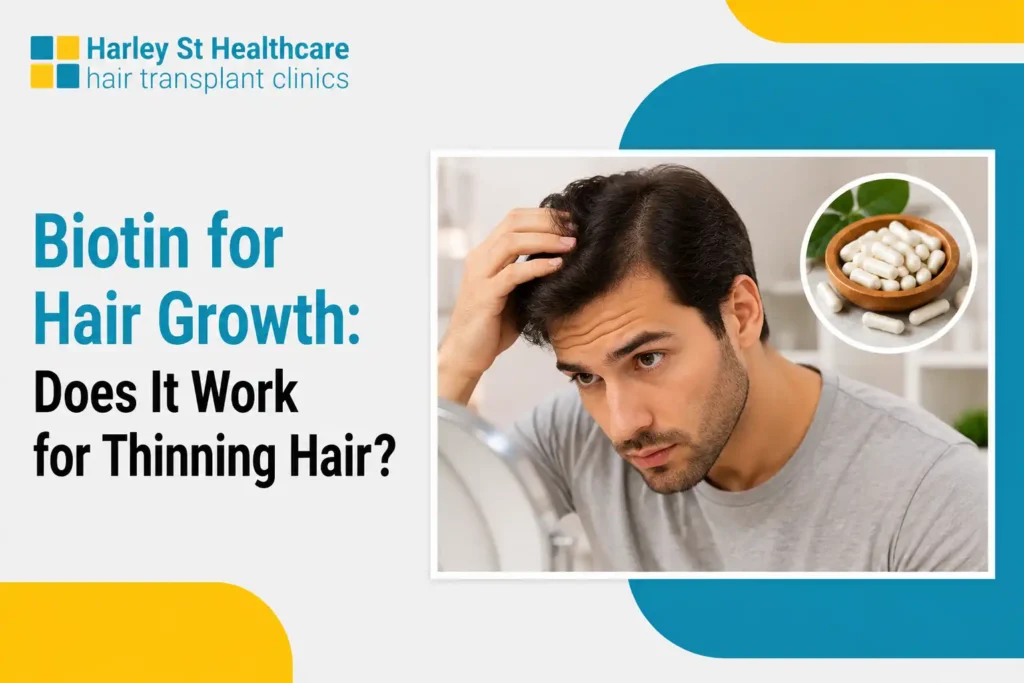
Hair thinning affects millions of people across the UK, leading many to search for supplements that promise thicker, healthier hair. One of the most popular options is biotin. From hair growth gummies and tablets to shampoos and serums, biotin is often marketed as a miracle solution for thinning hair. But does biotin actually work, or is its reputation bigger than the science behind it? In this guide, we’ll explore what biotin is, whether it helps hair growth, how much biotin to take daily for hair growth, potential side effects, and when other treatments may be more effective.
Table of Content
ToggleWhat Is Biotin?
Biotin, also known as Vitamin B7, is a water-soluble vitamin that helps your body convert food into energy. It also plays a vital role in producing keratin, the protein that forms your hair, skin, and nails.
Because healthy hair depends on keratin production, biotin has become one of the most widely used ingredients in hair vitamins for thinning hair.
Many supplements claim that increasing biotin intake can improve hair thickness, reduce shedding, and support stronger growth. However, the reality is more nuanced.
Does Biotin Help Hair Growth?
One of the most common questions people ask is:
Does biotin help hair growth?
The answer depends on the cause of your hair thinning.
Research suggests that biotin can improve hair growth in people who have a biotin deficiency. In these cases, restoring healthy biotin levels may reduce hair shedding and improve hair quality.
However, current evidence does not show strong support for biotin supplements significantly increasing hair growth in people who already have adequate biotin levels.
This is important because true biotin deficiency is relatively uncommon.
Why Biotin Is Associated With Hair Growth
Biotin contributes to:
- Keratin production
- Healthy hair structure
- Stronger nails
- Skin health
- Energy metabolism
When biotin levels are low, symptoms may include:
- Hair thinning
- Increased hair shedding
- Brittle nails
- Skin irritation
- Fatigue
Correcting a deficiency can often improve these symptoms, including hair health.
Is Biotin Good for Hair Growth?
Many people wonder:
Is biotin good for hair growth?
Biotin can support healthy hair, but it is not a cure for every type of hair loss.
Hair thinning may be caused by:
- Genetics
- Hormonal changes
- Female pattern thinning
- Male pattern baldness
- Thyroid disorders
- Iron deficiency
- Stress
- Certain medications
- Medical conditions
In these situations, biotin alone is unlikely to restore significant hair density.
Understanding the underlying cause of hair loss is often more important than simply taking a supplement.
What Does Research Say About Biotin Hair Growth Results?
While many people report positive biotin hair growth results, scientific studies remain limited.
Some studies have shown improvements in hair thickness and scalp coverage after supplementation. However, these supplements often contained additional ingredients such as:
- Iron
- Zinc
- Vitamin D
- Amino acids
This makes it difficult to determine whether biotin alone was responsible for the improvements.
Most dermatologists agree that biotin is most beneficial when a deficiency is present.
For people without a deficiency, the evidence supporting significant hair regrowth remains weak.
How Much Biotin to Take Daily for Hair Growth
A common question is:
How much biotin should I take daily for hair growth?
The recommended daily intake for adults is approximately:
Group | Recommended Daily Intake |
Adults | 30 mcg |
Pregnant Women | 30 mcg |
Breastfeeding Women | 35 mcg |
However, many commercial hair supplements contain:
- 2,500 mcg
- 5,000 mcg
- 10,000 mcg
How Much Biotin Per Day for Hair Growth Is Too Much?
There is currently no evidence showing that mega-doses provide better results than normal levels if you are not deficient.
More is not necessarily better.
Before taking high-dose supplements, it’s advisable to consult a healthcare professional.
Best Biotin for Hair Growth: What Should You Look For?
If you’re considering supplementation, focus on quality rather than simply choosing the highest dose.
The best biotin supplement for hair growth often contains complementary nutrients that support overall hair health.
Look for supplements containing:
- Biotin
- Zinc
- Iron
- Selenium
- Vitamin D
- Folate
The best biotin vitamins for hair growth are usually those that address multiple nutritional factors associated with thinning hair.
When choosing the best biotin tablets for hair growth, look for products that:
- Are third-party tested
- Come from reputable manufacturers
- Provide transparent ingredient information
Biotin Shampoo for Hair Growth: Does It Work?
Biotin is increasingly found in shampoos and conditioners marketed for hair growth.
Can Biotin Shampoo Regrow Hair?
Biotin shampoo for hair growth may help:
- Improve hair texture
- Increase volume temporarily
- Strengthen existing strands
- Reduce breakage
However, there is little evidence that shampoo-based biotin can penetrate deeply enough into the scalp to stimulate significant new hair growth.
While biotin shampoos can support overall hair care, they should not be relied upon as a primary treatment for progressive hair loss.
Biotin Before and After: What Results Can You Expect?
Searching online for “biotin before and after” often reveals dramatic transformation photos.
While some individuals do experience improvements, results depend largely on the underlying cause of hair loss.
You May See Better Results If:
- You have a biotin deficiency
- Your hair loss is nutrition-related
- Your diet lacked essential vitamins
- Hair breakage is causing apparent thinning
You May See Limited Results If:
- Hair loss is genetic
- Hormonal factors are involved
- You have advanced male pattern baldness
- You have female pattern thinning
Most people who respond positively to biotin supplementation notice changes after three to six months of consistent use.
Best Biotin Rich Foods for Hair Growth
Before purchasing supplements, consider improving your diet.
Many foods naturally contain biotin and other nutrients important for healthy hair.
Biotin Rich Foods for Hair Growth
Eggs
One of the richest natural sources of biotin and protein.
Salmon
Provides biotin, protein, and omega-3 fatty acids.
Almonds
Rich in healthy fats and biotin.
Sweet Potatoes
Contain vitamins that support scalp and follicle health.
Sunflower Seeds
Provide biotin, vitamin E, and antioxidants.
Liver
One of the highest natural sources of biotin available.
A balanced diet often supplies enough biotin for healthy individuals.
Biotin Side Effects
Biotin is generally considered safe because excess amounts are excreted through urine.
However, biotin side effects can occur.
Potential side effects include:
- Digestive discomfort
- Nausea
- Acne breakouts
- Excessive thirst
- Frequent urination
- Mild sleep disturbances
An Important Warning About Blood Tests
High-dose biotin supplements can interfere with laboratory testing.
This includes tests for:
- Thyroid function
- Hormones
- Cardiac markers
- Vitamin D levels
Always inform your healthcare provider if you are taking biotin supplements before undergoing blood tests.
When Biotin Isn’t Enough
While biotin may support healthy hair, many cases of thinning hair are caused by factors that supplements cannot address.
Common causes include:
- Female pattern thinning
- Male pattern baldness
- Hormonal imbalances
- Follicle miniaturisation
- Chronic scalp conditions
In these situations, clinically proven treatments may offer better results.
Options may include:
- Minoxidil
- Finasteride (for suitable male patients)
- PRP therapy
- Low-level laser therapy
- Hair transplant surgery
A proper diagnosis is essential before choosing a treatment plan.
Hair Restoration Options at Hair Transplant Clinics
If you’re experiencing persistent hair thinning despite using supplements, vitamins, or over-the-counter treatments, a professional assessment can help identify the underlying cause.
At Hair Transplant Clinics , our specialists evaluate:
- Hair loss patterns
- Scalp health
- Hair density
- Donor area suitability
- Long-term restoration options
Whether you’re exploring non-surgical treatments or considering a hair transplant, understanding the root cause of your hair loss is the first step towards achieving the best possible outcome.
Conclusion
Biotin plays an important role in maintaining healthy hair, skin, and nails. However, despite its popularity, current evidence suggests that biotin for hair growth is most effective when a genuine deficiency is present.
For individuals experiencing thinning hair, identifying the underlying cause remains crucial. Nutritional deficiencies, hormonal changes, genetics, stress, and medical conditions can all contribute to hair loss.
While biotin vitamins for hair growth may support overall hair health, they are unlikely to reverse advanced hair loss on their own.
If your hair thinning continues despite dietary improvements and supplementation, professional advice can help you explore more effective treatment options tailored to your needs.
Frequently Asked Questions
Biotin may help support hair growth in individuals with a biotin deficiency. Evidence for significant hair growth benefits in non-deficient individuals remains limited.
Most adults require approximately 30 mcg per day. Many supplements contain higher doses, though larger amounts have not consistently been shown to improve results.
The best biotin supplement for hair growth typically combines biotin with other hair-supporting nutrients such as zinc, iron, and vitamin D.
Biotin may help if hair loss is linked to a deficiency. However, it is unlikely to stop genetic hair loss or hormonal hair thinning by itself.
People who benefit from biotin supplementation generally notice improvements after three to six months of consistent use.