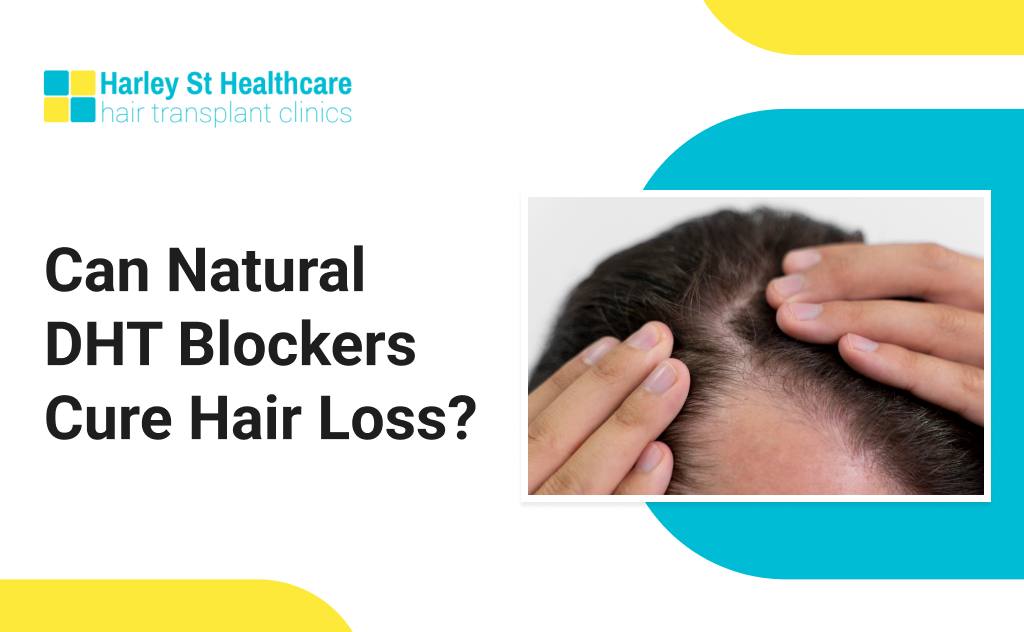
Summary
Natural DHT blockers cannot cure hair loss, but they may help slow down hair thinning and improve hair health. Their effects are mild compared to medical treatments like finasteride.
Table of Content
ToggleIntroduction
If you’re trying to treat hair loss naturally, you’ve probably come across natural DHT blockers.
They are often marketed as a safer alternative to medications but the real question is:
Can natural DHT blockers actually cure hair loss?
The truth is more nuanced.
Some natural ingredients may help reduce DHT activity slightly, but they don’t work the same way as clinically proven treatments. In this guide, we’ll break down what actually works, what doesn’t, and how to choose the right approach for your hair.
What Is DHT and Why Does It Cause Hair Loss?
DHT (dihydrotestosterone) is a hormone derived from testosterone and is the primary cause of pattern hair loss.
How DHT Affects Hair
- Shrinks hair follicles
- Shortens growth phase
- Leads to thinner hair
- Eventually stops hair growth
People who are genetically sensitive to DHT experience faster and more noticeable hair loss.
What Are Natural DHT Blockers?
Natural DHT blockers are plant-based substances, oils, or nutrients believed to reduce the effect of DHT.
Common Natural DHT Blockers
- Saw palmetto
- Pumpkin seed oil
- Green tea
- Rosemary oil
- Caffeine
They are commonly used in natural DHT blockers for hair routines, including oils, shampoos, and supplements.
Natural DHT Blockers vs Finasteride
Here’s a clear comparison to understand the difference:
Factor | Natural DHT Blockers | Finasteride |
Strength | Mild | Strong |
Scientific Evidence | Limited | Extensive clinical evidence |
Speed of Results | Slow | Moderate (3–6 months) |
Effect on DHT | Partial reduction | Significant reduction |
Side Effects | Minimal (generally safe) | Possible hormonal side effects |
Best For | Early-stage hair thinning | Moderate to advanced hair loss |
Prescription Needed | No | Yes |
Key Insight:
Natural options are supportive, while finasteride is a targeted medical treatment.
Can Natural DHT Blockers Cure Hair Loss?
No, they cannot cure hair loss.
Detailed Explanation
Hair loss, especially genetic hair loss is driven by hormones and follicle sensitivity. Natural blockers are not strong enough to completely stop DHT or reverse advanced follicle damage.
What They Can Do
- Slow down hair thinning
- Improve scalp condition
- Support healthier hair growth
- Delay progression in early stages
They are helpful, but not a complete solution.
Do Natural DHT Blockers Really Work?
Some ingredients show promising early results, but evidence is still limited.
What Studies Suggest
- Pumpkin seed oil may improve hair growth in some individuals
- Rosemary oil has shown comparable results to minoxidil in small studies
- Green tea compounds may help reduce DHT activity
However, most studies are small and not conclusive.
Final Take
Natural DHT blockers can support hair health, but they should not be relied on as the only treatment in significant hair loss.
Strongest Natural DHT Blocker Options
If you’re searching for the strongest natural DHT blocker, these are the most researched:
1. Saw Palmetto
- May help reduce DHT production
- Widely used in supplements
2. Pumpkin Seed Oil
- Contains DHT-inhibiting compounds
- Some clinical evidence of hair growth
3. Rosemary Oil
- Improves scalp circulation
- May support thicker hair
4. Green Tea (EGCG)
- May inhibit DHT-related activity
- Supports scalp health
5. Caffeine
- Stimulates hair follicles
- Common in shampoos
Best Way to Use Natural DHT Blockers
To see results, consistency and routine matter more than anything else.
Practical Tips
- Use oils like rosemary or pumpkin seed regularly
- Add DHT-supportive foods to your diet
- Use caffeine-based or herbal shampoos
- Maintain scalp hygiene
Pro Tip
Natural treatments work best in early stages of hair thinning, not advanced baldness.
Common Mistakes to Avoid
- Expecting fast results
- Using multiple products without consistency
- Ignoring root causes like DHT or nutrition
- Relying only on natural remedies for severe hair loss
These mistakes often lead to disappointment, even when the products are useful.
When Natural DHT Blockers Are Not Enough
Natural solutions may not be sufficient if:
- Hair loss is genetic and progressing
- There is visible thinning or bald patches
- Hair follicles are already weakened
In these cases, combining treatments is more effective.
Expert Hair Loss Solutions at Hair Transplant Clinics
If natural methods are not delivering results, a targeted approach is more effective.
At Hair Transplant Clinics, you get:
- Personalised diagnosis
- Evidence-based treatment plans
- Options like PRP, medical therapy, and hair transplants
This helps address the root cause of hair loss rather than relying on trial-and-error.
Conclusion
Natural DHT blockers can be a helpful addition to your hair care routine, especially if you are in the early stages of hair thinning or prefer a gentle, low-risk approach. They may support scalp health, reduce mild DHT activity, and improve overall hair quality over time. However, they are not strong enough to completely stop or reverse genetic hair loss on their own.
For noticeable and long-term results, it’s important to combine natural methods with proven treatments and take action early. A balanced approach based on the severity of your hair loss will always deliver better outcomes than relying on a single solution.
FAQs
Natural DHT blockers are plant-based ingredients like saw palmetto and pumpkin seed oil that may help reduce the effects of DHT on hair.
No, they cannot cure hair loss, but they may slow down thinning and support healthier hair.
They can help in early stages, but results are mild compared to medical treatments.
Saw palmetto and pumpkin seed oil are considered among the most effective natural options.
Yes, they are generally safe, but results vary and they are not a replacement for medical treatment in severe cases.