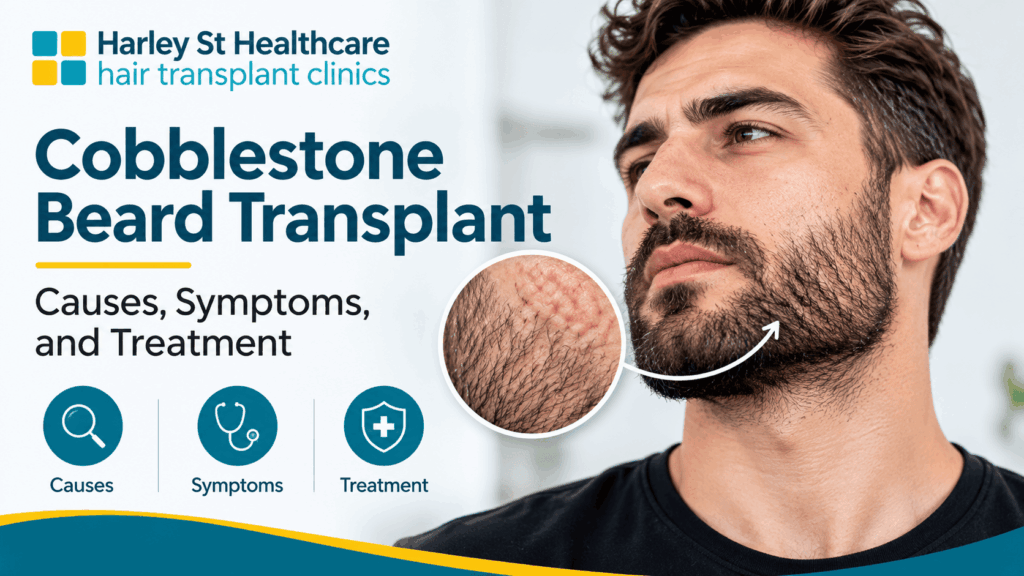
A beard transplant can help men achieve fuller facial hair, improve beard density and fill patchy areas. However, like any surgical procedure, it can sometimes lead to complications. One possible complication is cobblestoning after a beard transplant, which causes small, raised bumps or an uneven texture on the treated skin.
Table of Content
ToggleAlthough this condition can affect the appearance of transplanted facial hair, it does not necessarily mean the transplant has failed. Understanding its causes, recognising the symptoms and seeking appropriate treatment can help manage the condition.
In this guide, we explain what cobblestoning is, why it happens after a beard transplant and what treatment options may help improve the skin’s appearance.
What Is Cobblestoning After a Beard Transplant?
Cobblestoning is a skin irregularity that develops when small raised bumps appear around transplanted hair follicles. These bumps create an uneven surface that resembles the texture of cobblestones.
It is a recognised complication of hair transplantation and can occur in facial areas, particularly around the chin, below the lower lip and the moustache region.
The condition is generally associated with how hair grafts are placed during the procedure. When grafts are implanted at an incorrect depth or the surrounding tissue is not handled appropriately, the healing skin may develop small elevations.
Cobblestoning can make the beard area look less smooth, even when the transplanted hair continues to grow.
What Causes Cobblestoning After a Beard Transplant?
Several factors can contribute to cobblestoning following a beard transplant. The most common causes include:
1. Incorrect Graft Placement
One of the main causes is placing hair follicles too superficially in the recipient area. When grafts are not positioned at the appropriate depth, the surrounding skin may heal with raised areas.
Correct graft placement is particularly important in beard transplantation because facial skin requires careful handling to achieve natural-looking results.
2. Excess Tissue Around Hair Grafts
If grafts contain excess surrounding tissue, this can contribute to raised areas around the implanted follicles. Proper graft preparation and handling help minimise this risk.
3. Surgical Technique
The size and depth of the recipient incisions, the angle of implantation and the handling of individual follicles can all influence the final skin texture.
An experienced hair restoration surgeon must consider the natural direction of facial hair growth and the characteristics of the treatment area when placing each graft.
4. Healing and Scar Tissue Formation
The skin undergoes a healing process after transplantation. In some cases, changes in the surrounding tissue and scar formation can contribute to an uneven surface.
Not every raised area is cobblestoning, however. Swelling, temporary inflammation and folliculitis can also cause bumps during recovery.
What Are the Symptoms of Beard Transplant Cobblestoning?
Cobblestoning generally affects the texture of the skin rather than the growth of transplanted hair.
Common signs include:
- Small raised bumps: Visible elevations around individual transplanted hair follicles.
- Uneven skin texture: The treated area may feel rough or appear bumpy.
- Visible skin irregularities: Small elevations may become noticeable when the beard is short or the skin is exposed.
- Changes around the chin: Bumps may develop around the chin mound or directly below the lower lip.
- Persistent surface irregularities: Unlike temporary post-operative swelling, cobblestoning may remain after the initial healing period.
If bumps are painful, increasingly red, warm or filled with pus, they may indicate folliculitis or another complication rather than simple cobblestoning. A medical assessment is important to identify the cause.
How Is Cobblestoning After a Beard Transplant Treated?
Treatment depends on the severity of the skin irregularities, their underlying cause and how long it has been since the transplant.
A surgeon or qualified dermatologist should examine the affected area before recommending treatment.
1. Monitoring the Healing Process
Mild irregularities may improve as the skin heals and post-operative inflammation settles. If the transplant is recent, it is important to follow the clinic’s aftercare instructions and attend scheduled follow-up appointments.
Avoid picking, squeezing or repeatedly touching the bumps, as this can irritate the skin.
2. Microdermabrasion
In selected cases, microdermabrasion may be considered to improve superficial skin irregularities. It involves gently removing the outermost layer of skin.
However, it is not suitable for every patient and should only be considered after the treated area has healed sufficiently and a specialist has assessed the skin.
3. Surgical Correction
For more noticeable or persistent cobblestoning, a specialist may consider corrective treatment. Depending on the location and severity, this may involve carefully removing selected grafts or treating the raised scar tissue.
The appropriate approach depends on the condition of the surrounding skin and the position of the transplanted follicles.
4. Treating Associated Folliculitis
If the bumps are caused by folliculitis rather than cobblestoning, treatment will be different. A doctor may recommend topical or oral medication depending on whether the inflammation is bacterial, fungal or non-infectious.
It is important not to start antibiotics or other medication without a proper diagnosis.
Can Cobblestoning Be Prevented During a Beard Transplant?
Although no surgical procedure can guarantee that complications will not occur, careful surgical planning and technique can help reduce the risk of cobblestoning.
Some important considerations include:
- Accurate graft placement: Follicles should be implanted at an appropriate depth and angle.
- Proper graft preparation: Careful handling and preparation of grafts can help minimise excess surrounding tissue.
- Appropriate implantation technique: Small, carefully planned recipient sites can help reduce skin trauma.
- Experienced surgical team: Knowledge of facial hair direction, skin characteristics and graft placement is important.
- Following aftercare instructions: Proper post-operative care supports healing and helps reduce avoidable irritation.
When considering a beard transplant in the UK, patients should ask about the surgeon’s experience, the techniques used and the follow-up care provided.
When Should You Consult a Hair Transplant Specialist?
You should contact your hair transplant clinic if raised bumps persist beyond the expected healing period, become more noticeable or affect the appearance of your beard.
Seek prompt medical advice if you experience increasing pain, spreading redness, pus, fever or worsening swelling. These symptoms may indicate an infection that requires medical attention.
Early assessment helps distinguish cobblestoning from other post-transplant complications and allows the specialist to recommend an appropriate treatment plan.
Conclusion
Cobblestoning after a beard transplant can cause small raised bumps and an uneven skin texture around transplanted follicles. Incorrect graft placement, excess surrounding tissue and surgical technique are among its potential causes.
While mild irregularities may improve with healing, persistent cobblestoning may require specialist treatment. Choosing an experienced hair restoration surgeon, understanding the procedure and following appropriate aftercare instructions are important steps towards achieving natural-looking beard transplant results.
If you are considering a beard transplant or are concerned about complications following a previous procedure, Harley Street Healthcare offers personalised hair restoration
Frequently Asked Questions
Not necessarily. Mild irregularities may improve as the skin heals. However, more established skin elevations or scar tissue may persist and require specialist treatment.
There is no fixed recovery timeline. Mild post-operative swelling and inflammation usually settle during the initial healing period, whereas true cobblestoning may take longer to improve and can sometimes persist without corrective treatment.
Cobblestoning primarily affects the skin's surface texture. It does not automatically mean that transplanted follicles will fail to grow. However, the underlying cause and severity should be assessed by a specialist.
In some cases, yes. Depending on the severity, monitoring or selected non-surgical treatments may help. More pronounced irregularities may require a corrective procedure.
It is a recognised complication, particularly around the chin and below the lower lip. However, it is not inevitable, and careful graft preparation and implantation techniques can help minimise the risk.