Hair transplant procedures have evolved significantly in recent years, and the comparison of DHI vs FUE hair transplant has become one of the most searched topics in the UK. Both DHI (Direct Hair Implantation) and FUE (Follicular Unit Extraction) are advanced techniques that offer natural and long-lasting results.If you are considering a hair restoration procedure, understanding the difference between FUE and DHI hair transplant methods is essential. Each technique has its own advantages, and the right choice depends on your hair loss condition, expectations, and budget.
Table of Content
ToggleKey Takeaways
DHI offers higher precision and is ideal for hairline design and dense results.
FUE is more suitable for covering larger areas of hair loss.
Both techniques provide permanent and natural-looking outcomes.
The decision between DHI or FUE depends on individual needs and goals.
What Is an FUE Hair Transplant?
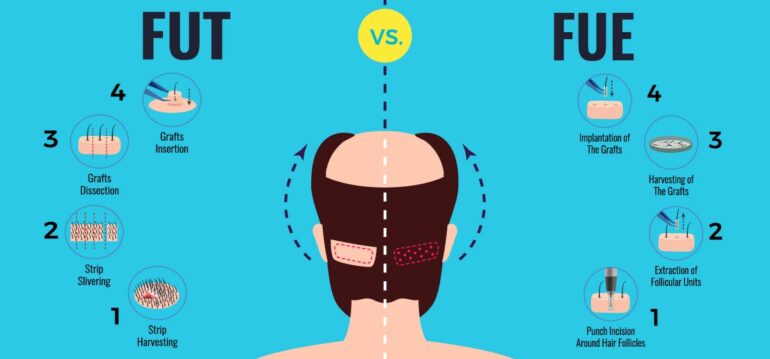
FUE (Follicular Unit Extraction) is a modern hair transplant method in which individual hair follicles are extracted from the donor area and implanted into thinning or bald areas.
The procedure involves extracting grafts using micro-punch tools and then creating tiny channels in the recipient area before implantation. This makes FUE a highly effective option for patients with moderate to advanced hair loss.
FUE is widely performed across the UK and is known for its ability to treat large areas efficiently while maintaining natural results.
What Is a DHI Hair Transplant?
DHI (Direct Hair Implantation) is an advanced variation of FUE that improves the implantation process.
In this technique, hair follicles are implanted directly into the scalp using a specialised Choi implanter pen without creating incisions beforehand. This allows greater control over the angle, direction, and depth of each follicle.
The growing popularity of DHI hair transplant UK procedures is due to their precision and ability to achieve higher density, especially in the hairline area.
Difference Between FUE and DHI Hair Transplant
When comparing DHI vs FUE hair transplant, the main difference lies in how the grafts are implanted.
FUE involves creating channels before placing the grafts, while DHI uses a direct implantation technique that combines both steps into one. This results in better control and potentially faster healing.
Understanding this difference between FUE and DHI hair transplant procedures helps patients make more informed decisions.
DHI vs FUE: Which Is Better?
One of the most common questions is which is better FUE or DHI. The answer depends on your specific goals.
When analysing DHI vs FUE which is better, DHI is often preferred for precision, density, and hairline design. It is ideal for patients who want highly detailed and refined results.
FUE, on the other hand, is better suited for patients who require larger coverage. It is also more cost-effective and efficient when a high number of grafts is needed.
DHI vs FUE Recovery Time
Another important factor is recovery.
When comparing DHI vs FUE recovery time, both procedures offer relatively quick healing. FUE typically requires around 7 to 10 days, while DHI may offer slightly faster recovery due to less trauma to the scalp.
Most patients can return to normal activities within a few days, with noticeable hair growth starting after a few months.
DHI vs FUE Results
Both procedures deliver natural and permanent outcomes, but there are slight differences.
When looking at DHI vs FUE results, DHI often provides higher density and more precise placement, particularly in visible areas like the hairline.
FUE is more effective for covering larger bald areas and achieving overall volume. The final results depend largely on the experience of the clinic and surgeon.
DHI vs FUE Cost in the UK
Cost is a key deciding factor for many patients in the UK.
FUE hair transplant procedures typically range between £3,000 and £7,000.
DHI procedures generally cost between £4,000 and £9,000.
DHI is usually more expensive due to the advanced tools and precision involved. However, both options are widely available across the UK, and choosing the right clinic is essential for achieving the best outcome.
Pros and Cons of DHI and FUE
FUE is suitable for large treatment areas, more affordable, and widely available. However, it may offer slightly less precision for detailed hairline work.
DHI provides higher precision, better density, and more natural hairline results. On the downside, it is more expensive and can take longer to perform.
Who Should Choose DHI or FUE?
FUE is recommended for individuals with moderate to severe hair loss who need extensive coverage and a cost-effective solution.
DHI is ideal for those with early-stage hair loss, patients focusing on hairline design, or individuals who want maximum density and precision.
A professional consultation is always recommended to determine whether DHI or FUE is the right choice for you.
Considering a Permanent Solution?
Choosing between DHI vs FUE hair transplant is an important step in your hair restoration journey. Both techniques offer effective, long-term solutions when performed correctly.
At Hair Transplant Clinics UK, patients receive personalised treatment plans based on their hair type, goals, and expectations. Selecting the right technique with expert guidance ensures natural-looking and lasting results.
Conclusion
Choosing between DHI vs FUE hair transplant depends on your hair loss stage, budget, and desired results. DHI offers better precision and density, while FUE is ideal for covering larger areas more cost-effectively. Consulting an experienced specialist will help you select the right procedure for natural and long-lasting results.
FAQ’s
Which is better FUE or DHI hair transplant?
DHI is better for precision and density, while FUE is more suitable for larger areas and affordability.
What is the difference between FUE and DHI hair transplant?
FUE involves creating channels before implantation, while DHI uses a direct implantation method with a specialised tool.
Is DHI more expensive than FUE?
Yes, DHI is generally more expensive due to its advanced technique and higher precision.
Which gives better results, DHI or FUE?
Both provide excellent results, but DHI offers better density while FUE is ideal for larger coverage.
How long does recovery take after a hair transplant?
Recovery usually takes 7 to 10 days, with full results visible within 10 to 12 months.