Summary
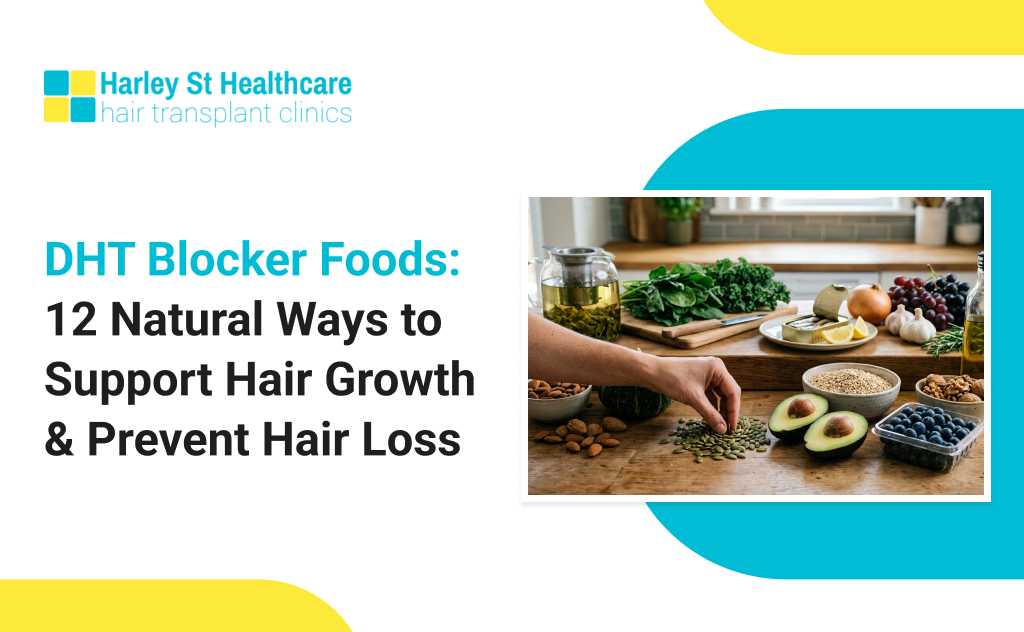
DHT blocker foods help reduce the activity of 5-alpha-reductase, the enzyme that converts testosterone into DHT, a hormone linked to hair loss. Foods like pumpkin seeds, green tea, and tomatoes may help slow hair thinning and support healthier hair growth when used consistently.
Table of Content
ToggleMedical Disclaimer
This content is for informational purposes only and does not replace professional medical advice. Hair loss can have multiple causes, so it’s best to consult a qualified specialist before starting any treatment or dietary change.
Why Is Your Hair Falling Out?
If you’re noticing hair loss at the temples, crown, or parting, DHT (dihydrotestosterone) is often a major factor.
DHT binds to genetically sensitive hair follicles and gradually shrinks them. Over time, this leads to:
- Thinner hair
- Shorter growth cycles
- Reduced hair density
This process, known as follicle miniaturisation, is the main cause of pattern baldness in both men and women.
The encouraging part is that your daily diet can influence this process.
What is DHT?
DHT (dihydrotestosterone) is a hormone derived from testosterone. It is produced by the enzyme 5-alpha-reductase.
When DHT attaches to hair follicles, it weakens them over time, eventually stopping new hair growth.
How to Block DHT Naturally
You can reduce DHT levels naturally by combining diet and lifestyle habits:
- Eat zinc-rich foods like pumpkin seeds and eggs
- Drink green tea regularly
- Include lycopene-rich foods like tomatoes
- Reduce stress levels
- Avoid processed and high-sugar foods
These steps help slow hair loss, though they work best in early stages.
Can Food Really Block DHT?
Yes, to an extent.
Certain foods contain nutrients that help inhibit 5-alpha-reductase, reducing DHT production.
However:
- They won’t reverse advanced baldness
- They work gradually over time
- Best results come with consistency
Think of DHT blocker foods as daily prevention, not a cure.
12 Best DHT Blocker Foods for Hair Growth
1. Pumpkin Seeds — The Most Effective Natural DHT Blocker
Rich in zinc, magnesium, and cucurbitin, pumpkin seeds help regulate DHT levels.
A clinical study showed improved hair growth over 24 weeks in men using pumpkin seed oil.
How to use:
A handful daily as a snack or in smoothies.
2. Green Tea — Natural DHT Inhibitor
Green tea contains EGCG, which helps block the enzyme responsible for DHT production.
It also improves scalp health and blood flow.
How to use:
2–3 cups daily.
3. Tomatoes — Rich in Lycopene
Lycopene helps inhibit DHT production.
Pro tip: Cooked tomatoes (sauces, paste) are more effective than raw.
4. Saw Palmetto — Natural Alternative to Finasteride
Derived from plant extracts, saw palmetto blocks DHT similarly to medications, but less strongly.
Note: Works best in early-stage hair loss.
5. Walnuts — Nutrient-Dense Hair Support
Contain omega-3s, vitamin E, and L-lysine, supporting hair strength and reducing DHT effects.
6. Avocado — Scalp Protection Food
Rich in vitamin E and healthy fats, it reduces oxidative stress and supports follicle health.
7. Eggs — Keratin Boosting Superfood
Packed with biotin and protein, essential for strong hair growth.
8. Berries — Antioxidant Power
Contain compounds that may help inhibit DHT and improve scalp circulation.
9. White Mushrooms — Vitamin D + Zinc Source
Help regulate DHT and improve follicle health.
10. Almonds — The Hair Vitamin Food
Loaded with biotin, vitamin E, and zinc key nutrients for hair strength.
11. Bananas — Gut + Hormone Support
Support gut health, which plays a role in hormone balance.
12. Watermelon — Hydration + Lycopene
Supports blood flow and helps reduce DHT activity.
Which Nutrients Matter Most for Blocking DHT?
Nutrient | Function | Best Sources |
Zinc | Blocks DHT production | Pumpkin seeds, eggs |
Lycopene | Inhibits enzyme | Tomatoes |
EGCG | Reduces DHT | Green tea |
Vitamin E | Protects follicles | Almonds, avocado |
Biotin | Strengthens hair | Eggs |
Vitamin D | Supports growth cycle | Mushrooms |
Do DHT Blocker Foods Work Differently for Women?
Yes.
Women usually experience diffuse thinning rather than a receding hairline.
For better results, women should also:
- Check iron and vitamin D levels
- Reduce sugar intake (important for PCOS)
- Consider spearmint tea for hormonal balance
Lifestyle Changes That Help Reduce DHT
Diet alone isn’t enough.
Support your hair with:
- Regular exercise
- Stress management
- 7–8 hours of sleep
- Healthy weight maintenance
These habits improve hormone balance and enhance results.
What Foods Increase DHT?
Avoid or limit:
- Refined carbs (white bread, pastries)
- Sugary drinks
- Processed foods
- Excess dairy and red meat
These can increase DHT production and worsen hair loss.
Is Diet Enough to Stop Hair Loss?
It depends on the stage.
- Early hair loss → Diet can slow progression
- Advanced hair loss → Diet alone is not enough
For significant hair loss, medical or clinical treatments may be required.
Not Sure Where to Start? Get Expert Guidance
At Hair Transplant Clinics, we help you find the right solution for your hair loss, whether that’s lifestyle changes, medical treatments, or advanced procedures.We connect you with experienced hair specialists so you can:
- Understand the real cause of your hair loss
- Explore suitable treatment options
- Get personalised recommendations
Book a free consultation to get expert advice tailored to your hair loss.
Conclusion
DHT blocker foods won’t deliver instant results, but they are one of the simplest and safest ways to support your hair naturally.
By consistently including foods like pumpkin seeds, green tea, and tomatoes and reducing processed foods, you can slow hair thinning and protect your follicles over time.
However, if your hair loss is progressing, relying only on diet may not be enough. Combining natural strategies with expert guidance can give you more effective and long-term results.
The earlier you take action, the better your chances of preserving healthy hair.