Blog Summary
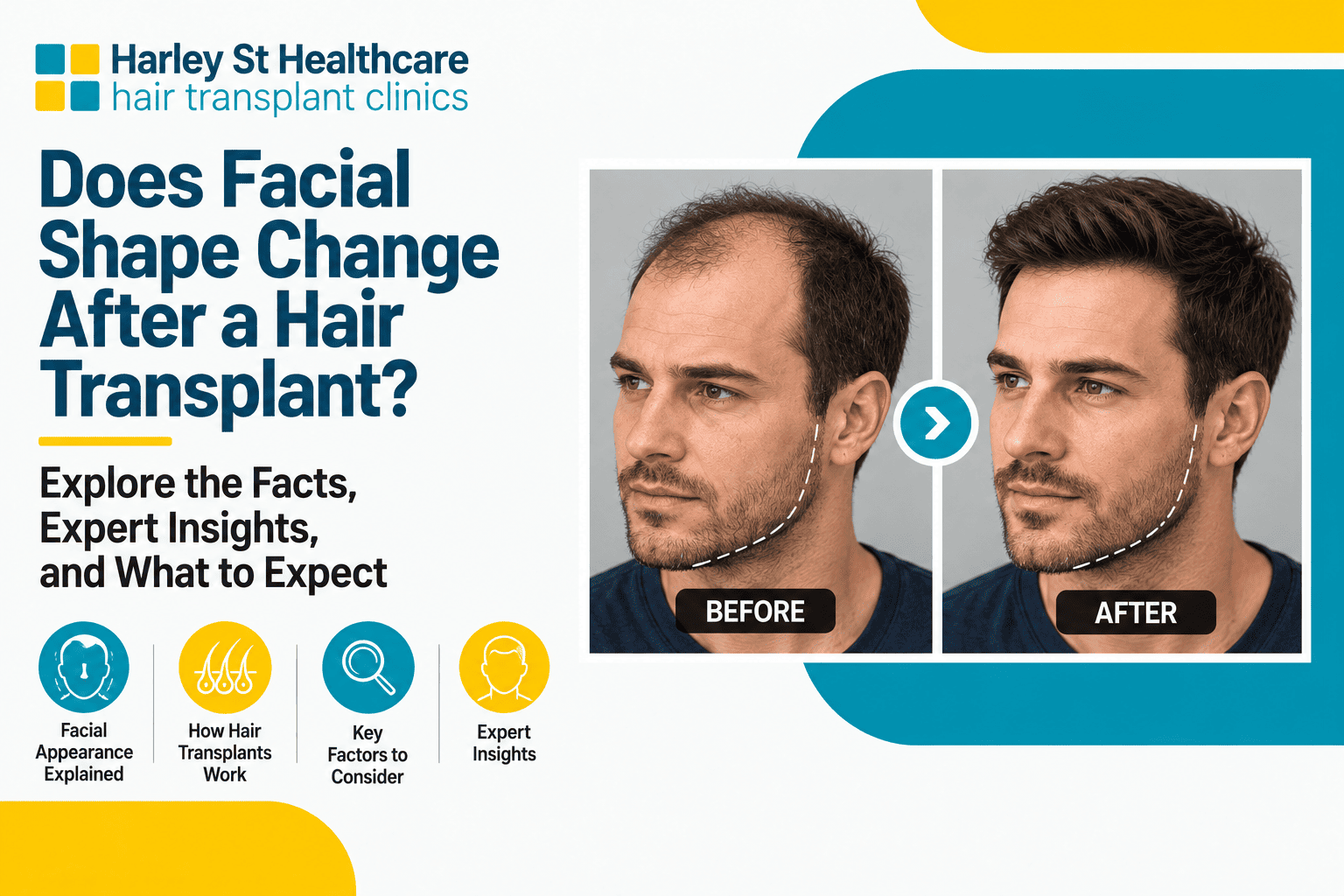
A hair transplant does not change the underlying structure of your face, but it can influence how your facial features appear. Restoring a receding hairline, improving hair density, or adjusting the hairline can change the visual balance between the forehead, temples, and other facial features. The overall effect depends on your original hairline, facial proportions, graft placement, and individual hair transplant results.
Table of Content
ToggleCan a Hair Transplant Change Your Facial Shape?
A hair transplant cannot alter your facial bones, jawline, cheekbones, or the underlying structure of your forehead. However, it can change the way your face looks by restoring hair in areas affected by thinning or hair loss.
For example, a receding hairline may make the forehead appear taller or more prominent. Restoring hair along the hairline can create a more balanced appearance and change the perceived proportions of the upper face.
Similarly, adding density around the temples may make the hairline look fuller and soften the transition between the forehead and the sides of the head.
These changes are visual rather than structural. The procedure redistributes hair follicles from a donor area, usually the back or sides of the scalp, into areas that need greater coverage.
How Hair Transplant Results Can Affect Facial Appearance
The appearance of your face after a hair transplant depends on the areas treated and the design of the new hairline.
1. A Restored Hairline Can Change Forehead Proportions
One of the most noticeable changes after a hair transplant may be the appearance of the forehead.
When the hairline recedes, more of the forehead becomes visible. Rebuilding the hairline can reduce the amount of visible forehead and create a different visual balance between the upper and lower parts of the face.
However, lowering the hairline too much can look unnatural or create an imbalance. A suitable design should consider your natural hairline, age, facial proportions, and the possibility of future hair loss.
2. Temple Restoration Can Affect Facial Framing
Hair loss around the temples can make the hairline appear more recessed and the upper face look wider or more exposed.
A hair transplant may restore some of this coverage, helping frame the face more evenly. The effect depends on the extent of temple recession and how the transplanted hair is positioned.
Not everyone needs temple restoration. The treatment plan should be based on individual hair loss patterns rather than a standard hairline design.
3. Increased Hair Density Can Change Overall Balance
Hair thinning can affect the overall proportions of the head and face. Improving coverage in the frontal scalp or other thinning areas may make the hair appear fuller and create a more balanced overall look.
The degree of change varies. A transplant may improve density in selected areas, but it does not always recreate the thickness of naturally dense hair.
Realistic expectations are important because the number of available donor follicles, the size of the thinning area, and the characteristics of the existing hair all influence the outcome.
4. Facial Features May Appear More Defined
A fuller hairline can change how the forehead, eyebrows, and other facial features are visually framed. Some people feel their face looks more proportionate after treatment, particularly if hair loss previously made the upper face appear more exposed.
However, a hair transplant does not directly change the size or shape of the nose, eyes, cheeks, or jaw. Any perceived difference comes from the surrounding hair and the way the face is framed.
Does a Hair Transplant Make Your Face Look Younger?
A hair transplant may create a more youthful appearance for some people by restoring hair around a receding hairline or improving visible scalp coverage.
Hair loss can make the hairline appear higher and the forehead more exposed. Restoring some of that coverage may change the way a person looks, but the result depends on their facial features, age, hair characteristics, and treatment goals.
A younger-looking result should not be the only objective. An excessively low or straight hairline may appear unnatural, particularly as a person ages or if further hair loss occurs.
An experienced hair restoration specialist should design a hairline that suits the individual’s facial proportions and allows for potential future changes in hair density.
Can a Hair Transplant Make Your Face Look Longer or Shorter?
A hair transplant may change the perceived length of the upper face, depending on the hairline design.
- A lower hairline: May make the forehead appear shorter and reduce the amount of visible upper-face area.
- A higher or conservative hairline: May preserve more forehead visibility and suit people with certain facial proportions or advanced hair loss.
- Temple restoration: May change how the sides of the forehead are framed, affecting the perceived width of the upper face.
These are visual effects rather than actual changes in facial dimensions. The ideal hairline is not necessarily the lowest possible one. It should look natural and work with the person’s facial structure, existing hair, and long-term hair loss pattern.
What Determines the Final Appearance After a Hair Transplant?
Several factors influence how a hair transplant affects facial appearance and the quality of the final result.
Hairline design: The position, shape, and natural irregularity of the hairline influence how the face is framed.
Graft placement: The angle and direction of implanted follicles affect how naturally the hair grows and blends with existing hair.
Donor hair availability: The amount and quality of available donor hair limit how much coverage can be achieved.
Existing hair loss: Ongoing hair loss may affect the appearance of non-transplanted hair over time. A specialist may discuss medical management where appropriate.
Healing and growth: Hair transplant results develop gradually. Transplanted hairs may shed temporarily before new growth appears, and the final outcome often takes around 9–12 months or longer to assess.
Individual facial proportions: A hairline that looks suitable on one person may not suit another. Treatment planning should be personalised rather than based only on photographs of other patients.
When Will Your Face Look Different After a Hair Transplant?
Changes in appearance happen in stages.
During the first few days, swelling, redness, or scabbing may temporarily affect the look of the scalp and forehead. These effects generally settle as healing progresses, although recovery varies.
During the following weeks, transplanted hairs may shed. This is a common part of the process and does not necessarily mean the follicles have failed.
New growth typically develops over the following months. As the transplanted hair grows and matures, the hairline and overall framing of the face become easier to assess.
Final hair transplant results often take 9–12 months or longer. It is best to avoid judging the cosmetic outcome too early, as hair growth and maturation take time.
Conclusion
A hair transplant does not change your underlying facial structure, but it can change how your face looks by restoring a receding hairline, improving hair density, or adding coverage around the temples. These changes may make the forehead appear shorter, alter the visual balance of the upper face, or create a fuller frame around facial features.
The best hair transplant results come from a personalised plan that considers facial proportions, donor hair availability, current hair loss, and potential future thinning. A qualified hair restoration specialist can explain what changes are realistic for your situation and help plan a natural-looking outcome.
Frequently Asked Questions
No. A hair transplant does not change facial bones or the underlying structure of the face. It can change perceived proportions by altering the hairline and the way hair frames the forehead and temples.
Yes, restoring the hairline may reduce the amount of visible forehead and make it appear shorter. The extent of this effect depends on the original hairline and the planned placement of the transplanted follicles.
Some people feel they look younger after hair restoration because a fuller hairline can create a more youthful appearance. However, results vary, and a transplant cannot guarantee a specific change in perceived age.
Temple restoration and changes in hairline framing can influence how wide the upper face appears. The effect is visual and depends on the treatment design and individual facial proportions.
New growth develops gradually over several months. Many people assess their results around 9–12 months after surgery, although some may need longer for the hair to mature fully.