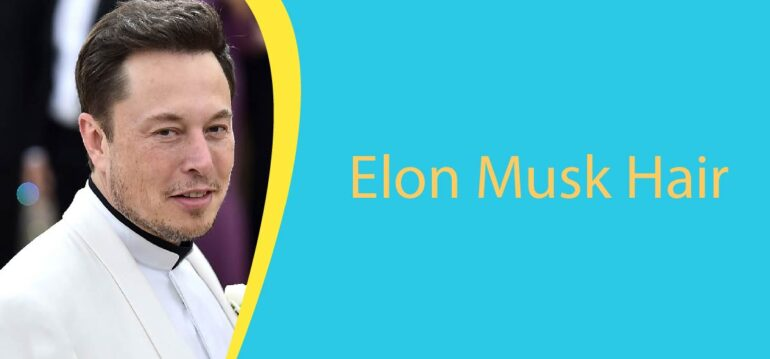
Elon Musk showed visible hair thinning and balding in the late 1990s, while today he has a fuller, denser, and stable hairline. Although Elon Musk has never publicly confirmed having a hair transplant, the scale, pattern, and longevity of the change strongly suggest professional hair restoration, most likely a hair transplant supported by medical treatment.
Table of Content
ToggleThis article explains what likely changed, which procedures are commonly used in such cases, and what his transformation realistically means for people considering hair restoration.
Why People Search “Elon Musk Hair”
Interest in Elon Musk’s hair is driven by a few clear reasons:
- Early photos show noticeable balding
- Recent appearances show strong density and coverage
- The results look natural, not artificial
- It raises the question: “If it worked for him, could it work for me?”
The real value lies not in the celebrity, but in understanding how hair restoration works.
Elon Musk Hair Loss: Early Years
In the late 1990s and early 2000s:
- Elon Musk displayed receding temples
- Thinning was visible across the frontal scalp
- His hair pattern matched male pattern baldness (androgenetic alopecia)
This type of hair loss:
- Is genetic
- Progresses over time
- Does not reverse naturally
Without intervention, further recession would normally be expected.
Elon Musk Hair Before and After: What Changed?
Over time, Elon Musk’s hair:
- Regained frontal density
- Developed a stronger, more defined hairline
- Maintained an age-appropriate appearance
- Remained stable for many years
These changes are unlikely to be explained by:
- Hairstyling alone
- Supplements
- Temporary cosmetic treatments
From a medical standpoint, surgical hair restoration is the most plausible explanation.
Did Elon Musk Have a Hair Transplant?
There is no public confirmation from Elon Musk himself.
However, based on clinical hair-loss patterns:
- The improvement is too significant and long-lasting for non-surgical methods alone
- Density distribution resembles transplanted follicular units
- The hairline design aligns with professional restoration techniques
Clinically, a hair transplant is the most realistic explanation, though it cannot be stated as confirmed fact.
What Type of Hair Transplant Is Most Likely?
Experts commonly suggest a combination approach:
- FUT (strip method) widely used in the early 2000s
- Possibly followed by FUE later for refinement
This approach was common among individuals seeking:
- High density
- Natural hairline design
- Long-term stability
Why His Results Look Natural
Elon Musk’s transformation appears successful because:
- The hairline is not unnaturally low
- Density matches his age
- Hair direction looks natural
- Changes appear gradual rather than sudden
Good hair transplants aim for believability, not perfection.
What Elon Musk’s Hair Transformation Does Not Mean
It does not mean:
- Everyone can achieve identical results
- Hair transplants stop future hair loss automatically
- Results are instant or guaranteed
- One procedure suits all patients
Outcomes depend on donor hair quality, hair loss pattern, and long-term planning.
What This Means for People Considering a Hair Transplant
Elon Musk’s case shows that:
- Significant hair loss can often be improved
- Natural-looking results are achievable
- Strategic planning matters more than visibility
- Long-term thinking is essential
Each patient must be assessed individually.
Key Takeaways
- Elon Musk showed clear hair loss early on
- His current hair density suggests professional restoration
- No public confirmation exists
- Results appear natural and long-term
- Hair transplants require planning, not imitation
Final Thought
Elon Musk’s hair before and after transformation is often discussed because it demonstrates something reassuring: significant hair loss does not always have to be permanent. His results did not rely on exaggerated density or an unnaturally low hairline. Instead, they appear gradual, age-appropriate, and stable over many years exactly what well-planned hair restoration aims to achieve.
What his case truly highlights is the importance of professional planning rather than quick fixes. Hair transplants are medical procedures, not cosmetic shortcuts. Even with access to the best resources, outcomes depend on biology, donor hair quality, timing, and long-term strategy not fame.
For anyone considering a hair transplant, the real lesson is not whether a celebrity had one, but why the result looks natural. Subtle hairline design, controlled density, and respect for future hair loss progression are what separate good outcomes from obvious ones. These principles apply to every patient, regardless of status.
Ultimately, successful hair restoration supports confidence without pressure. Understanding what is realistic and what is not allows patients to make informed, calm decisions. A good hair transplant is one that fits the individual, ages well, and feels like a thoughtful medical choice rather than an impulsive cosmetic one.
Frequently Asked Questions (FAQs)
He was not completely bald, but he showed clear signs of male pattern baldness, particularly at the temples and frontal scalp.
No. Elon Musk has never publicly confirmed undergoing a hair transplant.
Natural regrowth at this scale is extremely unlikely in androgenetic alopecia. The long-term stability suggests medical or surgical intervention.
Based on timing and results, FUT initially and possibly FUE later is considered likely, though unconfirmed.
No. Results depend on donor density, hair thickness, degree of hair loss, and future progression.
No. It restores hair in treated areas but does not stop loss in untreated regions without medical management.
Transplanted hair is generally permanent, but overall appearance depends on managing future hair loss.