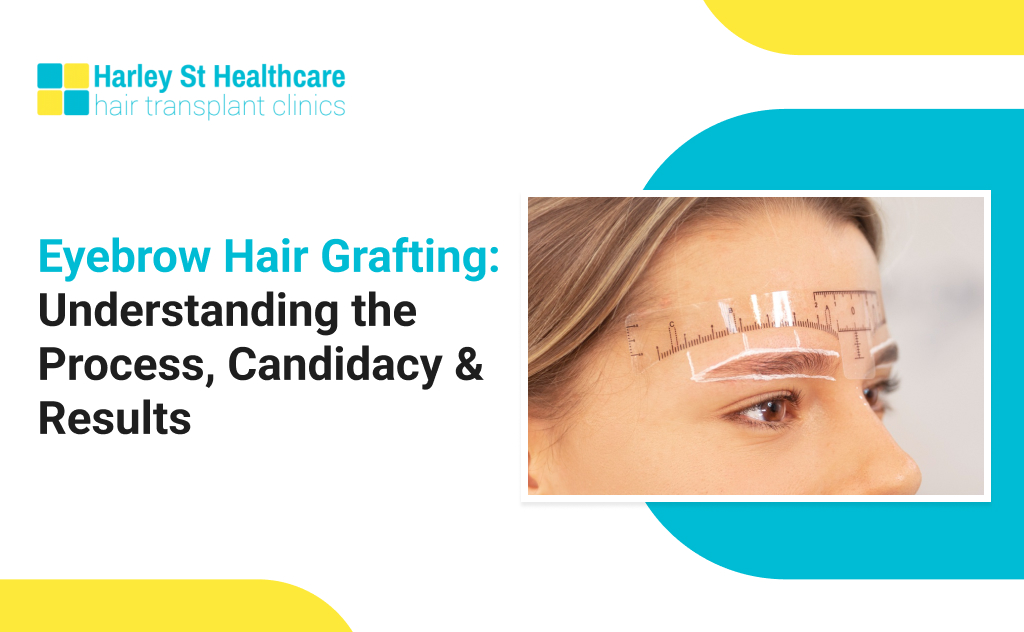
Hair grafting of the eyebrows has emerged as amongst the most successful aesthetic restorative operations to individuals who have lost some or all their eyebrows as a result of genetic weakness, aging, traumatic accidents, or excessively plucked eyebrows. This is an expert UK guide about the process of eyebrow grafting, its expected outcomes, cost, recovery process, and with whom it is most likely to benefit which will help you decide confidently about what to do for your hair-transplant.
What is eyebrow hair grafting?
Eyebrow hair grafting is a low-risk surgical operation in which healthy hair follicles, typically harvested on the back of the scalp, are literally transplanted into the eyebrows to re-architecture shape, re-establish density or to substitute missing hair
How Eyebrow Hair Grafting Works
- FUE micro-punch is a hair follicle extraction technique applied on donor hair.
- The grafts are inserted at a specific angle and direction in order to look natural in terms of the development of eyebrows.
- Density, form and symmetry are designed depending on facial structure.
Why It Matters
Eyebrows also help to frame the face and are a great determinant of expression, confidence, balance and identity. Patchy or thinning brows has the potential to influence self-image, particularly following medical conditions or injuries.
Who Benefits
- Women and men born with thin eyebrows.
- Individuals who have lost their hair as a result of traumas, burns, or accidents.
- Formerly over-plucked patients.
- Customers looking to have fuller, reshaped brows.
- Alopecia patients (type, and donor appropriateness)
The method of hair extraction and implanting contributes significantly towards ultimate appearance. Grafts are handled properly and therefore grow naturally without a pluggy and unnatural appearance. Depending on the density and shape ambitions of the eyebrows, donor quality, a variety of surgical methodologies may be employed, more specific variations are discussed in our guide to modern eyebrow hair transplant techniques, which describes such techniques as micro-FUE location, slit incision and individual hair graft orientation.
Comparison: Eyebrow Grafting vs Non-Surgical Brow Thickening
Feature | Eyebrow Hair Transplant | Microblading / Tinting / Makeup |
Longevity | Permanent (lifetime growth) | Temporary (months to years) |
Looks | 100% natural hair | Ink or pigment effect |
Maintenance | Regular trimming | Colour refresh every few months |
Ideal For | Medical or permanent hair loss | Cosmetic improvement only |
Cost Over Time | More efficient long-term | Continuous recurring cost |
Non-surgical solutions help with temporary enhancement, whereas eyebrow grafting is suitable for patients seeking natural, real hair growth.
Cost Range of eyebrow hair grafting
- Eyebrow hair grafting in the UK generally ranges from £2,000 to £6,000.
- Pricing is based on the number of grafts required, complexity of eyebrow reshaping and the experience level of the surgeon.
- At the higher end are cases that involve full reconstruction or those seeking scar revision.
Recovery Timeline
- Day 1–7 Mild redness, slight swelling and tiny scabs around the transplanted follicles are normal. They tend to subside within a week.
- Week 2 – 4: Hairs begin to fall out of the transplanted hair. This is part of the process of natural growth, not evidence you are a failure.
- 3–4 months: New hair starts to grow slowly. Young growth may feel normal or be soft initially.
- 6 to 12 months: The density will start to improve and the texture will appear more like natural eyebrow hair, it’s when you’ll see the final shape of your eyebrows.
Expected Results
- The implanted follicles behave as regular eyebrow hair and deliver natural and lasting growth.
- The end result provides a natural angle and direction, consistent with the patient’s preexisting pattern of eyebrow.
- Usually, patients will have fuller, more defined and symmetrical brows with enhanced form and density.
- Transplanted hairs often come from the scalp, meaning you may need some maintenance like occasional trims.
Risks & Limitations
All the surgical operations have some risks that include the risk of overgrowth, uneven density, or temporary loss of shock. To learn more about these considerations, there is specialist advice on potential risks in eyebrow transplants, such as variations in healing, and graft behaviour.
Who should Not Be a Good Candidate
- Very limited donor hair
- Some autoimmune cases of alopecia.
- Inappropriate expectation patients.
- Individuals who cannot adhere to aftercare.
Conclusion
Eyebrow hair grafting can be a life-changing option if you’ve been dealing with sparse or uneven brows for years. Whether the thinning happened because of over-plucking, genetics, stress or a past injury, having your natural brows grow back can make a big difference in how you feel day-to-day. The process is gentle, the results build gradually, and once the new hairs settle in, they become a natural part of your expression.
If you’re thinking about restoring your eyebrows and just want someone to look at your brows, understand your goals and give honest guidance, the specialists at Hair-Transplant-Clinics.co.uk are here to help. They’ll walk you through what’s possible and what will genuinely suit your face—without pressure.
FAQ's
Yes, you can. Eyebrow grafting uses tiny hair follicles from the scalp and places them into the brow area to add shape, fullness and definition. The results look natural and the new hairs grow like normal eyebrow hair.
In the UK, eyebrow grafting usually costs £2,000 to £6,000, depending on the number of grafts needed, the surgeon’s experience and how much shaping or reconstruction is required.
The risks are generally low when the procedure is done by a trained specialist in a regulated UK clinic. Mild swelling, temporary redness or uneven early growth can happen, and graft behaviour varies from person to person.
Eyebrow transplants are designed to last a lifetime. The transplanted follicles grow permanently, although you may need to trim them occasionally as they follow scalp-hair growth patterns.