Blog Summary
An eyebrow transplant can help restore eyebrow density, improve shape, and create a fuller appearance using hair follicles taken from another area of the scalp. Understanding eyebrow transplant before and after changes, the healing process, and essential aftercare can help patients prepare for recovery and set realistic expectations. Although initial healing may take around one to two weeks, visible growth develops gradually over several months, with final results often taking around 9–12 months or longer.
Table of Content
ToggleWhat to Expect From Eyebrow Transplant Before and After
An eyebrow transplant involves transferring individual hair follicles, usually from the scalp, into areas of the eyebrows where hair is sparse or missing. The procedure may be considered by people with naturally thin eyebrows, over-plucked brows, scars, or hair loss caused by certain conditions.
Before treatment, a specialist assesses eyebrow shape, existing hair growth, donor hair availability, and the patient’s desired outcome. This planning is important because the direction and angle of each implanted follicle influence how natural the eyebrows look.
After the procedure, the eyebrows may initially appear fuller or more prominent than expected. Small scabs, redness, and mild swelling can also occur. These temporary changes are part of the early healing process and do not necessarily indicate the final result.
The most important point to remember is that eyebrow transplant results develop gradually. The appearance immediately after surgery is not a reliable indication of the final density or shape.
Understanding the Eyebrow Transplant Healing Process
The eyebrow transplant healing process occurs in stages. Recovery varies between individuals depending on the technique used, skin response, the number of grafts transplanted, and how closely aftercare instructions are followed.
Days 1–3: Initial Healing
During the first few days, the treated area may be red, tender, or slightly swollen. Tiny scabs usually form around the implanted follicles. Some discomfort or tightness may occur, although symptoms should generally remain manageable.
During this period:
- Avoid touching, rubbing, or scratching the transplanted area.
- Keep the area protected according to your clinic’s instructions.
- Avoid strenuous exercise if advised by your surgical team.
- Do not apply makeup, creams, or unapproved products to the eyebrows.
Protecting the newly implanted grafts is especially important during early recovery.
Days 4–7: Scabs and Redness Begin to Settle
As healing progresses, scabs may start to loosen naturally. Redness and swelling should gradually improve, although some people may experience visible signs for longer.
Do not pick scabs or try to remove them prematurely. Doing so may irritate the skin and interfere with healing. Follow your clinic’s instructions on when and how to clean the area.
Weeks 2–4: Temporary Shedding May Begin
Some transplanted hairs may shed within the first few weeks after surgery. This is commonly known as shock loss and can be an expected part of the process.
The shedding of hair shafts does not necessarily mean the transplanted follicles have failed. The follicles may remain in the skin and produce new hairs during subsequent growth cycles.
However, unusual pain, increasing redness, pus, or worsening swelling should not be dismissed as normal healing. Contact your clinic if these symptoms occur.
Months 2–4: Early Regrowth
New hairs may begin to appear during the following months, although growth timing differs from person to person. At first, the hairs may be fine, uneven, or grow at different rates.
It is normal for the eyebrows to look less dense than expected during this stage. Avoid judging the outcome too early, as further growth and maturation take time.
Months 6–12: Increasing Density and Maturation
As growth continues, the transplanted eyebrows may become fuller and more defined. The texture and direction of the hairs can also become more apparent.
Many patients see substantial improvement by 6–9 months, but the final eyebrow transplant results may take 9–12 months or longer. The timeline depends on individual hair growth and healing.
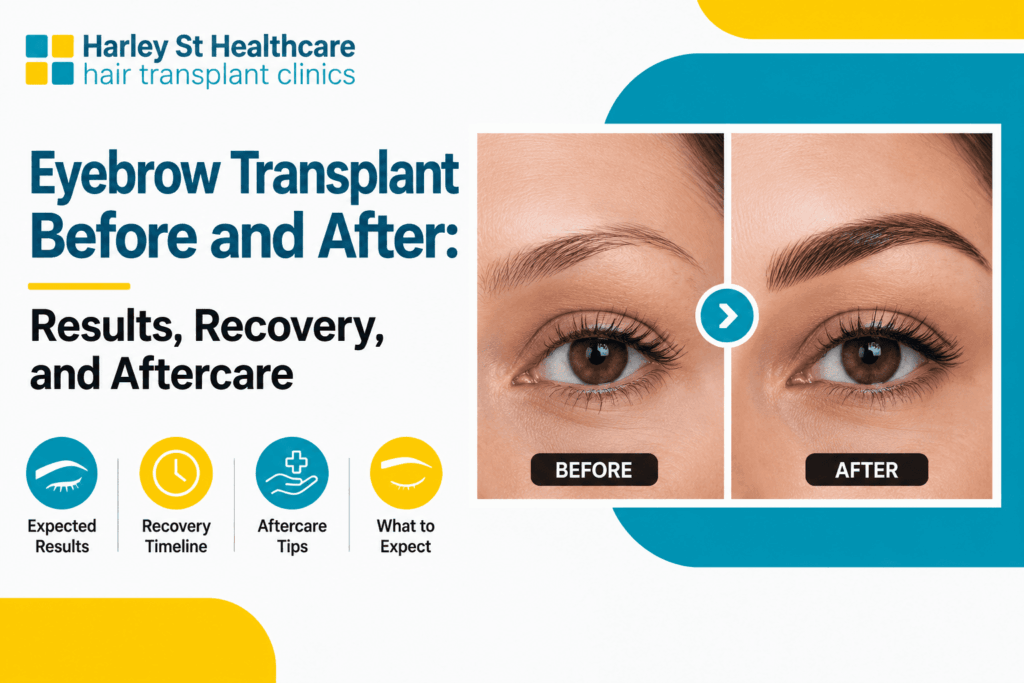
Eyebrow Transplant Before and After: What Results Can You Expect?
Before-and-after photographs can help illustrate the changes that may be possible following an eyebrow transplant. However, results differ according to the patient’s starting eyebrow density, skin characteristics, donor hair quality, surgical technique, and healing response.
Potential improvements include:
- Greater eyebrow density: Sparse areas may appear fuller as transplanted hairs grow.
- Improved eyebrow definition: Careful planning can create a more balanced shape.
- Coverage of selected gaps: Transplanted follicles may help fill areas with limited natural growth, including some scars.
- A more balanced appearance: Eyebrow design can be planned to complement facial features.
A transplant cannot guarantee perfectly symmetrical eyebrows or an exact match to natural eyebrow hair. Transplanted scalp hairs may continue to grow longer than ordinary eyebrow hairs, so regular trimming may be necessary.
When reviewing before-and-after photographs, look for images taken at different stages of recovery and ask whether the results represent patients with similar concerns to yours. Consistent lighting and angles also make comparisons more meaningful.
Essential Eyebrow Transplant Aftercare Tips
Following appropriate eyebrow transplant aftercare instructions helps protect the grafts and supports uncomplicated healing. Your surgeon’s advice should always take priority because recommendations may differ depending on the procedure.
1. Follow Cleaning Instructions Carefully
Your clinic should explain when to begin cleaning the treated area and which products are suitable. Use only the recommended method and avoid rubbing or applying pressure to newly transplanted follicles.
2. Avoid Picking or Scratching
Scabs should loosen naturally rather than being pulled away. Scratching can cause irritation and may disturb healing skin.
If itching becomes uncomfortable or persistent, contact your clinic before applying a cream or medication.
3. Protect the Eyebrows From Direct Sun Exposure
The healing skin may be more sensitive to sunlight. Follow your clinic’s guidance on sun protection and when it is safe to apply sunscreen to the treated area.
Avoid tanning and prolonged direct sun exposure during the early recovery period.
4. Resume Exercise Gradually
Your surgeon may recommend avoiding strenuous exercise for a period after surgery because sweating, friction, and increased blood flow can affect comfort during early healing.
Ask when you can safely resume activities such as running, weight training, swimming, or contact sports.
5. Use Makeup and Skincare Products Only When Cleared
Do not apply eyebrow makeup, exfoliants, retinoids, or other potentially irritating products to the treated area until your clinic confirms they are safe to use.
The same applies to facial treatments and cosmetic procedures around the eyebrows.
6. Attend Follow-Up Appointments
Follow-up visits allow your clinical team to assess healing, answer questions, and identify potential complications. Contact the clinic promptly if symptoms worsen rather than waiting for your next appointment.
Factors That Can Affect Eyebrow Transplant Results
Several factors influence how the eyebrows look after treatment.
Graft placement and hair direction: Eyebrow hairs grow at shallow angles and in different directions across the brow. Careful placement is important for a natural-looking result.
Donor hair characteristics: Transplanted scalp hair may differ in thickness, texture, or growth rate from existing eyebrow hair.
Individual healing and hair growth: People respond differently to surgery, and regrowth may be faster for some than for others.
Aftercare and friction: Rubbing or disturbing the treated area during early healing can interfere with recovery.
Underlying causes of hair loss: Conditions that continue to affect hair growth may influence the long-term appearance of the eyebrows. A specialist may recommend assessing the cause before proceeding.
A consultation can help establish whether an eyebrow transplant is appropriate and explain its limitations, likely recovery, and maintenance requirements.
When Should You Contact Your Clinic?
Mild redness, tenderness, and small scabs can occur during early recovery. However, certain symptoms require medical advice.
Contact your clinic if you notice increasing pain, spreading redness, worsening swelling, pus, fever, or bleeding that does not settle. Seek urgent medical attention for severe or rapidly worsening symptoms.
If eyebrow growth appears slower than expected, discuss it at your follow-up appointment. Hair growth varies, and the final outcome should generally be assessed over several months rather than in the early weeks.
Conclusion
Understanding eyebrow transplant before and after changes can help you approach the procedure with realistic expectations. Initial healing commonly takes around one to two weeks, while temporary shedding may occur before new growth develops over the following months. Final eyebrow transplant results often take 9–12 months or longer.
Careful graft placement, appropriate eyebrow transplant aftercare, and regular follow-up appointments all contribute to a well-managed recovery. Before choosing treatment, consult a qualified hair restoration professional to discuss suitability, expected results, possible risks, and the ongoing maintenance transplanted eyebrow hairs may require.
Frequently Asked Questions
Initial healing often takes around 7–14 days, although redness and other temporary changes may last longer. Full hair growth takes considerably more time, with final results often developing over 9–12 months or longer.
Early changes are visible immediately after surgery, but they do not represent the final outcome. Transplanted hairs may shed during the first few weeks, with new growth often becoming noticeable over the following months. More mature results usually develop gradually.
Yes. Temporary shedding of transplanted hair shafts is common during the early weeks after the procedure. The follicles may remain in place and begin producing new hairs later. Contact your clinic if you experience unusual pain, increasing redness, or other concerning symptoms.
Avoid rubbing or scratching the eyebrows, picking scabs, using unapproved skincare products, and resuming strenuous activities before your surgeon says it is safe. Follow your clinic's specific instructions for cleaning, sun exposure, and makeup.
Results can look natural when the eyebrow shape, graft placement, hair angle, and direction are carefully planned. However, outcomes vary, and transplanted scalp hairs may grow differently from natural eyebrow hairs and require regular trimming.