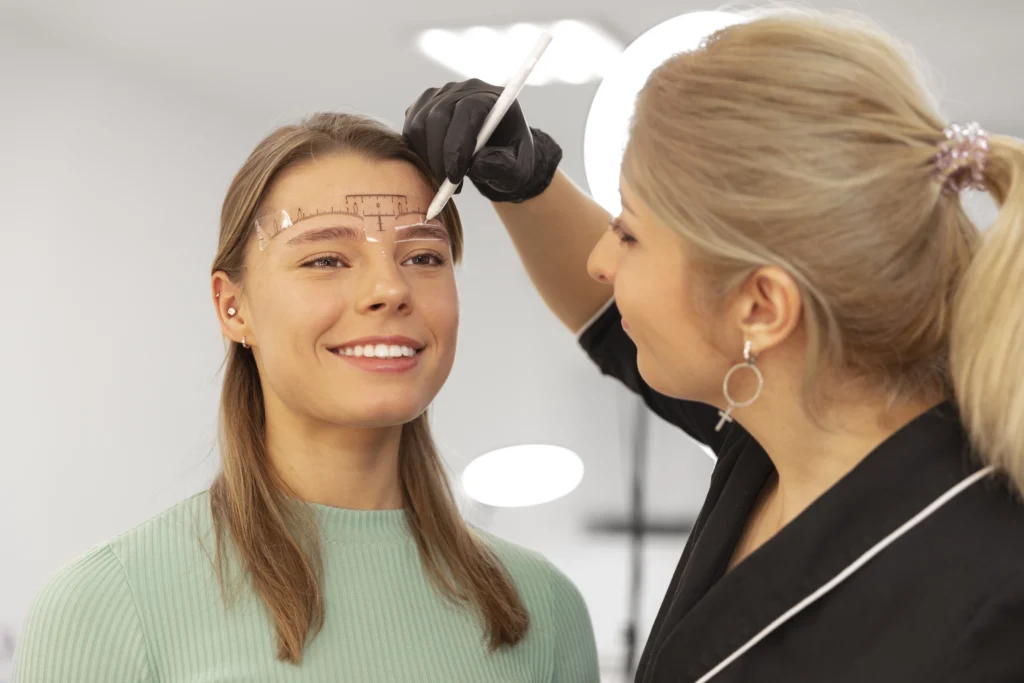
Eyebrow transplants can dramatically improve facial aesthetics by restoring natural, fuller brows — enhancing symmetry, balance, and overall appearance for men or women with thin or sparse brows. This guide explains how eyebrow transplantation works, its aesthetic benefits, potential drawbacks, and what realistic results you can expect. Reviewed by the clinical hair restoration experts at Hair-Transplant-Clinics.co.uk.
What Are Eyebrow Transplants & Why They Matter for Facial Aesthetics
What it is
An eyebrow transplant involves taking healthy hair follicles (usually from the scalp donor area) and implanting them into the eyebrow region to grow as natural eyebrow hairs.
How it works
- Under local anaesthetic, surgeons extract follicles (typically by the FUE method) from a donor site.
- The extracted hairs are trimmed to single-hair grafts.
- These grafts are transplanted into the eyebrow area at carefully planned angles and directions to mimic natural eyebrow hair orientation.
Why it matters (for aesthetics & confidence)
- Provides a permanent solution for thin, sparse or over-plucked eyebrows — eliminating the need for daily makeup, pencilling, or periodic microblading.
- Restores natural look and feel: transplanted hair behaves like normal eyebrow hair and can be trimmed or styled.
Enhances facial symmetry, balance, and definition — eyebrows play a crucial role in framing the eyes and overall face, so fuller brows can improve perceived attractiveness and confidence.
Advantages of Eyebrow Transplants: Aesthetic + Lifestyle Benefits
- Natural look & feel: Because the grafts are actual hair (not pigments or tattoo), the eyebrows grow naturally and blend with existing hairs.
- Permanent & low-maintenance: Once healed and grown, transplanted hairs are long-term; no repeated tattooing, pencils or frequent salon visits.
- Customizable shape & density: During consultation, you and your surgeon can design brows that suit your face shape, desired arch, thickness or tapering.
- Psychological / confidence boost: Fuller, well-shaped brows often lead to improved self-image and less daily effort to “fake” brows.
- Reconstruction benefit: For people who lost brows due to trauma, illness, overplucking, or medical conditions — a transplant can restore brows that look natural and harmonise facial features.
Disadvantages & Considerations Before You Proceed
- Cost: In UK clinics, eyebrow transplant costs typically range between ~£2,000 and ~£5,000, depending on the number of grafts and complexity.
- Time to results: The procedure is not an instant “brow fix.” It may take several months — often up to 9–12 months — for full growth and final appearance.
- Maintenance (trimming): Because transplanted hairs behave like scalp hair, they may grow longer than natural brow hair; regular trimming is often needed to maintain a natural brow look.
- Surgical risks / healing period: As with any transplant surgery, there can be temporary side effects: redness, scabbing, mild swelling, or minor discomfort during the initial healing period.
- Suitability limitations: Not everyone may qualify — limited donor hair, scalp hair quality/texture, or unrealistic expectations can affect final outcome.
What Makes Eyebrow Transplants Better (for Aesthetics) than Alternative Methods
Because transplants use your own hair, the result tends to look the most natural and remain long term — unlike pigments or make-up which can fade or look artificial.
Who Benefits Most from an Eyebrow Transplant
You may be a good candidate if you:
- Have naturally thin, sparse, or uneven eyebrows.
- Have lost eyebrow hair due to over-plucking, age, medical conditions or trauma.
- Want a long-lasting, low-maintenance solution instead of daily makeup or repeated microblading.
- Have realistic expectations and understand that results take time (months) and require patience.
Realistic Expectations & What to Know Before Booking
- The transplanted hair will grow like scalp hair — it may need regular trimming for a natural brow length.
- Full final appearance can take 6–12 months after transplant.
- The success and natural outcome depend heavily on the surgeon’s skill, graft placement (angle & direction), and post-op care.
- Compared with non-surgical methods (microblading, tattooing), transplants are more expensive upfront — but often more cost-effective and hassle-free long-term.
Summary & Practical Takeaway
Eyebrow transplants offer the most natural, long-lasting way to improve facial aesthetics, restore brow fullness, and reduce reliance on make-up or temporary treatments. They are especially beneficial for individuals with sparse brows, hair loss due to age or over-plucking, or for those seeking a permanent, low-maintenance solution. However, success depends on a skilled surgeon, realistic expectations, and proper after-care.
If you’re considering eyebrow transplantation and want personalised advice based on your brow shape, donor hair, and aesthetic goals, the specialists at Hair-Transplant-Clinics.co.uk can help you make an informed decision.
FAQs
Healthy hair follicles are extracted from a donor area (usually the scalp), trimmed into single-hair grafts, and implanted into the eyebrow region at specific angles and directions to mimic natural eyebrow growth.
Yes. Once healed, transplanted hairs behave like natural brows and offer a long-term solution compared with makeup, microblading, or cosmetic tattoos.
Final results typically take around 6 to 12 months, as transplanted hairs grow gradually over several months.
Yes. Because the hairs come from the scalp, they may grow longer and require occasional trimming to maintain a natural eyebrow length.
People with thin, sparse, uneven, or lost brows due to age, over-plucking, trauma, or medical conditions, and those who want a permanent, low-maintenance solution with realistic expectations.