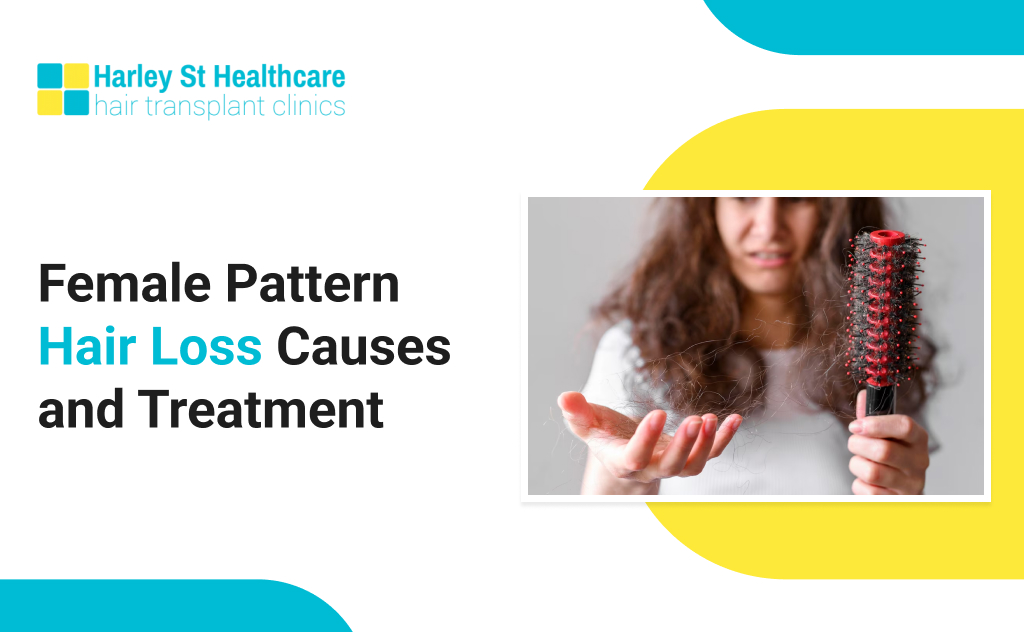
Female pattern hair loss is one of the most common reasons behind female hair thinning, affecting confidence and overall appearance. Many women notice gradual thinning along the parting, reduced volume, or increased shedding over time. Understanding female hair loss causes and choosing the right treatment for female hair loss early can make a significant difference in results.
Table of Content
ToggleWhat Is Female Pattern Hair Loss?
Female pattern hair loss (FPHL) is a progressive condition that causes diffuse thinning over the crown while usually preserving the frontal hairline. Unlike male baldness, it does not typically lead to complete bald patches.
Women often experience:
- Widening of the central parting
- Reduced hair density
- Increased scalp visibility
It is important to recognise that this is a medical condition, not caused by poor hair care.
How Female Pattern Hair Loss Differs From Male Hair Loss
Hair loss patterns in men and women differ significantly.
- Men often develop receding hairlines or bald patches
- Women experience overall thinning, especially on the crown
This distinction is important for selecting the right female alopecia treatment and improving outcomes.
Understanding the Causes
Hair loss in women causes and treatment depends on multiple factors. Female pattern hair loss is usually influenced by a combination of:
Genetics
Family history plays a strong role in determining susceptibility.
Hormonal Influence
Hormonal imbalance is a key reason why do women lose hair. Sensitivity to androgens can shrink hair follicles over time.
Age and Menopause
Hair thinning becomes more noticeable with age, especially after menopause due to reduced estrogen levels.
Nutritional and Lifestyle Factors
Deficiencies in iron, vitamin D, and thyroid imbalances, along with stress, can worsen hair loss.
Early Warning Signs to Look Out For
Recognising early symptoms helps in starting the right treatment for female hair loss.
- Widening of parting
- Reduced hair volume
- Increased shedding
- Thinner ponytail
- Visible scalp
Early intervention improves long-term results.
How Dermatologists Diagnose FPHL
Diagnosis involves a combination of:
- Medical history analysis
- Scalp examination
- Dermoscopy
- Blood tests (iron, thyroid, hormones)
This helps identify exact female hair loss causes and guides treatment.
Treatment Goals
The main goals of treating female pattern hair loss include:
- Reducing hair shedding
- Improving hair density
- Enhancing hair thickness
- Supporting confidence
Treatment plans are always personalised.
Medical Treatments for Female Pattern Hair Loss
1. Topical Minoxidil
The most widely used treatment for female hair thinning:
- Improves blood flow to follicles
- Extends growth phase
- Shows results in 4–6 months
2. Oral Anti-Androgens
Used when hormonal imbalance is present:
- Reduce androgen effects
- Slow down hair thinning
3. Low-Level Laser Therapy
- Stimulates hair follicles
- Improves thickness and density
4. Nutritional Support
Correcting deficiencies improves treatment results:
- Iron
- Vitamin D
- Protein
5. Hair Transplant Surgery
For advanced cases, hair transplant is a highly effective female alopecia treatment:
- Permanent solution
- Restores natural density
- Ideal for stable hair loss
Realistic Expectations
Hair regrowth takes time. Most treatments show visible improvement within 6–12 months.
- Minoxidil improves density
- Medications slow hair loss
- Combination treatments give better results
Consistency is key.
Psychological Impact of Hair Loss
Hair loss can affect:
- Confidence
- Self-esteem
- Social interactions
Addressing emotional well-being is important alongside treatment.
Why Early Intervention Matters
Starting treatment early:
- Prevents further follicle damage
- Preserves existing hair
- Improves success rate
Delaying treatment reduces effectiveness.
Monitoring and Follow-Up
Regular follow-ups help:
- Track progress
- Adjust treatments
- Maintain long-term results
Hair loss management is a continuous process.
Combining Medical Care With Personal Hair Care
Daily habits also impact results:
- Avoid excessive heat styling
- Use gentle products
- Reduce tight hairstyles
These practices support medical treatments.
When to Consult a Specialist
Consult a specialist if you notice:
- Persistent hair thinning
- Increased shedding
- Family history of hair loss
Early consultation ensures better outcomes.
Understanding the Hair Growth Cycle
Hair grows in three main phases:
- Anagen (growth phase)
- Catagen (transition phase)
- Telogen (resting phase)
In FPHL, the growth phase shortens and shedding increases, leading to visible thinning.
Hormonal Influences on Hair Loss
Hormones play a major role in female hair loss causes:
- Androgens shrink hair follicles
- PCOS can accelerate thinning
- Menopause reduces hair-supporting hormones
Understanding hormones helps in selecting the right treatment.
The Emotional Impact of Hair Loss
Hair loss can deeply affect mental health. Many women feel self-conscious and anxious about their appearance.
Proper support and treatment can significantly improve both hair and confidence.
Looking for a Permanent, Confidence-Boosting Solution?
If you’re dealing with persistent female hair thinning and temporary treatments are not delivering the desired results, it may be time to explore a more advanced approach.
At Hair Transplant Clinics UK, we specialise in natural-looking, long-lasting hair restoration for women. Our expert-led treatments are designed to address the root cause of hair loss and deliver visible density improvement with personalised care.
Book your consultation today and take the first step toward restoring fuller, healthier hair with confidence.
Final Thoughts
Female pattern hair loss is a progressive but manageable condition. Understanding hair loss in women causes and treatment, identifying early signs, and choosing the right approach can significantly improve results.
With modern treatments and advanced solutions, women can regain not just hair density but also confidence and quality of life.
FAQs
It is a gradual thinning condition affecting the crown and parting in women.
Genetics, hormonal changes, ageing, stress, and nutritional deficiencies.
Minoxidil, medications, lifestyle changes, and hair transplant for advanced cases.
Due to hormonal imbalance, genetics, and ageing.
It can be managed and improved, but complete reversal is rare.