FUT hair transplant is an accepted procedure with potential to be very effective to the correct patient. Although it is not as popularly sold nowadays, compared to FUE, FUT is also significant in certain medical and loss-of-hair cases. It is necessary to know when and why it is used before making a decision.
Table of Content
ToggleWhat is a FUT hair transplant?
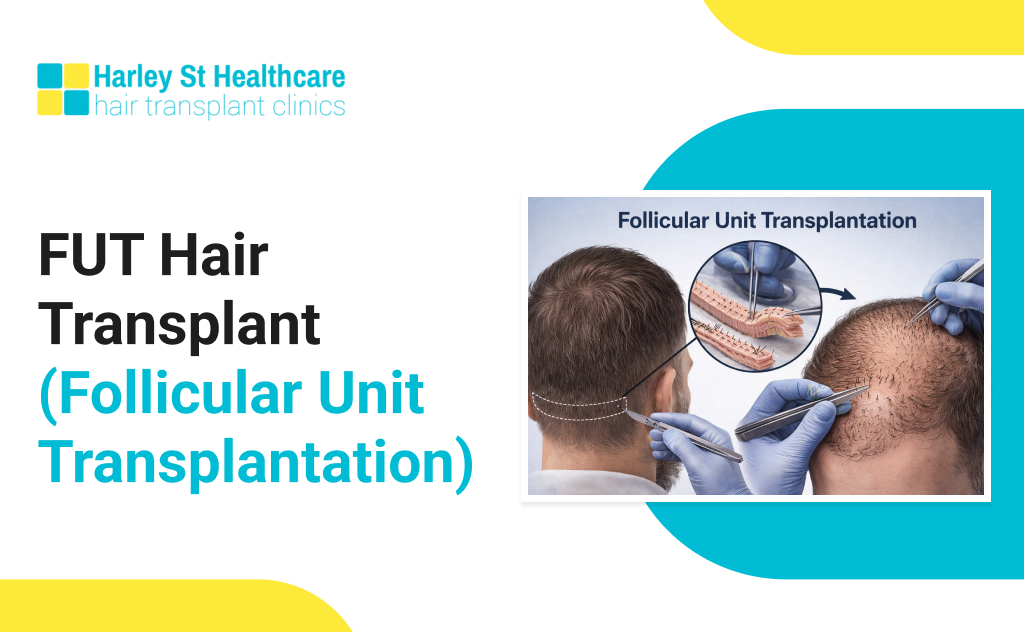
FUT hair transplant (Follicular Unit Transplantation), also referred to as strip method, is where a thin strip of skin is cut on the back of the head (the donor area). This strip is then cautiously cut into a unitary follicular unit under a microscope, and placed on hair loss areas.
As compared to FUE where a follicle is removed one at a time, FUT enables the surgeon to remove numerous grafts within a single procedure. A linear scar is created because the donor area is sealed up using sutures and this scar is normally covered up by longer hair.
What are the advantages of FUT hair transplant?
FUT has a number of benefits, especially when it comes to patients requiring a comprehensive coverage:
- Higher graft yield in one session
FUT can provide a large number of grafts efficiently, making it suitable for advanced hair loss. - Better graft survival in some cases
Follicles are extracted under direct vision, which can reduce transection and improve consistency. - Preserves donor area density
Since follicles aren’t scattered across the donor zone, FUT can be gentler on overall donor management. - Often more cost-effective in the UK
For high graft numbers, FUT may be less expensive per graft than FUE.
For patients with significant hair loss, FUT can sometimes deliver more noticeable coverage in fewer procedures.
Is FUT hair transplant painful?
Most patients report mild to moderate discomfort, not severe pain.
- During the procedure, local anaesthetic is used, so pain is minimal.
- Some discomfort is common during the anaesthetic injections.
- After surgery, patients may experience:
- Tightness at the donor area
- Mild soreness for a few days
Pain is usually manageable with standard pain relief and typically settles within 3–7 days.
Most concerns about FUT pain relate more to recovery than the procedure itself and even then, discomfort is usually temporary.
In what situations is an FUT hair transplant preferred over an FUE?
Because FUT and FUE differ in donor management, scarring, and graft yield, choosing between them depends on individual hair-loss patterns.
Patients with advanced hair loss, limited donor density, or long-term restoration plans may be advised to consider FUT in certain situations.
- Advanced hair loss (Norwood 5–7)
When a high graft count is required. - Limited donor area density
FUT can preserve donor resources more effectively for long-term planning. - Patients planning multiple transplants
FUT may be used first, with FUE reserved for future procedures. - When shaving the donor area is not ideal
FUT does not require full donor shaving. - Patients who wear their hair longer at the back
The linear scar can remain concealed.
That said, FUT may not be ideal for patients who prefer very short hairstyles or are concerned about linear scarring
Key Takeaways
- FUT is a medically sound and effective hair transplant method.
- It is especially useful for extensive hair loss and high graft requirements.
- Pain is generally manageable and short-term.
- The main trade-off is a linear scar, which must be considered carefully.
- FUT is not outdated, it’s selective, and suitability matters more than trends.
Final Thoughts
A hair transplant is a permanent one and the decision must never be in a hurry. FUT may be the correct option to certain patients and the incorrect option to others. It is much better to know your pattern of hair-loss, how much you can have donated, and what your future goals are than to pick the most hyped method.
The Hair-Transplant-Clinics.co.uk specialists are here to make sure that patients can see clearly the differences between the two-so that they can make decisions that are not motivated by marketing but depend on medical reality.
FAQ’s
FUT is not universally superior to FUT. FUE can be used more frequently to consider small procedures and small visible scarring whereas FUT may be used to consider advanced hair loss that requires a large number of grafts. The more appropriate alternative will be based on the extent of hair loss, the quality of donor area, lifestyle, and long-term.
The typical price of 3,000 grafts in India is 1,80,000 to 90,000(Rs).00 or FUE or FUT, based on the clinic, experience of the surgeon, and city. Prices can be extensive and less expensive can not necessarily indicate surgical intervention or safety norms in the long term.
Generally F UE will cost more than FUT on a per graft basis. FUE takes longer time, specialised devices, and single follicle removal, making it more expensive. FUT tends to be cheaper when using large grafts, however the price can change depending on countries and practices of different clinics.