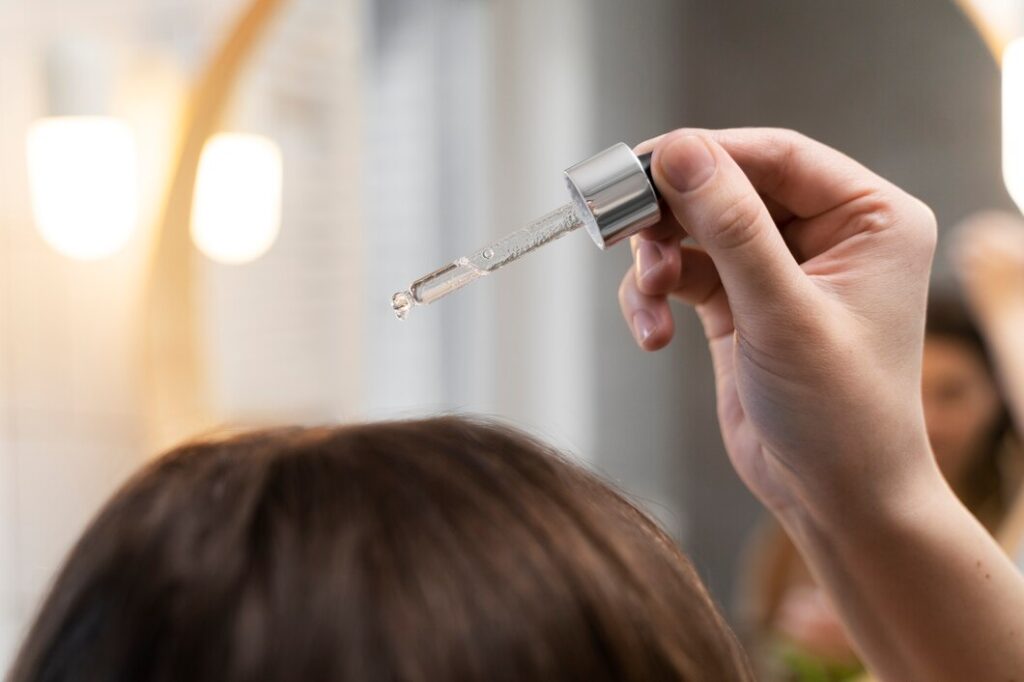
The Ordinary Glycolic Acid 7% can be used on the scalp as a gentle chemical exfoliant to remove buildup, excess oil, and flakes. It should be applied sparingly, left on briefly, and used no more than once every 2–4 weeks. It is not a treatment for medical dandruff or hair loss.
This guide explains how to use it safely, what it actually helps with, and when it should be avoided.
Why This Topic Matters
People usually search for glycolic acid scalp treatments because they:
- Struggle with scalp buildup or flaking
- Want relief from dandruff-like flakes
- Feel their scalp is blocking healthy hair growth
- Are unsure if The Ordinary Glycolic Acid is safe for scalp use
There is also confusion between cosmetic exfoliation and medical scalp treatment, which this guide clarifies.
What Is Glycolic Acid and Why Is It Used on the Scalp?
Glycolic acid is an alpha-hydroxy acid (AHA) commonly used in skincare for exfoliation.
On the scalp, it helps:
- Break down dead skin cells
- Remove excess oil and product buildup
- Improve scalp cleanliness and comfort
However, it does not treat hair loss or cure dandruff caused by fungal or medical conditions.
The Ordinary Glycolic Acid for Scalp: What You Should Know
The Ordinary Glycolic Acid is a 7% toning solution, designed primarily for facial and body skin not the scalp.
When used on the scalp:
- It acts as a chemical exfoliant
- It must be used less frequently and more cautiously
- It should never be applied to broken, irritated, or inflamed scalp skin
Benefits of Glycolic Acid on the Scalp
When used correctly, benefits may include:
- Removal of heavy product buildup
- Reduction in visible flakes caused by dead skin accumulation
- Fresher scalp feel with less oiliness
- Improved absorption of shampoos or topical products
These benefits are cosmetic and maintenance-based, not medical treatment.
Does Glycolic Acid Help With Dandruff?
Sometimes but only in specific cases.
Glycolic acid may help flake-related dandruff caused by buildup, but:
- It does NOT treat fungal dandruff (Malassezia-related)
- It does NOT replace medicated anti-dandruff shampoos
If dandruff is persistent, itchy, red, or recurring, a dermatologist should assess it.
How to Use The Ordinary Glycolic Acid on Scalp (Safe Method)
Step-by-step:
- Start with clean, dry or slightly damp scalp
- Patch test behind the ear or small scalp area (wait 24 hours)
- Apply sparingly using a cotton pad or nozzle
- Avoid rubbing or scratching
- Leave on for 10–15 minutes only
- Rinse thoroughly with lukewarm water
- Follow with a gentle, sulfate-free shampoo
- Do not leave it on overnight
- Do not combine with scrubs or medicated treatments
Frequency & Safety Guidelines
- Use once every 2–4 weeks only
- Do not increase frequency for faster results
- Overuse can lead to irritation, dryness, or barrier damage
Who Should Use or Avoid Glycolic Acid Scalp Treatments
Suitable for:
- Oily scalp with heavy product buildup
- Occasional flaking without redness or itching
- Non-sensitive, healthy scalps
Should avoid:
- Eczema, psoriasis, seborrheic dermatitis
- Broken or inflamed scalp skin
- Recent hair transplant patients
- Anyone using prescription scalp treatments
Common Mistakes People Make
- Using it weekly or more often
- Leaving it on too long
- Assuming it treats hair loss
- Using it on active dandruff or scalp conditions
Aftercare: What to Do After Treatment
- Use mild shampoo only
- Avoid heat styling for 24–48 hours
- Avoid sun exposure on scalp
- Stop use if irritation occurs
When to See a Dermatologist or Trichologist
Seek professional advice if:
- Flaking persists
- Itching or redness develops
- Hair shedding increases
- You have a known scalp condition
Final Thoughts
Glycolic acid scalp treatments can be helpful for maintenance and exfoliation, but they are often misunderstood. Products like The Ordinary Glycolic Acid 7% are not scalp medications and should never be used as a substitute for medical treatment. When used occasionally and cautiously, they can improve scalp cleanliness but overuse or misuse can worsen scalp health.
For anyone experiencing persistent dandruff, hair thinning, or post-transplant scalp concerns, professional assessment is always safer than self-treatment. Healthy hair growth begins with a healthy scalp, but not every scalp issue requires acids or exfoliation.
FAQs
Apply sparingly, leave on for 10–15 minutes, rinse thoroughly, and use no more than once every 2–4 weeks.
It may help with buildup-related flakes but does not treat fungal or medical dandruff.
It does not damage hair when used correctly, but misuse can irritate the scalp.
No, but irritation or overuse may temporarily worsen shedding due to scalp inflammation.
Only after full healing and with surgeon approval.