Hair transplant aftercare is one of the most important factors that determines graft survival, healing speed, and the final results. It is a UK-specific guide by Hair-Transplant-Clinics.co.uk which defines what to do after transplant, how to take care of your head, when to expect shedding, what to avoid in order to get long-term results with FUE or FUT.
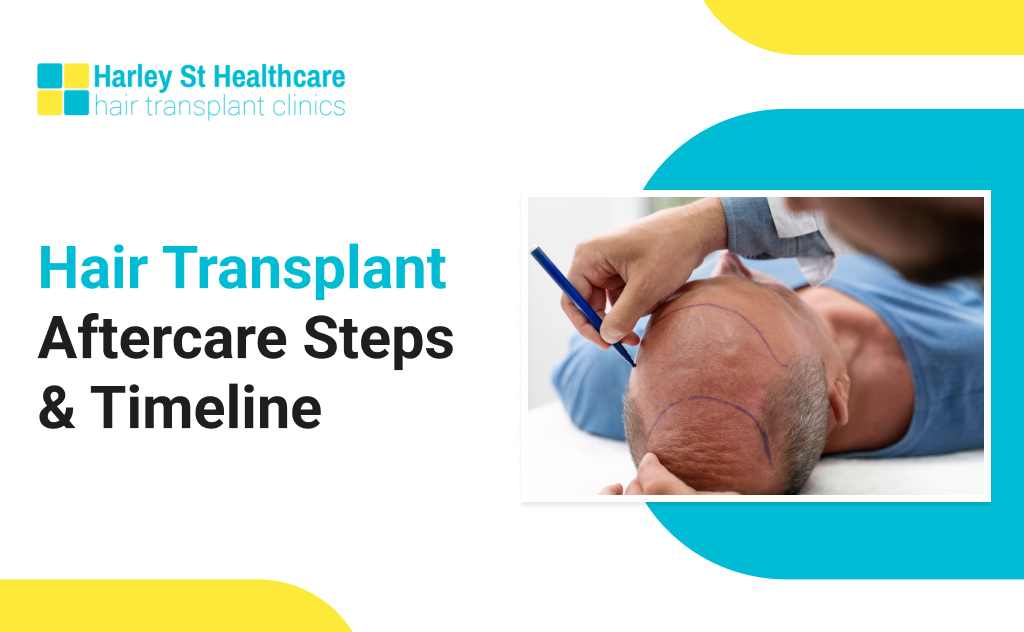
What is aftercare?
Aftercare can be defined as all activities you perform within the first 2-4 weeks of doing your hair transplant to preserve the grafts, maintain the scalp health, and have proper healing.
How it works:
During transplants of grafts, the grafts are tender within the initial 7-10 days. Scalp micro-scabs, re-connections of blood vessels and the growth cycle of new follicles are initiated.
Why it matters:
A surgical operation that has been done to perfection may fail because of poor aftercare.
Proper care ensures:
- Higher graft survival
- Faster healing
- Lessened redness and inflammation.
- Better long-term density
Who benefits most?
Any person who has had early male or female pattern thinning is aware of how sensitive the scalp is at the time. In most of the instances, the care after the transplant is more overlapping in the knowledge of the underlying cause of male female pattern baldness, which numerous patients research prior to and following surgery.
Core Clinical Principles Of Hair Transplant Aftercare
- Grafts to be covered, do not touch, rub or scratch. It takes grafts until day 710 to anchor completely and any friction may dislodge it.
- The saline sprays are offered at the clinics or the sterile mist solutions. The scabs that are hydrated fall freely.
- The first 3 nights should be spent in a 45-degree position to avoid the swelling on the forehead.
- Sweat raises the risk of bacteria and retards healing.
- Others also respond to soft exfoliation treatments of the body after the recovery period which is comparable to the concept of scalp health in glycolic acid regimes.
Evidence-Based Comparison
FUE vs FUT Aftercare Differences
Factor | FUE Aftercare | FUT Aftercare |
Donor Healing | Tiny micro-punch wounds | Linear incision |
Pain Levels | Usually mild | Slightly higher |
Sleeping Position | Elevated 2–3 nights | Elevated 5–7 nights |
Scalp Tightness | Minimal | Common due to sutures |
Physical Activity | Avoid 10–14 days | Avoid 14–21 days |
Risk Areas | Recipient zone | Donor suture line |
Transplant vs Non-Surgical Post-Care
- Transplant requires early treatment.
- Such medical interventions as Minoxidil/Finasteride require commitment.
- Mesotherapy/PRP are scalp nourishing agents that are not substitutes for aftercare.
Why Hair Transplant Aftercare Matters
If-this-then-that Logic
- When lying flat in bed the swelling spreads down the forehead.
- When grafts are touched at an early stage, scabs soften before attachment occurs to the grafts resulting in graft loss.
- In case of excessive sweating, the bacteria multiply the risk of infection.
- Transplanted follicles can be loosened in case you wash too hard.
Step by Step Reader Decision Logic.
- In case scalp itchy, apply saline spray, do not scratch.
- When a scab will not fall down, then leave it, do not pick it.
- Should the redness increase beyond day 7 → contact clinic.
- In case shedding of hair starts, now it is normal loss of the body in shock.
How Much Does a Hair Transplant Cost in the UK?
The price of a hair transplant in the UK varies according to the number of grafts, the method, experience of the surgeon and the location of the clinic.The cost of FUE and FUT ranges between 3,000 and 7,000 and 4,000 and 8,000 respectively, the high cost of London and Manchester because of the surgical demand and availability of specialists.
What Is the Healing Time of Hair Transplant?
The process of healing starts right after the surgery.
- In the first three days, the patient experiences low-grade redness and swelling during the process of applying hydration sprays on grafts.
- The scabs appear between 4-7 days, and the grafts can safely stabilise.
- The scabs naturally shed off by day 10-14 and the donor area can be seen to settle out.
- This is followed by scalp shifting to week 3-6, which involves temporary shock loss- one of the normal processes.
When Will New Hair Growth Start After Hair Transplant?
The follicles re-enter the active phase and new growth usually begins at about month 3-4. The patients usually observe complete fullness and visible improvement between the months of 6 -9, and the ultimate density and thickness can be observed between 12-15 months, according to the hair type and biology of the person.
What are the after effects of a Hair transplant?
- Even though the clinics in the UK are regulated by CQC and are very careful in the medical standards, there are still some risks in the after-operations.
- These are mild folliculitis, temporary risk of infection, over-scrubbing sensitivity and sun sensitivity.
- Natalia graft failure tends to take place most of the time when the aftercare guidelines are not properly adhered to.
Conclusion
Caring for your scalp properly after a transplant is just as important as the procedure itself. With the right aftercare routine, grafts heal stronger, growth begins earlier, and final results look thicker and more natural.
If you want personalised guidance for your hair type, healing speed, and long-term goals, the specialists at Hair-Transplant-Clinics.co.uk can help you with honest, expert support every step of the way.
FAQ’s
Grafts usually become secure between day 7–10. Until then, avoid touching, rubbing, or scratching the scalp.
Most UK clinics recommend first gentle wash on day 3, using a soft pouring method or a clinic-provided wash routine.
Yes. Shock loss occurs between week 2 and week 6 and is a normal part of the growth cycle. New growth begins after this phase.
Avoid heavy exercise, sweating, and intense workouts for 10–14 days, as sweat and pressure can irritate healing grafts.