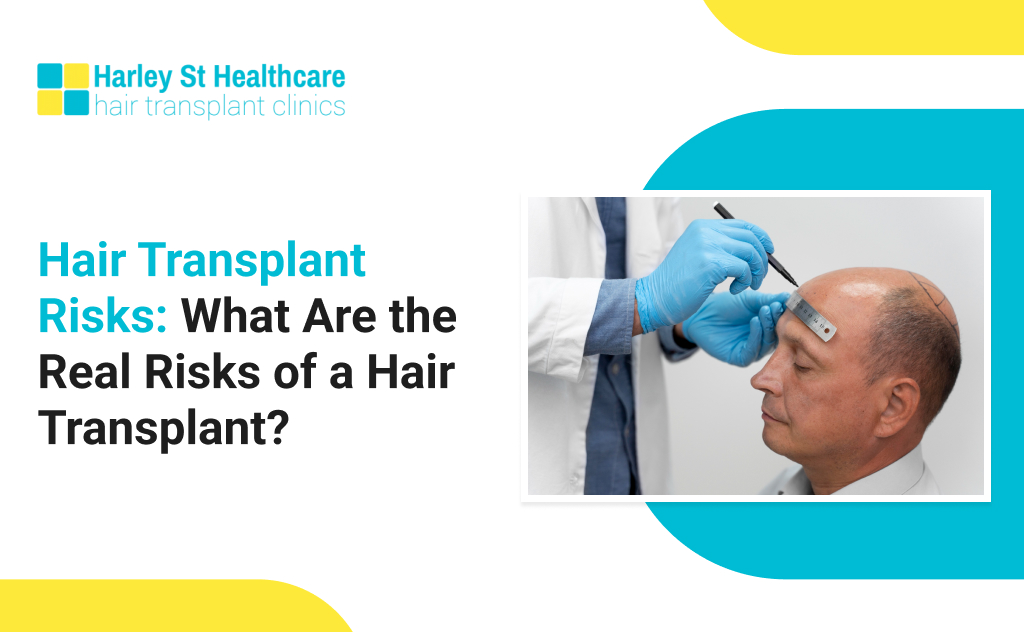
Hair Transplant Risks: A Clear, Honest Overview
Hair transplant risks are one of the most searched and least clearly explained aspects of hair restoration surgery.
While modern techniques like FUE and FUT are generally safe when performed correctly, a hair transplant is still a surgical procedure, and no surgery is completely risk-free.
Table of Content
ToggleMost patients don’t just want to know if there are risks they want to understand:
- What could realistically go wrong
- How common these risks are
- Whether the procedure is truly right for them
This guide explains the real risks of hair transplant surgery, without exaggeration or reassurance that feels unrealistic. The goal is clarity, not fear.
What Are the Risks of a Hair Transplant?
The risks of a hair transplant can be grouped into three categories:
- Short-term surgical risks
- Medium-term growth and cosmetic risks
- Long-term limitations and regret risks
Understanding these differences helps patients make informed decisions rather than emotional ones.
Short-Term Hair Transplant Risks
1. Risk of Infection After Hair Transplant
The risk of infection after a hair transplant is low, but it is not zero.
Why infection can occur:
- The scalp has thousands of tiny incisions
- Poor hygiene during or after surgery
- Ignoring aftercare instructions
- Underlying medical conditions (e.g. diabetes, smoking)
Signs of infection may include:
- Increasing redness or swelling
- Pain that worsens after day 3–4
- Pus or unusual discharge
- Fever or general unwellness
When performed in a regulated clinic with sterile conditions, infection rates are well below 1–2%. However, clinics that cut corners or rush procedures increase this risk significantly.
This is why clinic standards matter more than marketing claims.
2. Bleeding and Excessive Swelling
Mild bleeding during the first 24 hours is normal.
However, excessive bleeding or swelling may occur if:
- Blood pressure is uncontrolled
- Blood-thinning medications are not disclosed
- Aftercare instructions are ignored
Swelling around the forehead and eyes is common for a few days and usually settles naturally.
3. Pain and Discomfort
One of the most common fears is pain.
Reality:
- The procedure itself is usually painless due to local anaesthesia
- Post-procedure discomfort is typically mild to moderate
- Pain is usually manageable with basic medication
Severe or worsening pain is not normal and should be reviewed by a medical professional.
Medium-Term Hair Transplant Risks
4. Poor Hair Growth or Patchy Results
Not all transplanted grafts survive.
Possible reasons include:
- Poor surgical technique
- Excessive graft handling
- Poor blood supply to the scalp
- Smoking during recovery
Most clinics expect 85–95% graft survival, but no ethical clinic can guarantee 100% growth.
This is one of the most misunderstood hair transplant risks a transplant can be successful but still look thinner than expected.
5. Unnatural Hairline or Density
An unnatural appearance is not a medical risk, but it is one of the biggest regret risks.
Causes include:
- Poor hairline design
- Incorrect angle or direction of grafts
- Over-harvesting donor hair
Once grafts are placed, they cannot be “undone.” Corrections are possible, but they are complex and costly.
6. Scarring Risks (FUE vs FUT)
All hair transplants involve some degree of scarring.
- FUE: Tiny dot scars, usually not visible unless hair is shaved very short
- FUT: A linear scar, which may be visible with short hairstyles
Poor healing or aggressive extraction increases visible scarring, especially in patients prone to keloids.
Long-Term Hair Transplant Risks
7. Shock Loss (Temporary Hair Shedding)
Shock loss occurs when existing hair sheds after surgery due to trauma.
Key points:
- Usually temporary
- More common in patients with weak native hair
- Hair often regrows within 3–6 months
However, in advanced hair loss cases, shock loss may reveal permanent thinning, which surprises many patients.
8. Progressive Hair Loss After Transplant
A hair transplant does not stop natural hair loss.
This means:
- Transplanted hair may remain permanent
- Surrounding native hair may continue to thin
- Additional procedures or medical therapy may be needed
Patients who do not plan long-term often feel disappointed years later not because the transplant failed, but because expectations were incomplete.
9. Psychological and Expectation Risk
One of the least discussed risks of hair transplant surgery is expectation mismatch.
Common issues:
- Expecting teenage-level density
- Expecting instant results
- Believing surgery alone will “fix” hair loss confidence
Hair restoration improves appearance it does not change identity or guarantee emotional satisfaction.
Who Is at Higher Risk of Hair Transplant Complications?
You may face higher risks if:
- You have unrealistic expectations
- Donor hair is weak or limited
- You smoke heavily
- You have uncontrolled medical conditions
- You choose a clinic based on price alone
A responsible surgeon will sometimes advise against surgery this is often a sign of trustworthiness, not rejection.
How to Reduce Hair Transplant Risks
Patients can reduce risks by:
- Choosing a regulated, medically led clinic
- Asking who performs the extraction and implantation
- Following aftercare instructions strictly
- Avoiding smoking and alcohol during recovery
- Planning long-term hair loss management
The safest hair transplant is not the cheapest or fastest it is the most carefully planned.
Key Takeaway: Are Hair Transplant Risks Worth It?
For many patients, hair transplant surgery is safe and effective.
But it should never be treated as risk-free or guaranteed.
Understanding the real risks of hair transplant surgery allows you to:
- Ask better questions
- Choose clinics more carefully
- Decide whether surgery is the right step or not
An informed decision is always safer than an impulsive one.
Frequently Asked Questions (FAQs)
Hair transplant surgery is generally safe when performed by qualified professionals. However, like all surgeries, it carries risks such as infection, scarring, and poor growth if standards are not maintained.
The risk of infection is low (typically under 2%) in regulated clinics. The risk increases with poor hygiene, ignored aftercare, or unlicensed providers.
Yes. Poor graft survival, unnatural design, or ongoing hair loss can lead to unsatisfactory results. Failure is often due to poor planning rather than the procedure itself.
Transplanted hair is usually permanent, but surrounding natural hair may continue to thin. Long-term planning is essential.
Patients with insufficient donor hair, unrealistic expectations, uncontrolled medical conditions, or early-stage hair loss without stabilisation may not be suitable candidates.