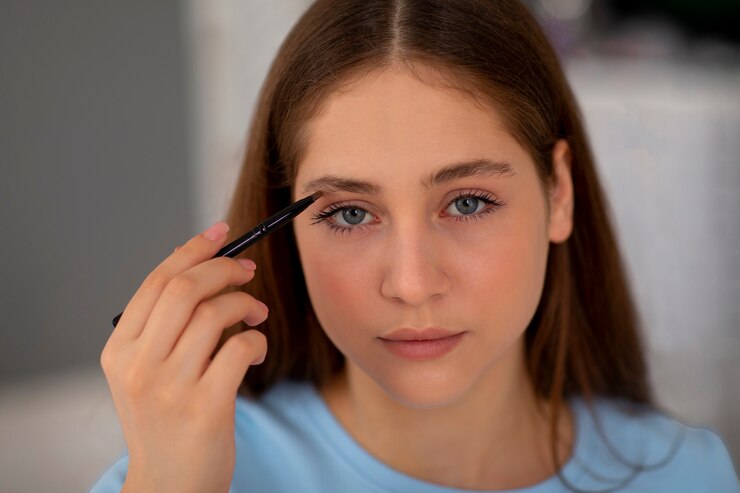
If you’re wondering how long it takes for eyebrows to grow back — whether after plucking, waxing, or a transplant — this guide gives a clear timeline, explains factors influencing regrowth, and outlines realistic expectations to help you plan accordingly.
At Hair-Transplant-Clinics.co.uk, we rely on the latest clinical insights and hair-growth science to guide you truthfully.
Eyebrow Hair Growth Cycle — What You Should Know
Eyebrow hairs follow a three-phase cycle: growth (anagen) → transition (catagen) → rest/shedding (telogen).
The anagen phase for brows is short — usually 30–45 days — which is why eyebrows do not grow long like scalp hair and why regrowth may feel slow.
Because of this short cycle, brows require weeks to rebuild visible density after shedding or removal.
Typical Regrowth Timeline (Natural Brows After Plucking / Waxing / Normal Loss)
If follicles are intact:
- Visible regrowth: 4–6 weeks
- Fuller shape & density: 2–3 months
- Slow cases: up to 4 months
This timeline applies to overplucking, waxing, shaving, or natural shedding — as long as follicles remain healthy and unscarred.
Eyebrow Transplant: Growth Timeline & What to Expect
If eyebrow hair has been restored via transplant:
- 2–3 weeks: Transplanted hairs shed (normal).
- 3–4 months: New growth begins as follicles activate.
- 6–8 months: Noticeable improvement in brow fullness.
- 9–12 months: Final density and natural shape appear.
Because transplanted follicles are taken from the scalp, hair may grow longer than typical brow hair — meaning regular trimming and shaping will be needed.
Factors That Influence How Quickly Brows Grow Back
Several factors affect eyebrow regrowth speed:
- Follicle health — intact vs damaged
- Genetics & age
- Hormonal balance
- Nutritional health
- Skin conditions (eczema, dermatitis, scarring)
- Post-procedure care (especially after transplant)
- Trauma or repeated overplucking
Tips to Support Healthy Eyebrow Regrowth
- Avoid plucking, shaving, or waxing for at least 8–12 weeks
- Maintain a balanced diet rich in proteins, iron, zinc & biotin
- Use brow serums or nourishing oils
- Avoid harsh skincare around the brow area
- After transplant: follow all aftercare instructions strictly
- Be patient — eyebrow hair grows slower than scalp hair
When Slow Regrowth Might Indicate a Problem
If after 4–6 months you see little to no regrowth, potential causes include:
- Follicle damage or scarring
- Long-term overplucking
- Thyroid or hormonal issues
- Skin diseases
- Improper post-transplant aftercare
- Poor blood supply to follicles
In such cases, consulting a trichologist or GMC-registered hair restoration surgeon is recommended.
Summary
- Natural eyebrow regrowth takes 2–4 months in most healthy individuals.
- After an eyebrow transplant, expect:
- 3–4 months for initial growth
- 9–12 months for final results
- 3–4 months for initial growth
- Growth is slow due to the short brow anagen phase.
Healthy follicles + good aftercare = best outcomes.
FAQs
Most people notice new growth in 4–6 weeks, with fuller density returning in 2–3 months.
Transplanted hairs shed in 2–3 weeks, new growth starts around 3–4 months, noticeable fullness appears by 6–8 months, and final results take 9–12 months.
Slow regrowth may be due to follicle damage, overplucking, age, hormonal imbalance, nutrient deficiency, or skin conditions.
Yes. Shaving does not affect the follicles, so regrowth usually begins within 4–6 weeks.
If little to no regrowth is seen after 4–6 months, issues like scarring, hormonal imbalance, skin diseases, or poor follicle health may be involved and require professional evaluation.