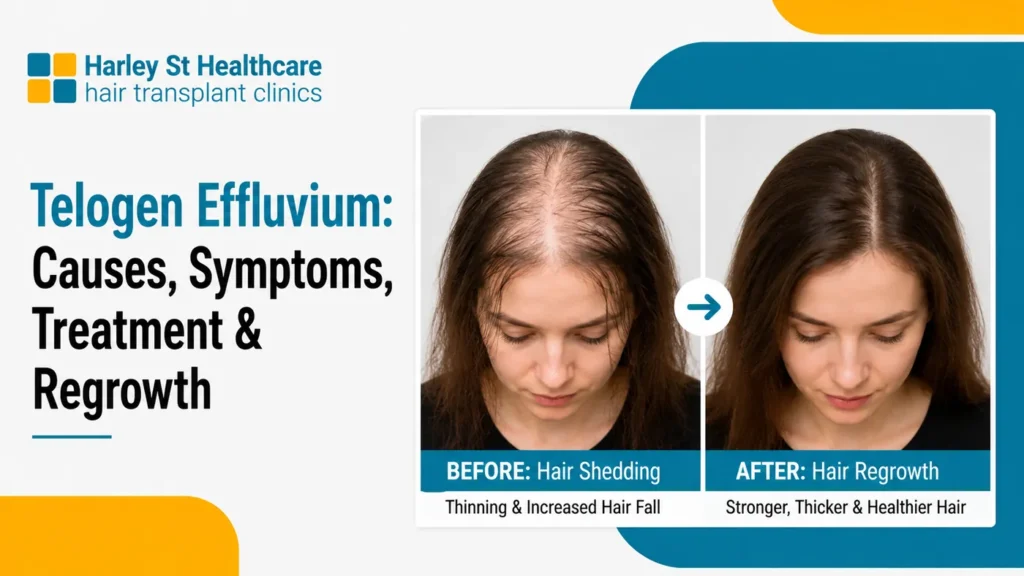
Hair shedding can be concerning, especially when you suddenly notice more hair on your pillow, in the shower or on your hairbrush. One possible explanation is telogen effluvium, a common form of temporary hair shedding that can occur after illness, stress, surgery, significant weight loss, childbirth or other major changes to the body.
The good news is that telogen effluvium is usually temporary. Once the underlying trigger has settled, the normal hair-growth cycle can gradually return. However, recovery takes time, and persistent shedding may need further assessment to rule out other types of hair loss.
In this guide, we explain what telogen effluvium is, its causes and symptoms, how it is diagnosed, treatment options, recovery signs and how long telogen effluvium can last.
Table of Content
ToggleWhat Is Telogen Effluvium?
Telogen effluvium is a type of temporary hair loss where more hairs than usual enter the shedding phase of the hair-growth cycle. Your hair naturally moves through different stages of growth, rest and shedding. Normally, around 15% of scalp hair is in the shedding phase at any one time. With telogen effluvium, this proportion increases, resulting in noticeably heavier hair shedding. The condition commonly develops around three months after a triggering event, although the exact timing can vary. This delay can make it difficult to connect the hair loss with the original cause. Telogen effluvium generally causes diffuse thinning across the scalp rather than clearly defined bald patches. The follicles remain intact, allowing new hair to grow once the normal hair cycle resumes.
What Causes Telogen Effluvium?
There are several possible telogen effluvium causes. A trigger may place physical or psychological stress on the body and temporarily disrupt the normal hair-growth cycle.
Common triggers include:
Significant physical or emotional stress
Severe illness or infection, particularly with a high fever
Major surgery
Childbirth
Significant or rapid weight loss
Extreme or restrictive dieting
Nutritional problems
Certain medications
Starting a new medication
Stopping some hormone treatments
Hormonal changes
Certain scalp conditions
The British Association of Dermatologists notes that a specific cause cannot be identified in around one-third of people with telogen effluvium.
Can Stress Cause Telogen Effluvium?
Yes. Significant psychological or physical stress can trigger telogen effluvium by disrupting the normal hair cycle.
However, the shedding often appears several weeks or months after the stressful event, rather than immediately. This means the original trigger may have occurred before you noticed any change in your hair.
What Are the Symptoms of Telogen Effluvium?
The main telogen effluvium symptoms involve increased hair shedding.
You may notice:
- More hair than usual in your hairbrush
- Increased shedding when washing your hair
- Hair collecting in the shower or sink
- More hair on your pillow or clothing
- Overall reduction in hair volume
- Diffuse thinning across the scalp
- Greater visibility of the scalp in more pronounced cases
Unlike some other forms of hair loss, telogen effluvium generally does not produce distinct bald patches. The scalp will usually appear healthy, although some people can experience scalp tenderness or altered sensations.
How Long Does Telogen Effluvium Last?
One of the most common questions people ask is how long does telogen effluvium last?
The active shedding phase generally lasts around three to six months. Once shedding settles, new hair begins to grow, but it can take several additional months for your hair to regain its previous volume and thickness.
This means that noticing less shedding does not necessarily mean your hair will immediately look as thick as it did before.
What Is Chronic Telogen Effluvium?
Chronic telogen effluvium is generally used when excessive shedding continues for more than six months.
Persistent shedding does not automatically mean permanent hair loss. However, if shedding continues, it is important to consider whether another condition, such as pattern hair loss, may be present alongside telogen effluvium.
How Is Telogen Effluvium Diagnosed?
If you’re wondering how is telogen effluvium diagnosed, there is no single test that confirms the condition.
A healthcare professional will usually assess your scalp and ask about your medical history, including:
- When your hair shedding started
- Recent illness or infection
- Stressful events
- Surgery
- Changes in weight or diet
- Pregnancy or childbirth
- Hormonal changes
- Current and recently stopped medications
- Family history of hair loss
A hair-pull test may be used to assess whether you are experiencing increased active shedding.
Blood tests may also be recommended when appropriate to investigate other potential causes of hair loss, such as iron deficiency or thyroid problems. In less straightforward cases, further examination or specialist testing may be considered.
How Is Telogen Effluvium Treated?
For many people, specific telogen effluvium treatment is not necessary because the condition naturally improves once the underlying trigger has settled.
The British Association of Dermatologists states that medication does not normally speed up the natural regrowth process. Instead, treatment focuses on identifying and addressing the factors that may have triggered the shedding.
Addressing Nutritional Problems
A balanced diet containing sufficient protein, iron-rich foods, fruit and vegetables can support general hair health.
If a nutritional deficiency is suspected or confirmed, your GP or another qualified healthcare professional can advise whether dietary changes or supplements are appropriate.
Avoid taking high-dose supplements without professional advice. Excessive intake of certain nutrients can itself be harmful.
Managing Stress
If significant stress contributed to your shedding, addressing the underlying stress may support your overall wellbeing while your hair cycle recovers.
This could include improving sleep, maintaining regular activity and seeking appropriate support when stress is difficult to manage.
Reviewing Medication
Some medicines can contribute to hair shedding. If you believe a medication may be involved, speak to your GP or pharmacist rather than stopping prescribed treatment yourself.
Gentle Hair Care
While gentle hair care will not cure telogen effluvium, it can help reduce unnecessary damage while your hair is shedding.
Try to:
- Avoid tight hairstyles
- Reduce excessive heat styling
- Limit harsh chemical treatments
- Brush and comb gently
- Avoid unnecessary pulling or tension
These measures are also consistent with self-care advice from the British Association of Dermatologists.
Telogen Effluvium Recovery Signs
Understanding the telogen effluvium recovery signs can help you recognise gradual improvement.
Possible signs include:
- Less hair falling out during washing
- Fewer hairs on your brush
- Reduced hair on your pillow or clothing
- Short new hairs becoming visible
- Gradual improvement in hair volume
- Less visible scalp over time
Recovery is gradual, and daily shedding can fluctuate. A longer-term reduction in shedding is generally more meaningful than changes from one day to the next.
It is also important to remember that new hair growth takes time to become noticeable.
Can Hair Grow Back After Telogen Effluvium?
Yes, hair can usually grow back after telogen effluvium.
The condition does not normally destroy the hair follicles. Once the triggering factor has been addressed and the hair cycle returns to its usual pattern, new hair can begin to grow.
The British Association of Dermatologists explains that new hair starts to grow after the shedding phase, although it can take many months for the hair to return to its previous volume and thickness.
If shedding continues or regrowth does not appear to be progressing, professional assessment can help determine whether another type of hair loss may be contributing.
Telogen Effluvium vs Pattern Hair Loss
Telogen effluvium and pattern hair loss can sometimes appear similar, but there are important differences.
Telogen Effluvium | Pattern Hair Loss |
Often develops relatively suddenly | Usually develops gradually |
Increased shedding is common | Progressive thinning is more typical |
Often follows a trigger | Often has a genetic component |
Usually causes diffuse thinning | Often follows a recognisable pattern |
Usually temporary | Can be progressive |
The two conditions can also occur together. In some cases, an episode of telogen effluvium may make previously subtle pattern hair loss more noticeable.
How to Treat Telogen Effluvium at Home
There is no guaranteed home treatment that can immediately stop telogen effluvium.
However, you can support your general hair health by:
- Eating a balanced diet
- Getting adequate protein
- Including iron-rich foods in your diet
- Avoiding extreme diets
- Managing ongoing stress
- Limiting excessive heat styling
- Avoiding tight hairstyles
- Handling your hair gently
If you suspect a nutritional deficiency or another medical cause, it is better to seek professional advice than to rely on supplements without assessment.
When Should You Seek Professional Advice?
You should consider speaking to a GP or qualified hair-loss professional if:
- Hair shedding is sudden or severe
- Hair loss continues for more than six months
- You develop clearly defined bald patches
- Your scalp becomes painful, inflamed, very itchy or scaly
- You have other unexplained symptoms
- You are concerned about a nutritional or medical cause
- You are unsure whether your hair loss is telogen effluvium or another condition
Persistent or unexplained hair loss deserves appropriate assessment because several different conditions can cause similar symptoms. The NHS also recommends speaking to a GP if you are worried about hair loss.
Thinking About Your Hair Loss?
If you’re concerned about ongoing shedding, thinning or changes in hair density, understanding the underlying cause can help you decide what to do next.
At Harley Street Hair Transplants, an individual assessment can look at your hair-loss pattern, existing density and donor area to help determine whether your symptoms may be consistent with telogen effluvium or another form of hair loss.
Understanding the cause of your hair loss is the first step towards choosing the right approach. Book a Hair Loss Consultation with Harley Street Hair Transplants to discuss your concerns and explore your options.
Conclusion
Telogen effluvium is a common cause of temporary hair shedding that can develop after stress, illness, surgery, hormonal changes, weight loss or nutritional problems. In most cases, shedding gradually settles once the underlying trigger has been addressed and the normal hair-growth cycle resumes.
If hair shedding continues for longer than expected, becomes severe or does not appear to be improving, professional assessment can help identify whether telogen effluvium or another form of hair loss is involved.
Frequently Asked Questions
The shedding phase usually lasts around 3–6 months, while fuller recovery can take several additional months.
Treatment focuses on identifying and addressing the underlying trigger. Telogen effluvium often improves naturally without specific medication.
Reduced shedding and the appearance of short new hairs can be signs that your hair is beginning to recover.
Telogen effluvium involves a disruption to the normal hair cycle, followed by increased shedding and gradual regrowth as the cycle returns to normal.
There is no single blood test for telogen effluvium. Tests may be used to investigate possible causes, including iron deficiency and thyroid problems.
Common triggers include illness, significant stress, surgery, childbirth, marked weight loss, extreme dieting and some medication or hormone changes.