Blog Summary
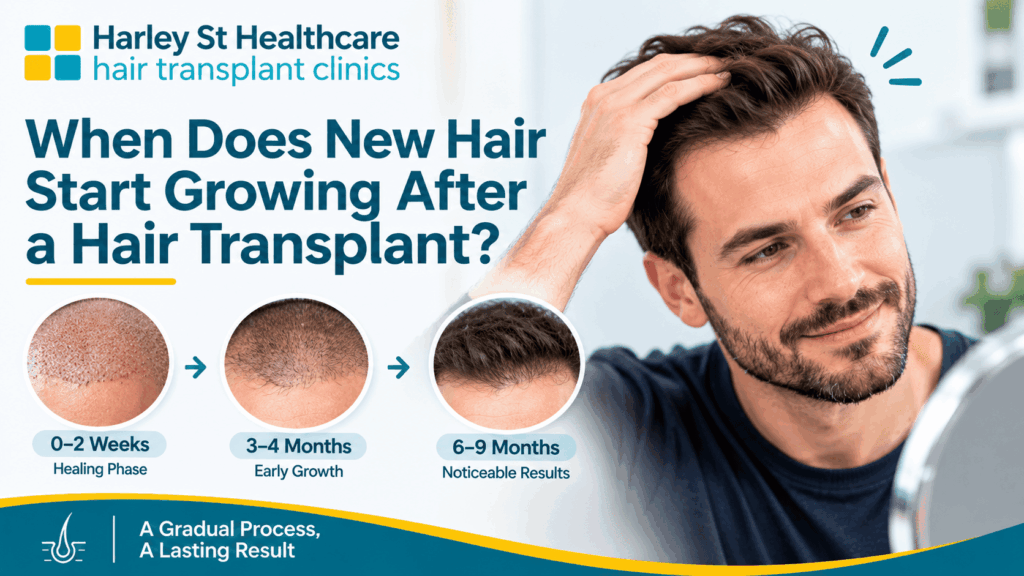
New hair growth after a hair transplant usually begins around 3–4 months after surgery, although the timeline varies between individuals. Transplanted hairs often shed during the first few weeks before new growth starts. Hair transplant results develop gradually, with noticeable improvement commonly occurring between 6 and 9 months and final results often taking 12 months or longer. Understanding the hair transplant stages and recovery timeline can help patients set realistic expectations.
Table of Content
ToggleWhen Does New Hair Start Growing After a Hair Transplant?
New hair growth generally starts around 3–4 months after a hair transplant. However, not all transplanted follicles begin growing at the same time. Some patients may notice early growth slightly sooner, while others may need additional months.
After the procedure, transplanted hair follicles enter a temporary resting phase. The hair shafts may shed, but the follicles can remain within the scalp and later produce new hair.
This process is a normal part of the hair transplant growth timeline. It is important to understand that the appearance immediately after surgery does not represent the final outcome.
Most patients need patience throughout recovery because hair growth occurs gradually rather than all at once.
Hair Transplant Growth Timeline: What Happens at Each Stage?
Hair transplant recovery and new hair growth follow several stages. The exact timing depends on the individual, the procedure, the healing response, and the characteristics of the transplanted follicles.
Stage 1: First 1–2 Weeks – Initial Healing
During the first two weeks, the scalp begins healing around the transplanted follicles. Small scabs, redness, and mild swelling may occur in the recipient area.
At this stage:
Transplanted hairs are generally still visible.
Small crusts may form around grafts.
The scalp may feel tender or tight.
Hair growth is not yet the main focus; graft protection and healing are.
Patients should follow their surgeon’s aftercare instructions carefully. Avoid rubbing, scratching, or disturbing the transplanted area.
Stage 2: Weeks 2–8 – Temporary Hair Shedding
During the first few weeks, many transplanted hair shafts shed. This is commonly called shock loss or post-transplant shedding.
Although the visible hairs may fall out, the follicles can remain in the scalp. They may later begin producing new hair.
Some patients may also experience temporary shedding of existing hair near the transplanted area. This can be concerning, but it does not always indicate permanent hair loss.
If shedding is accompanied by worsening pain, redness, or signs of infection, contact your clinic for medical advice.
Stage 3: Months 3–4 – Early New Hair Growth
Around months 3–4, the first signs of new hair growth may become visible.
The new hairs may initially be:
Thin or fine
Light in colour
Uneven in density
Short and delicate
The hairline may look patchy during this period because follicles grow at different rates. This is a normal part of the hair growth timeline.
Patients should avoid judging their final hair transplant results at this early stage.
Stage 4: Months 5–6 – Visible Hair Growth
By months 5–6, more transplanted hairs may become visible. Hair density often begins to improve, and the treated area may look fuller than it did during the shedding phase.
However, the hair may still appear uneven or lack the thickness expected from the final result.
At this stage, continued growth and maturation are important. Some patients experience more noticeable progress than others.
Stage 5: Months 7–9 – Increasing Density and Maturation
During months 7–9, hair transplant results often become more noticeable.
The transplanted hairs may:
Become thicker
Increase in length
Blend better with existing hair
Improve overall coverage
The hairline may appear more defined, although further growth can still occur.
Stage 6: Months 10–12 and Beyond – Final Results
Many patients assess their final hair transplant results around 12 months after surgery. Some procedures, particularly those involving the crown, may take 12–18 months or longer to show their full outcome.
By this stage, transplanted hair may have matured in thickness, texture, and appearance.
The final density depends on several factors, including donor hair quality, graft survival, the size of the treated area, and individual hair growth characteristics.
Hair Transplant Stages at a Glance
| Recovery Stage | Expected Hair Changes |
|---|---|
| Weeks 1–2 | Scalp healing, scabbing, and early recovery |
| Weeks 2–8 | Temporary shedding of transplanted hairs |
| Months 3–4 | Early new hair growth may begin |
| Months 5–6 | Visible growth and initial density improvement |
| Months 7–9 | Increasing thickness and coverage |
| Months 10–12 | Hair maturation and more complete results |
| Months 12–18 | Further growth may occur, particularly in the crown |
This hair transplant growth timeline is a general guide. Individual results and recovery experiences can differ.
What Factors Affect New Hair Growth After a Hair Transplant?
Several factors can influence how quickly transplanted hair begins to grow and how the final results develop.
1. Individual Hair Growth Cycle
Hair follicles naturally move through growth, transition, and resting phases. Transplanted follicles also follow a growth cycle, which means they may not all produce new hair at the same time.
2. Donor Hair Quality
The thickness, texture, and characteristics of donor hair can influence the appearance of the transplanted area. Strong, suitable donor follicles may contribute to better coverage, but results are not guaranteed.
3. Surgical Technique and Graft Handling
The way follicles are extracted, handled, and implanted can influence graft survival. Proper technique and careful placement are important for achieving natural-looking hair transplant results.
4. Scalp Healing and Aftercare
Following post-operative instructions can help protect the transplanted area during recovery. Avoiding unnecessary friction, keeping the scalp clean as advised, and attending follow-up appointments are important.
5. Existing Hair Loss
Hair transplant surgery does not necessarily stop the progression of natural hair loss in untreated areas. A specialist may recommend appropriate treatment to help manage ongoing hair loss.
How Can You Support Hair Growth During Hair Transplant Recovery?
Although you cannot force transplanted follicles to grow faster, you can support recovery by following your clinic’s instructions.
Follow the recommended scalp washing routine.
Avoid scratching or rubbing the transplanted area.
Resume exercise only when your surgeon permits it.
Avoid smoking if advised by your healthcare professional.
Attend scheduled follow-up appointments.
Use medications only as prescribed or recommended by your clinician.
Maintain a balanced diet with adequate protein and essential nutrients.
Avoid applying oils, supplements, or topical products directly to the scalp without checking with your surgeon.
When Should You Be Concerned About Delayed Hair Growth?
Not seeing new hair growth by the third or fourth month does not automatically mean the transplant has failed. Some patients experience slower growth, and the timeline can vary.
However, if there is little or no visible progress by around 6–9 months, it may be useful to discuss your concerns with your hair restoration clinic.
A specialist can assess the scalp, review your recovery, and determine whether the growth pattern is within the expected range.
Seek medical advice promptly if you experience persistent or worsening pain, significant redness, swelling, discharge, or fever during recovery.
Conclusion
New hair growth after a hair transplant usually begins around 3–4 months after surgery, following a temporary shedding phase. The hair transplant stages progress gradually, with visible improvement often developing between 5 and 9 months. Final hair transplant results commonly take around 12 months, although some patients may require 12–18 months for further maturation.
Understanding the hair transplant recovery process and hair growth timeline can help patients maintain realistic expectations. Following appropriate aftercare and attending follow-up appointments are important steps in supporting recovery and assessing the final outcome.
Frequently Asked Questions
New hair growth commonly begins around 3–4 months after surgery. Visible improvement often occurs between 5 and 9 months, while final results may take around 12 months or longer.
Yes. Temporary shedding of transplanted hair shafts is common during the first few weeks. The follicles may remain in the scalp and begin producing new hair later.
Hair growth varies between individuals. Some patients experience early growth around month 3, while others may notice slower progress. Four months is still an early stage, and the final results should not be judged yet.
Many patients notice improved coverage between 6 and 9 months. Full maturation may take around 12 months or longer, depending on the treated area and individual growth cycle.
Crown hair transplants may take longer to show their full results, sometimes around 12–18 months. The growth pattern and hair characteristics in the crown can make progress appear slower.