Summary
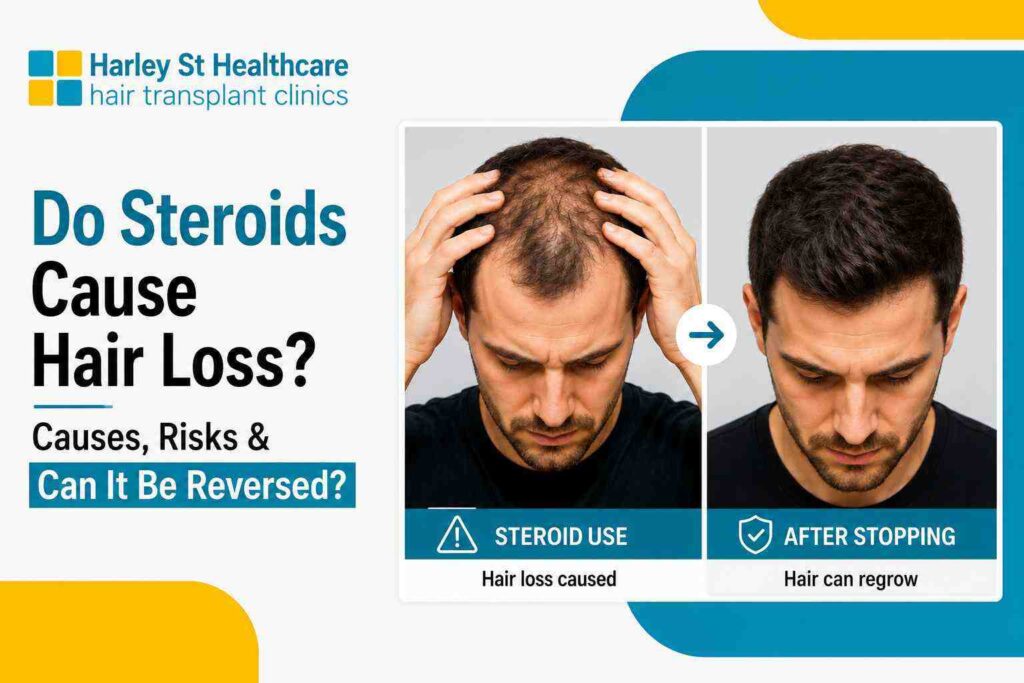
Many people use anabolic steroids to increase muscle size or improve athletic performance, while corticosteroids are prescribed to treat a range of medical conditions. This can raise an important question: do steroids cause hair loss?
The answer depends on the type of steroid, your genetics, your individual response, and other factors affecting your hair.
Anabolic steroids can increase androgen activity in the body and may accelerate pattern hair loss in people who are genetically susceptible. Other types of steroids can affect the hair cycle differently, and hair shedding may have several possible causes.
In this guide, we’ll explain how steroids may affect hair, which factors can increase the risk, whether steroid-related hair loss can be reversed, and what treatment options may be considered.
Table of Content
ToggleImportant: If you are taking prescribed steroids, do not stop or change your medication without speaking to your doctor or prescribing clinician.
Do Steroids Cause Hair Loss?
Yes, anabolic steroids can contribute to or accelerate hair loss in some people, particularly those who are genetically predisposed to pattern hair loss.
Anabolic steroids have androgenic effects, meaning they can influence pathways involving male sex hormones. In people who are genetically sensitive to these hormones, this may accelerate the miniaturisation of susceptible hair follicles.
Medical corticosteroids are different medicines and work differently. Hair shedding can occur for a number of reasons while someone is taking medication, but it is important not to assume that any hair loss is directly caused by the steroid itself.
Hair loss can be influenced by several factors, including:
- Genetics
- Type of steroid or medication
- Individual sensitivity to androgens
- Duration of exposure
- Existing pattern hair loss
- General health and nutritional status
- Stress and other medical factors
Why Do Steroids Cause Hair Loss?
The relationship between steroids and hair loss is particularly relevant to anabolic steroids because of their effects on androgen activity.
Testosterone and related androgens can affect hair follicles differently depending on their location on the scalp. In people with androgen-sensitive follicles, increased androgen activity can contribute to follicle miniaturisation.
Over time, affected hairs may become:
- Finer
- Shorter
- Less visible
- Lower in density
This process is associated with androgenetic alopecia, also known as male or female pattern hair loss.
However, steroid-related shedding should not automatically be assumed to be genetic hair loss. A healthcare professional can help determine the likely cause.
How Hair Growth Works
Understanding the normal hair cycle helps explain why changes in health, hormones, medication and other factors can affect hair.
Anagen Phase (Growth)
During the anagen phase, the hair follicle actively produces a hair shaft. This phase can last for several years.
Catagen Phase (Transition)
The catagen phase is a short transitional period when active hair growth slows and the follicle prepares to enter its resting stage.
Telogen Phase (Resting)
During telogen, the follicle rests before the old hair is eventually shed and the cycle begins again.
Changes to this cycle can result in increased shedding or changes in hair density. The exact effect depends on the underlying cause of the hair loss.
Which Steroids Have the Highest Hair Loss Risk?
Not all steroids affect hair in exactly the same way.
The risk associated with anabolic steroids varies according to the specific substance, its androgenic activity, the individual’s genetics, and other factors. It is therefore difficult to rank individual steroids as having a specific “highest” risk for hair loss.
Testosterone-Based Steroids
Testosterone-based anabolic steroids can increase androgen exposure in the body.
For someone who is genetically susceptible to androgenetic alopecia, increased androgen activity may accelerate the progression of hairline recession, crown thinning or general reduction in density.
The effect varies significantly between individuals, so experiencing hair loss is not inevitable.
Winstrol and Hair Loss
Winstrol, also known as stanozolol, is an anabolic steroid with androgenic activity.
People searching for Winstrol and hair loss are often concerned about whether it can affect an existing tendency towards pattern baldness.
Because anabolic steroids can influence androgen pathways, people who are already genetically susceptible to hair loss may notice faster progression.
However, individual responses vary, and there is not enough evidence to accurately predict the degree of hair loss a particular person will experience.
Anavar Hair Loss
Anavar, or oxandrolone, is another anabolic steroid that is sometimes described as having relatively lower androgenic activity than some other anabolic steroids.
However, lower androgenic activity does not mean there is no potential effect on hair.
People who are genetically predisposed to pattern hair loss may still experience increased thinning or shedding while using anabolic steroids.
Other Anabolic Steroids
Other anabolic steroids can also have androgenic effects, but the impact on hair varies between substances and individuals.
Rather than assuming that one particular steroid will definitely cause baldness, it is more useful to consider your personal risk factors and existing pattern of hair loss.
Can Steroids Cause Baldness?
One of the most common questions is:
Can steroids cause baldness?
Anabolic steroids may accelerate pattern hair loss in people who are genetically susceptible, but they do not necessarily cause baldness in everyone who uses them.
If you already have a genetic tendency towards male or female pattern hair loss, increased androgen activity may make the condition progress more quickly.
This also explains why two people using the same substance may experience very different changes in their hair.
Signs of Steroid-Related Hair Loss
Hair changes can appear in different ways depending on the underlying cause.
Possible signs include:
- Increased hair shedding
- A gradually receding hairline
- Thinning around the crown
- A wider parting
- Reduced overall hair density
- Hair strands becoming finer over time
If you notice sudden or significant hair shedding, it is important not to assume that steroids are the only possible cause. Stress, nutritional deficiencies, illness, hormonal changes and other conditions can also affect hair growth.
A professional assessment can help identify the likely cause.
Is Hair Loss from Steroids Reversible?
Many people ask:
Will steroids cause hair loss permanently?
There is no single answer because reversibility depends on the type and cause of hair loss.
Temporary Hair Shedding
Some forms of increased shedding can improve once the underlying trigger is addressed. However, the hair growth cycle takes time, so improvement is not usually immediate.
If you are taking prescribed corticosteroids or another medication, speak to your doctor before making any changes to your treatment.
DHT-Related Hair Loss
When androgen-sensitive follicles become progressively miniaturised, hair loss can become more difficult to reverse.
This is why early assessment can be useful. Identifying the cause of thinning early may allow appropriate treatment to be considered before significant follicle miniaturisation occurs.
How to Treat Steroid Hair Loss
Treatment depends on the cause, severity and pattern of hair loss. It is important to establish what is causing the shedding before choosing a treatment.
Minoxidil
Minoxidil is an established treatment option for certain forms of pattern hair loss.
It may help slow progression and encourage hair growth in some people, although results vary and treatment generally needs to be continued to maintain its benefits.
A healthcare professional can advise whether minoxidil is appropriate for your particular type of hair loss.
Finasteride
Finasteride reduces the conversion of testosterone to dihydrotestosterone (DHT) and is used to treat male pattern hair loss.
It is a prescription medicine and is not suitable for everyone. It can also cause side effects, so it should be discussed with an appropriately qualified healthcare professional before use.
It is important to distinguish treatment of pattern hair loss from treatment of the underlying reason someone may have increased androgen exposure.
Lifestyle and Hair Health
Supporting general health can help maintain healthy hair, although lifestyle changes alone cannot reverse genetic pattern baldness.
Useful measures include:
- Eating a balanced diet with adequate protein
- Correcting confirmed nutritional deficiencies with appropriate medical advice
- Getting sufficient sleep
- Managing prolonged stress
- Looking after your scalp and hair
- Avoiding unnecessary chemical or heat damage
If you suspect a nutritional deficiency, it is better to seek appropriate medical advice rather than taking high-dose supplements without a confirmed need.
Hair Transplant Surgery
For people with established pattern hair loss and sufficient healthy donor hair, a hair transplant may be an option.
Modern procedures such as FUE involve moving individual follicular units from a suitable donor area to areas affected by hair loss.
A transplant does not stop future loss of untreated hair, which is why careful assessment and long-term planning are important.
Can You Prevent Hair Loss While Using Steroids?
There is no guaranteed way to prevent androgen-related hair loss while using anabolic steroids.
If you are concerned about hair loss, consider:
- Discussing the potential risks with a qualified healthcare professional
- Avoiding non-medically indicated anabolic steroid use
- Monitoring changes in your hairline and density
- Seeking advice if significant shedding begins
- Maintaining a balanced diet and healthy lifestyle
- Avoiding unproven hair-loss treatments
If you are using prescribed steroids, do not stop them suddenly without medical advice.
Early assessment can help identify the cause of hair loss and determine whether treatment may be appropriate.
Hair Transplant Clinics UK: Expert Support for Hair Loss
Hair loss can be worrying, particularly when it develops unexpectedly or appears to progress quickly.
At Hair Transplant Clinics UK, we help patients understand the possible causes of hair loss before discussing suitable treatment options.
Whether you’re experiencing early thinning, hereditary hair loss, or more advanced balding, an individual assessment can help determine your hair-loss pattern, donor hair suitability and potential treatment options.
If a hair transplant is appropriate, treatment can then be planned around your existing hair, donor area and long-term goals.
Conclusion
So, do steroids cause hair loss?
Anabolic steroids can contribute to or accelerate hair loss in people who are genetically susceptible to androgenetic alopecia. However, the effect varies from person to person, and not every case of hair shedding after steroid use is necessarily caused by the steroid itself.
The type of hair loss, your genetics, existing hair density and other health factors all need to be considered.
If you have noticed increased shedding, a receding hairline or thinning after using steroids, professional assessment can help establish the likely cause and identify suitable treatment options.
If you are taking prescribed steroids, speak with your doctor before changing or stopping your medication.
Frequently Asked Questions
Anabolic steroids can contribute to or accelerate hair loss in people who are genetically susceptible to pattern baldness. However, individual responses vary and other causes of hair shedding should also be considered.
There is no single percentage that applies to everyone. The likelihood depends on factors such as genetics, the type of anabolic steroid, androgen sensitivity, existing hair loss and individual response.
Some forms of temporary shedding may improve once the underlying trigger is addressed. However, androgen-related follicle miniaturisation can become progressively difficult to reverse. Early assessment may help preserve existing hair.
Anabolic steroids are not a treatment for pattern hair loss and may worsen hair loss in genetically susceptible people. Some corticosteroid treatments may be prescribed for specific medical conditions that cause hair loss, such as alopecia areata, but this is different from using anabolic steroids for hair growth.
Testosterone replacement therapy (TRT) does not automatically cause baldness. However, increasing androgen exposure may accelerate male pattern hair loss in men who are genetically susceptible. Anyone concerned about hair loss while receiving TRT should discuss it with their healthcare professional.
Treatment depends on the underlying cause. Options for certain types of pattern hair loss can include medicines such as minoxidil and, where appropriate, finasteride, while a hair transplant may be considered for selected patients with established hair loss and suitable donor hair. A professional assessment is important before choosing a treatment.