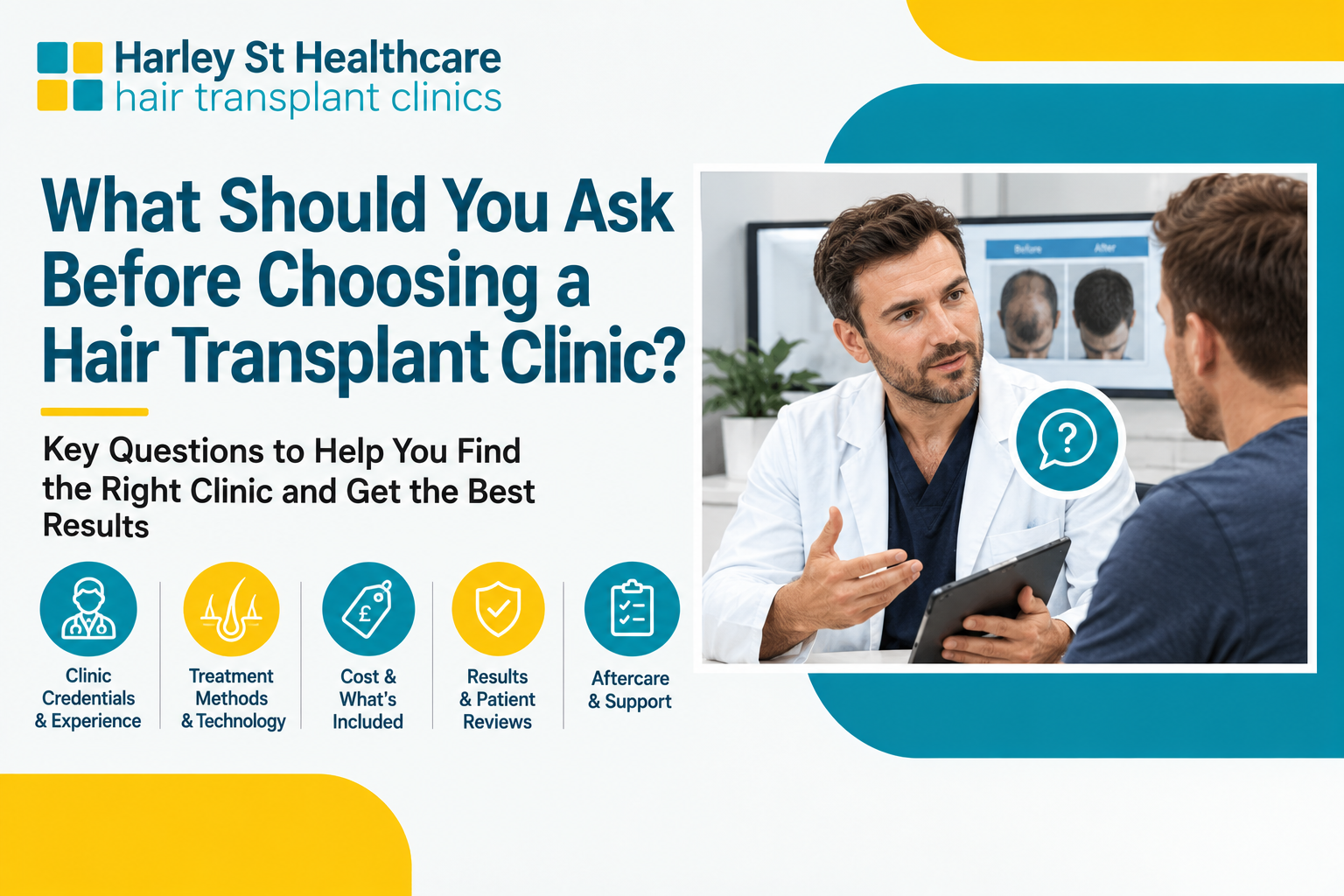
Summary
Choosing the right hair transplant clinic involves more than comparing treatment prices. Before booking a procedure, you should ask about the clinician’s qualifications and experience, the recommended hair transplant treatment, expected results, risks, costs, recovery and aftercare. You should also understand who will perform each stage of the procedure and whether the proposed treatment is appropriate for your individual pattern of hair loss.
Table of Content
ToggleWhy Is Choosing the Right Hair Transplant Clinic Important?
A hair transplant is a medical procedure, so the clinic you choose can have an important role in the safety, planning and quality of your treatment.
Different clinics may offer different techniques, treatment plans and levels of medical involvement. A reputable hair restoration clinic should assess your individual hair loss rather than automatically recommending the same procedure or number of grafts to every patient.
Before committing to treatment, asking detailed questions can help you understand what is being recommended and whether the clinic is suitable for your needs.
1. Who Will Perform My Hair Transplant?
One of the first questions to ask is who will actually perform the procedure.
Ask about:
- The clinician’s qualifications
- Relevant medical registration
- Experience with hair transplantation
- Their role during the procedure
- Which parts of the treatment will be performed by the doctor or surgeon and which by other members of the team
It is important to understand the level of clinical involvement rather than choosing a clinic based only on its website or advertised package.
2. Which Hair Transplant Treatment Is Right for Me?
There is no single hair transplant technique that is appropriate for everyone.
A clinic may discuss options such as FUE (Follicular Unit Extraction) or FUT (Follicular Unit Transplantation) depending on your hair loss, donor area, goals and individual circumstances.
Ask:
“Why are you recommending this particular treatment for me?”
A good consultation should explain the reasoning behind the recommended approach rather than simply presenting a treatment as the best option for everyone.
3. How Many Grafts Do I Actually Need?
The number of grafts required depends on factors such as:
- Extent of hair loss
- Size and shape of the treatment area
- Existing hair density
- Donor hair availability
- Desired coverage
- Future hair-loss expectations
Be cautious of recommendations that focus only on a large graft number without explaining why it is necessary.
The goal should be to use the donor supply appropriately while creating a natural-looking result.
4. Can You Show Me Relevant Before-and-After Results?
Ask to see genuine before-and-after photographs of previous patients.
Ideally, examples should include people with similar:
- Hair-loss patterns
- Hair characteristics
- Hairline requirements
- Degree of thinning
- Treatment goals
Before-and-after images can help you develop realistic expectations, but they should not be treated as a guarantee of your own result.
5. What Results Can I Realistically Expect?
A responsible hair transplant clinic should discuss both the potential benefits and limitations of treatment.
Ask:
- How much density can realistically be achieved?
- What will my hairline look like?
- Could I continue losing existing hair?
- Will I need additional treatment in the future?
- How long will it take to see the final result?
Hair transplantation redistributes existing follicles. It cannot create an unlimited supply of new hair, so donor availability is an important factor.
6. What Are the Risks and Side Effects?
Before undergoing hair transplant treatment, you should understand the possible risks.
Potential short-term effects can include:
- Swelling
- Redness
- Scabbing
- Tenderness
- Temporary numbness
- Itching around treated areas
As with other surgical procedures, complications such as infection, bleeding, scarring or poor graft growth can occur.
Ask the clinic to explain the risks relevant to your specific treatment rather than relying only on general information.
7. What Is Included in the Hair Transplant Cost?
Price is an important consideration, but the cheapest package is not necessarily the best option.
Ask exactly what the quoted price includes, such as:
- Consultation
- Procedure
- Number of grafts
- Medication
- Aftercare
- Follow-up appointments
- Additional treatments if required
You should also ask whether there could be additional charges later.
A transparent clinic should be able to explain its pricing clearly before you commit to treatment.
8. How Long Is the Recovery Period?
Ask what you should expect during the first few days and weeks after your procedure.
Questions may include:
- When can I return to work?
- When can I exercise?
- When can I wash my hair normally?
- When can I wear a hat?
- How should I sleep?
- When can I return to normal activities?
Recovery varies between individuals and depends partly on the type and extent of treatment.
9. What Aftercare and Follow-Up Will I Receive?
Aftercare does not end when you leave the clinic.
Ask whether the clinic provides:
- Written aftercare instructions
- Post-treatment reviews
- Access to clinical support
- Guidance about washing and protecting the scalp
- Advice about medications or other treatments
- Long-term follow-up
Knowing who to contact if you have concerns after treatment can provide additional reassurance.
10. What Happens If My Hair Continues to Thin?
This is an especially important question for people experiencing genetic or progressive hair loss.
A transplant treats the areas where follicles have been lost, but it does not necessarily prevent existing non-transplanted hair from continuing to thin.
Ask the clinic whether you may benefit from a broader hair-loss management plan and how future hair loss could affect the appearance of your transplant.
Planning for potential future loss can help avoid an unnatural-looking hairline or insufficient donor hair later.
Warning Signs to Watch For
When comparing a hair restoration clinic, be cautious if you encounter:
- Pressure to book immediately
- Guaranteed results
- Unrealistically low prices without clear explanations
- Recommendations made without a proper assessment
- Limited discussion of risks
- Unclear information about who performs the procedure
- Claims that one technique is suitable for everyone
A consultation should give you enough information to make an informed decision without unnecessary pressure.
Conclusion
Choosing a hair transplant clinic should involve more than comparing prices or looking at promotional photographs. Ask who will perform the treatment, why a particular technique is recommended, how many grafts you may need, what results are realistic, what risks are involved and what aftercare is provided.
A reputable hair restoration clinic should assess your individual hair loss and explain both the benefits and limitations of the proposed hair transplant treatment.
Taking time to ask questions before booking can help you understand the procedure, set realistic expectations and choose treatment based on clinical suitability rather than marketing claims.
Frequently Asked Questions
Look for appropriate medical qualifications, experienced clinicians, clear treatment recommendations, realistic expectations, transparent pricing and proper aftercare.
Ask about clinician qualifications, experience, treatment planning, genuine patient results, risks, pricing and follow-up care before making a decision.
Price should be one consideration rather than the deciding factor. The quality of clinical care, experience, treatment planning and aftercare are also important.
Ask which technique is recommended and why, how many grafts you need, who will perform the procedure, what results are realistic, what risks exist and how recovery will be managed.
No. A transplant replaces hair in areas where follicles have been lost but does not necessarily prevent existing non-transplanted hair from continuing to thin.