Summary
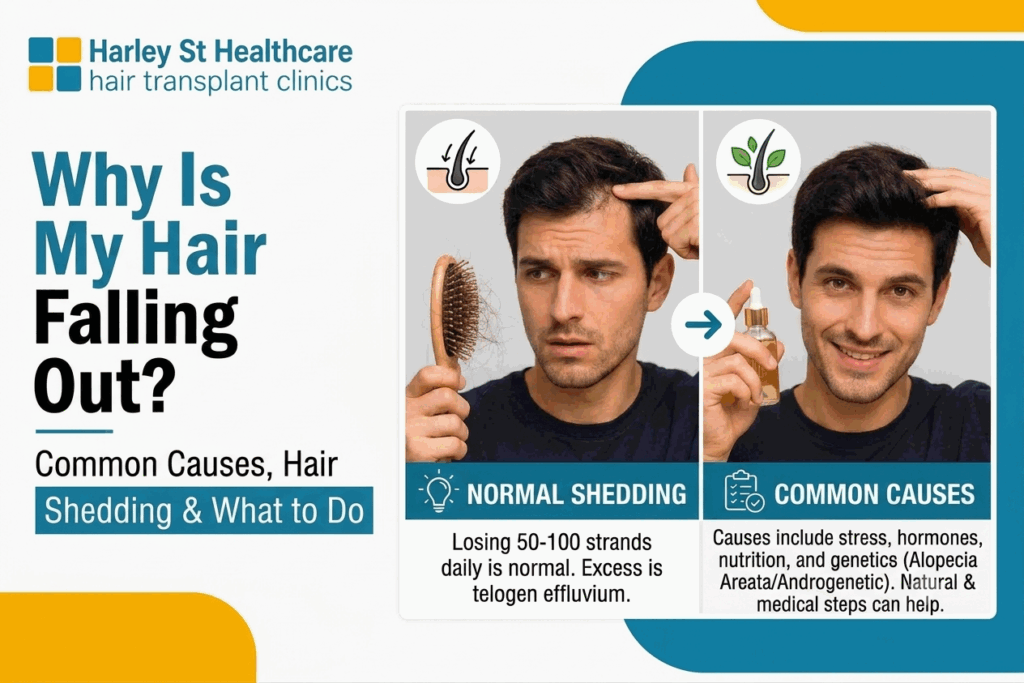
Hair shedding is a normal part of the hair growth cycle, but noticing more hair than usual on your pillow, clothes, hairbrush or in the shower can understandably be concerning. Hair falling out can have many possible causes, including genetic hair loss, stress, illness, hormonal changes, nutritional deficiencies, weight loss and certain medical conditions.
The important thing is to understand whether you are experiencing normal shedding, temporary excessive shedding or ongoing hair loss that may need professional assessment.
Table of Content
ToggleWhy Is My Hair Falling Out?
Your hair may be falling out because of normal shedding, temporary changes in the hair-growth cycle, genetic hair loss, stress, illness, hormonal changes, nutritional factors or other underlying causes.
Hair naturally moves through different stages of growth, rest and shedding. This means losing some hairs each day is expected.
However, you may notice a change when:
- More hair than usual is coming out when washing or brushing
- Your hair appears thinner overall
- Your parting looks wider
- Your hairline appears to be changing
- You notice reduced density around the crown
- You develop a bald or noticeably thinner patch
- Hair shedding continues for longer than expected
There is no single explanation for why your hair falls out, so identifying the pattern and possible trigger is an important first step.
Is It Normal for Hair to Fall Out?
Yes, some daily hair shedding is normal.
Individual hairs naturally reach the end of their growth cycle and are shed before another hair can grow from the follicle. You may therefore notice loose hairs throughout the day without having a hair-loss condition.
What matters is whether your shedding has changed significantly from your usual pattern or whether you are also noticing visible thinning.
For example, increased hair on your brush alone does not necessarily mean you are developing permanent hair loss. However, persistent shedding accompanied by reduced density, a changing hairline or bald patches may warrant professional assessment.
What Are the Common Causes of Hair Fall?
There are many potential causes of hair falling out. Some are temporary, while others can cause longer-term or progressive hair loss.
Genetic Hair Loss
One of the most common causes of ongoing hair loss is androgenetic alopecia, also known as male or female pattern hair loss.
It can affect both men and women, although the pattern can differ.
In men, it commonly begins with:
- Recession around the temples
- A changing frontal hairline
- Thinning around the crown
- Gradual reduction in hair density
In women, it may more commonly appear as:
- Widening of the central parting
- Reduced overall density
- Diffuse thinning across the scalp
Genetic hair loss tends to develop gradually rather than appearing suddenly.
Stress and Hair Shedding
Stress can contribute to increased hair shedding in some people.
Significant physical or emotional stress can affect the normal hair-growth cycle and cause more hairs to enter the resting phase.
This type of temporary shedding is commonly known as telogen effluvium.
Potential triggers can include:
- Significant emotional stress
- Illness
- Surgery
- Major changes in the body
- Rapid weight loss
- Crash dieting
- Other significant physical stressors
One important feature is that the increased shedding may not happen immediately after the triggering event. There can be a delay between the trigger and noticeable hair shedding.
If you have experienced a significant event several weeks or months before noticing excessive shedding, this is worth discussing with a healthcare professional.
Sudden Hair Loss: What Can Cause It?
Sudden hair loss can have several possible causes and should not automatically be assumed to be genetic hair loss.
A sudden change may be associated with:
- Alopecia areata
- Illness
- Significant stress
- Hormonal changes
- Nutritional deficiencies
- Rapid weight loss
- Certain medications
- Scalp conditions or infections
Alopecia areata, for example, can cause distinct patches of hair loss and occurs when the immune system affects hair follicles.
If you develop sudden or patchy hair loss without an obvious explanation, seeking professional advice is appropriate.
Excessive Hair Shedding After Illness or Surgery
Hair shedding can sometimes increase after a significant illness or surgical procedure.
This can happen because the body has experienced physical stress, which may temporarily affect the normal hair-growth cycle.
The increased shedding may become noticeable after the original illness or procedure rather than immediately afterwards.
If you notice substantial shedding following an illness or surgery, a clinician can help assess whether the pattern is consistent with temporary shedding or whether another cause should be considered.
Can Weight Loss Cause Hair Loss?
Significant or rapid weight loss can sometimes be associated with increased hair shedding.
This may be related to the physical stress placed on the body or changes in nutritional intake.
People who have undergone significant dietary changes or weight-loss procedures may therefore notice increased shedding during the following months.
If hair loss develops after substantial weight loss, it is important to consider the wider picture rather than assuming that the weight loss itself is the only cause.
Hormonal Changes and Hair Loss
Hormonal changes can affect the hair-growth cycle, particularly during certain stages of life.
For women, changes associated with events such as pregnancy, the postpartum period and menopause can be accompanied by changes in hair density or shedding.
Some hormonal conditions can also contribute to hair loss.
The pattern and timing of shedding can provide useful information, but hormonal hair loss should not be self-diagnosed from symptoms alone.
If you have noticed significant hair changes alongside other hormonal symptoms, discussing them with your GP or an appropriately qualified healthcare professional may help identify the underlying cause.
Can Nutritional Deficiencies Cause Hair Loss?
Yes, some nutritional deficiencies can be associated with hair loss or increased shedding.
Hair follicles require adequate nutrients to support normal growth. Changes in diet, restricted eating patterns, significant weight loss and certain health conditions can affect nutritional status.
Nutrients that may be relevant to hair health include:
- Iron
- Zinc
- Vitamin D
- Protein
- Other essential nutrients
However, hair loss does not automatically mean that you have a nutritional deficiency.
Taking supplements without establishing whether you actually have a deficiency is not always appropriate. If a nutritional problem is suspected, a healthcare professional can determine whether further assessment or testing is needed.
Thyroid Problems and Hair Loss
Changes in thyroid function can sometimes affect the hair-growth cycle.
Both an underactive and overactive thyroid can be associated with changes in hair.
Depending on the underlying condition, people may notice:
- Overall thinning
- Increased shedding
- Changes in hair texture
- Hair becoming dry or brittle
Hair loss can have many different causes, so thyroid problems cannot be identified from hair loss alone. If you have other symptoms that could suggest a thyroid problem, speak with your GP about whether further assessment is appropriate.
Can Hairstyles Cause Hair Loss?
Repeated tension on the hair can contribute to a type of hair loss called traction alopecia.
This can occur when hairstyles consistently pull on the hair and follicles.
Examples can include:
- Very tight ponytails
- Tight buns
- Certain braiding styles
- Hair extensions
- Other hairstyles that place repeated tension on the scalp
Early traction-related hair loss may improve when the source of tension is addressed. Continued or significant damage can potentially result in more permanent hair loss.
If you regularly wear tight hairstyles and are noticing thinning around the hairline, reducing tension and seeking professional advice may be appropriate.
Why Does Hair Fall Out After Pregnancy?
Pregnancy and the period following childbirth can bring significant hormonal changes.
Some women notice thicker-looking hair during pregnancy, followed by increased shedding after giving birth.
This can be alarming because a large amount of hair may appear to come out during washing or brushing.
However, postpartum shedding can be part of a temporary change in the hair-growth cycle.
If shedding is severe, persistent or accompanied by other symptoms, it is still sensible to discuss it with a healthcare professional rather than assuming that every case is simply postpartum hair shedding.
Could Medication Cause Hair Loss?
Some medications can be associated with hair loss or increased shedding.
If you noticed a significant change in your hair after starting, stopping or changing a medication, do not stop prescribed medication without speaking to the prescribing healthcare professional.
Instead, explain when the shedding started and which medications or treatments you are taking. This can help a clinician consider whether there may be a connection.
How Can You Tell What Is Causing Your Hair Loss?
There is no single symptom that can identify the cause of hair loss.
A professional assessment may consider:
- When the shedding started
- Whether it was sudden or gradual
- Where the hair is thinning
- Whether there are bald patches
- Your family history of hair loss
- Recent illness or surgery
- Stressful events
- Weight or dietary changes
- Hormonal changes
- Medications
- Scalp health
- Existing hair density
The pattern of hair loss and its timing can provide important clues.
For example, gradual recession around the temples may suggest a different process from sudden patchy hair loss or diffuse shedding across the scalp.
When Should You Seek Professional Advice?
You should consider seeking professional advice if you are worried about your hair loss, particularly if you notice:
- Sudden or rapidly increasing hair loss
- Clearly defined bald patches
- Significant changes in your hairline
- Persistent excessive shedding
- Noticeable reduction in overall density
- Scalp changes alongside hair loss
- Hair loss following a significant illness or other major physical change
- Hair loss that is affecting your wellbeing
The NHS advises speaking to a GP if you are concerned about hair loss, particularly before considering treatment through a commercial hair clinic.
Understanding the underlying cause is important because not every type of hair loss is suitable for a hair transplant.
What Treatments Are Available for Hair Loss?
Treatment depends on the underlying cause.
Some types of hair loss are temporary and may improve when the underlying trigger resolves. Other forms, such as genetic hair loss, may require longer-term management.
Depending on the diagnosis and individual circumstances, options may include:
- Monitoring temporary shedding
- Addressing an underlying medical or nutritional issue
- Medical treatments for certain types of hair loss
- Non-surgical hair restoration approaches
- Hair transplantation for suitable candidates
A hair transplant is not a universal treatment for hair loss. It is generally considered when the pattern of hair loss, donor supply and other factors make transplantation appropriate.
This is why identifying the cause should come before deciding on a treatment.
Does Hair Loss Always Grow Back?
No. Whether hair grows back depends on the underlying cause.
Some forms of hair shedding are temporary, and hair density can improve once the triggering factor has resolved.
Other forms of hair loss can be progressive or permanent.
The earlier the underlying cause is understood, the better informed your treatment decisions can be.
If you are experiencing ongoing hair loss, a professional assessment can help determine whether your hair is likely to recover naturally or whether further treatment may be worth considering.
What Should You Do If Your Hair Is Falling Out?
If you have noticed more hair falling out than usual, try not to immediately assume that you are going bald.
Instead, consider:
- When did the shedding begin?
- Was there a major illness, stressful event or weight change beforehand?
- Is the hair shedding diffuse or concentrated in one area?
- Are you noticing a changing hairline or widening parting?
- Are there any bald patches?
- Have you recently changed medication or your diet?
- Is the shedding continuing or getting worse?
Keeping track of changes in your hair over time can be useful when discussing the problem with a healthcare professional.
Most importantly, avoid self-diagnosing the cause based solely on the amount of hair you see in your brush or shower.
What Should You Do If Your Hair Is Falling Out?
If you’re noticing persistent shedding, thinning or changes to your hairline, understanding why your hair is falling out is an important first step. Because hair loss can have many different causes, identifying the underlying reason can help you understand which options may be appropriate.
At Harley Street Hair Transplants, a personalised hair-loss assessment can help evaluate your hair-loss pattern, existing density and donor area, and whether hair restoration may be suitable for you. If you’re concerned about ongoing hair loss, you can Book a Hair Loss Consultation to discuss your individual concerns and potential treatment options.
The right approach starts with understanding the cause of your hair loss.
Conclusion
Hair falling out can happen for many different reasons, and some degree of daily shedding is completely normal. However, noticeable changes in shedding, density or the hairline can sometimes indicate an underlying cause that needs further assessment.
Genetic hair loss, stress, illness, hormonal changes, significant weight loss, nutritional issues, thyroid conditions and repeated tension on the hair are among the factors that can contribute to hair loss.
The key is not simply to count the hairs you lose each day, but to look at the pattern, timing and progression of the hair loss.
If you are worried about sudden, excessive or persistent shedding, professional assessment can help establish what may be happening and whether treatment is appropriate. A hair transplant may be suitable for some types of permanent hair loss, but it is not the right solution for every cause of hair shedding.
FAQs
Seasonal shedding can occur, but it is not experienced by everyone. Persistent or excessive shedding may have other causes, such as stress, illness, nutritional issues or genetic hair loss.
Yes. Hair can grow back when shedding is caused by a temporary factor such as stress, illness or weight loss. Some forms of genetic hair loss may require treatment.
Iron deficiency can contribute to hair loss, while other nutritional deficiencies may also affect hair health. Testing can help identify whether a deficiency is involved.
Some daily shedding is normal. However, sudden, excessive or persistent shedding, bald patches or noticeable thinning should be assessed by a healthcare professional.
A balanced diet with enough protein, iron and other essential nutrients supports healthy hair growth. Foods such as eggs, fish, beans, nuts and vegetables can be useful choices.
There is no single month when everyone sheds the most hair. Seasonal changes may affect some people, but ongoing excessive shedding can have other causes.
Stress-related shedding can appear several weeks or months after a significant physical or emotional stressor. A professional assessment can help identify the cause.
Eat a balanced diet, avoid crash diets, manage stress and be gentle when washing and styling your hair. Persistent shedding should be professionally assessed.
There is no specific age. Genetic hair loss can begin in adulthood, while other types of hair loss can occur at different ages.
Stage 4 on the Norwood Scale describes more noticeable frontal and temple recession, often with thinning around the crown. It is mainly used to describe male pattern hair loss.