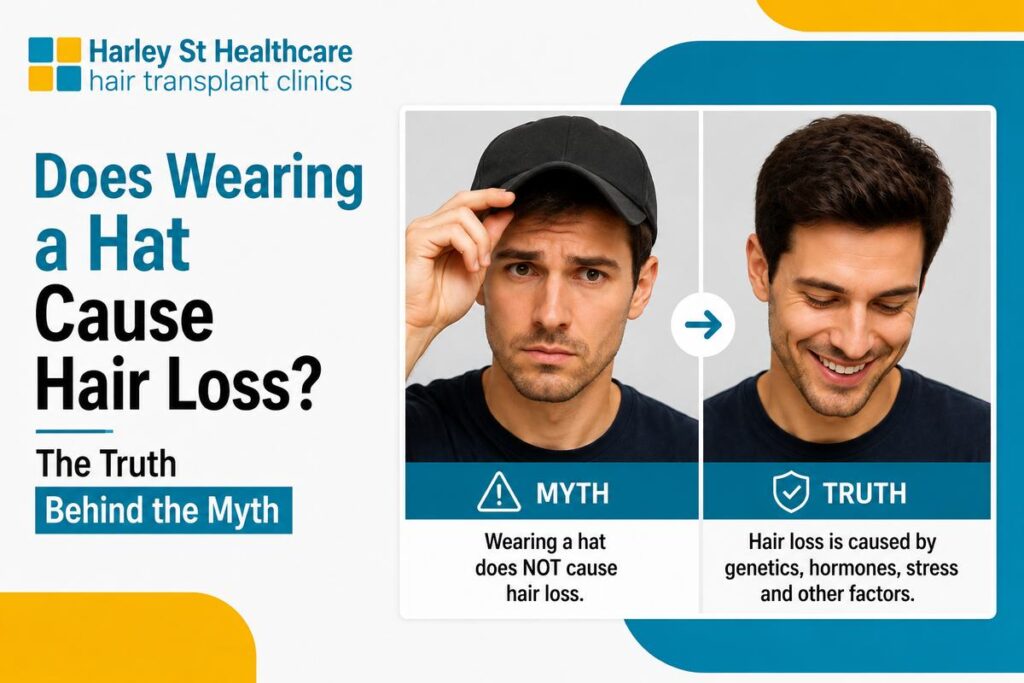
Many people worry that wearing a hat every day could lead to thinning hair or even baldness. Whether you wear a baseball cap, beanie, bucket hat, or work helmet, you’ve probably heard someone claim that hats “suffocate” your scalp and cause hair loss.
Fortunately, this is one of the most common hair loss myths. Scientific evidence shows that wearing a properly fitted hat does not cause permanent hair loss. However, certain hat-wearing habits and underlying scalp conditions may affect hair health in some situations.
In this guide, we’ll explain what the research says, what actually causes hair loss, and how to keep your scalp and hair healthy.
Table of Content
ToggleDoes Wearing a Hat Cause Hair Loss?
The short answer is no.
There is no scientific evidence proving that wearing a hat causes permanent hair loss or male pattern baldness. Hair follicles receive oxygen and nutrients through tiny blood vessels beneath the scalp not from the air around your head. This means your hair cannot be “suffocated” simply by wearing a hat.
If you’ve been wondering:
- Does wearing hats cause hair thinning?
- Can wearing a hat cause hair thinning?
- Does wearing a hat contribute to hair loss?
- Does wearing a cap lead to hair loss?
The answer remains the same: normal hat use does not damage healthy hair follicles.
In fact, many dermatologists recommend wearing hats outdoors because they help protect your scalp from harmful UV rays, excessive heat, wind, and environmental damage.
Why Do People Think Hats Cause Hair Loss?
The belief that hats cause baldness has existed for decades, but it’s based on misunderstandings rather than medical evidence.
Several reasons explain why this myth continues today.
Hair Found Inside Your Hat
After removing your cap, you may notice several hairs inside it. This often makes people think the hat pulled their hair out.
In reality, losing 50 to 100 hairs every day is completely normal. These hairs were already in the shedding phase of the hair growth cycle. Instead of falling onto your pillow or clothing, they simply collected inside your hat.
People Often Wear Hats to Hide Hair Loss
Many people experiencing thinning hair or a receding hairline start wearing hats more frequently to boost their confidence.
Because hats are commonly associated with people who already have hair loss, many assume the hat caused the problem when the opposite is usually true.
Hair Looks Flatter After Wearing a Hat
Caps naturally flatten your hairstyle.
When you remove your hat, thinning areas or a receding hairline may become more noticeable because the hair has lost its volume. This temporary change creates the illusion that wearing hats causes hair loss.
How Hair Growth Actually Works
Understanding how hair grows makes it much easier to understand why hats aren’t responsible for permanent hair loss.
Every hair follicle follows a natural cycle consisting of three stages.
Anagen Phase (Growth)
This is the active growth stage, lasting between 2 and 7 years. Around 85–90% of your hair is usually in this phase at any given time.
Catagen Phase (Transition)
Hair growth slows during this short transition stage, which lasts approximately two to three weeks.
Telogen Phase (Resting & Shedding)
The hair rests before naturally falling out, allowing a new strand to begin growing.
Because shedding is a normal part of this cycle, seeing hairs inside your cap does not automatically mean you’re losing more hair than usual.
What Actually Causes Hair Loss?
Instead of blaming hats, it’s important to understand the real causes of hair thinning.
Genetics
The most common reason for hair loss is androgenetic alopecia, also known as male pattern baldness or female pattern hair loss.
If hair loss runs in your family, your follicles become increasingly sensitive to dihydrotestosterone (DHT), causing them to shrink over time.
This process has nothing to do with wearing hats.
Hormonal Changes
Hormonal fluctuations can significantly affect hair growth.
Common causes include:
- Pregnancy
- Menopause
- Thyroid disorders
- Polycystic Ovary Syndrome (PCOS)
- Testosterone-related changes
These hormonal shifts often lead to temporary or progressive thinning.
Stress
Both emotional and physical stress can trigger telogen effluvium, a condition where a larger number of hairs enter the resting phase simultaneously.
This often happens after:
- Surgery
- High fever
- Emotional trauma
- Rapid weight loss
- Serious illness
Fortunately, this type of hair loss is usually temporary.
Nutritional Deficiencies
Healthy hair depends on proper nutrition.
Low levels of the following nutrients may contribute to excessive shedding:
- Iron
- Vitamin D
- Zinc
- Biotin
- Protein
- Vitamin B12
Eating a balanced diet supports stronger hair growth and overall scalp health.
Medical Conditions
Several health conditions may contribute to thinning hair, including:
- Alopecia areata
- Scalp psoriasis
- Fungal scalp infections
- Lupus
- Thyroid disease
- Autoimmune disorders
These conditions require proper medical diagnosis rather than simply changing your hairstyle or avoiding hats.
Can Wearing a Hat Ever Affect Your Hair?
Although wearing a hat doesn’t directly cause hair loss, certain habits may affect your scalp health or lead to temporary hair problems. These situations are uncommon and usually preventable with proper hair care.
Wearing Extremely Tight Hats
One concern often discussed is whether tight hats can damage hair follicles.
A hat that fits comfortably is unlikely to cause any issues. However, wearing extremely tight caps, helmets, or headwear for long periods may place constant tension on the hairline. Over time, this repeated pulling can contribute to traction alopecia, a form of hair loss caused by continuous stress on the hair follicles.
Unlike male pattern baldness, traction alopecia is not caused by genetics or hormones. Instead, it develops due to repeated physical tension. Tight hairstyles such as braids, ponytails, extensions, or buns are far more common causes than everyday hats.
If you regularly wear protective helmets for work or sports, make sure they fit properly without putting unnecessary pressure on your scalp.
Poor Scalp Hygiene
Your hat itself isn’t the problem poor hygiene can be.
Wearing the same hat every day without washing it allows sweat, oil, bacteria, and dead skin cells to accumulate inside the fabric. Over time, this buildup may irritate the scalp and increase the risk of conditions such as:
- Scalp folliculitis
- Dandruff
- Itching
- Excess oil build-up
- Mild scalp inflammation
While these conditions don’t directly cause permanent hair loss, an unhealthy scalp creates a less favourable environment for healthy hair growth.
Regularly cleaning both your scalp and your hats helps maintain good scalp health.
Wearing Wet Hats
Putting on a hat immediately after washing your hair isn’t ideal.
Wet hair is more elastic and fragile than dry hair, making it easier to stretch and break. Covering damp hair with a tight cap can also trap moisture and heat, which may encourage bacterial or fungal growth on the scalp.
Whenever possible, allow your hair to dry naturally before wearing a hat.
Dirty Hats Can Irritate the Scalp
Many people wash their hair regularly but rarely clean their hats.
Dust, sweat, skin oils, styling products, and environmental pollutants gradually build up inside hats over time. When these are repeatedly transferred back onto the scalp, they may cause irritation or clogged hair follicles.
If you wear hats frequently, washing them every few weeks (or more often after exercise) is a simple habit that supports better scalp hygiene.
Does Wearing a Hat Cause a Receding Hairline?
No.
There is no scientific evidence showing that wearing a hat causes a receding hairline.
A receding hairline is usually the result of androgenetic alopecia (male pattern baldness), a hereditary condition linked to genetics and sensitivity to the hormone DHT (dihydrotestosterone).
Many people notice their hairline looks worse after taking off a cap because the hair becomes flat against the scalp, making thinning areas more visible. This visual effect often leads people to believe the hat caused the recession when, in reality, the underlying hair loss was already developing.
If you’re asking:
- Does wearing hats cause a receding hairline?
- Do hats cause receding hairline?
- Can hats cause receding hairline?
The answer is no for normal, properly fitted hats.
Does Wearing a Cap Every Day Cause Hair Loss?
Daily cap use alone does not cause baldness.
Whether you wear a baseball cap, snapback, bucket hat, beanie, or flat cap, everyday use is generally safe as long as you:
- Choose a comfortable fit
- Keep your hat clean
- Wash your hair regularly
- Avoid excessive pressure on the scalp
Many people including athletes, outdoor workers, delivery drivers, and construction workers wear hats or helmets daily without experiencing hair loss because of them.
If you notice increased shedding while wearing a cap every day, the cause is much more likely to be genetics, hormones, stress, medical conditions, or nutritional deficiencies rather than the cap itself.
Can Wearing a Hat Actually Protect Your Hair?
Surprisingly, yes.
A well-fitting hat can offer several benefits for your hair and scalp, especially when you’re outdoors for extended periods.
Wearing a hat may help:
- Protect your scalp from harmful UV rays.
- Reduce sunburn on exposed areas of the scalp.
- Shield hair from excessive wind and dust.
- Minimise environmental damage.
- Help retain moisture in harsh weather conditions.
This is especially useful for people with thinning hair or a visible scalp, where sun exposure can increase the risk of irritation and sunburn.
Like sunscreen protects your skin, a hat can provide an extra layer of protection for your scalp when used appropriately.
Tips for Keeping Your Hair Healthy
Healthy hair depends far more on your daily habits than whether or not you wear a hat.
Here are some practical ways to support stronger, healthier hair:
Choose Comfortable Hats
Avoid hats that feel excessively tight or leave deep marks on your forehead. A properly fitted hat should feel secure without creating constant pressure.
Wash Your Hats Regularly
Clean hats prevent the buildup of sweat, bacteria, oil, and dirt that can irritate your scalp.
Eat a Balanced Diet
Hair needs nutrients to grow.
Include foods rich in:
- Protein
- Iron
- Zinc
- Vitamin D
- Omega-3 fatty acids
- Biotin
A nutrient-rich diet supports healthy hair follicles from within.
Manage Stress
Long-term stress can contribute to excessive shedding. Regular exercise, quality sleep, mindfulness, and stress management techniques may help maintain healthier hair growth.
Be Gentle With Your Hair
Avoid excessive heat styling, harsh chemical treatments, and tight hairstyles that place unnecessary strain on the hair follicles.
Seek Professional Advice Early
If you notice persistent thinning, bald patches, or a rapidly receding hairline, consulting a hair restoration specialist early can improve your treatment options and long-term results.
Hair Loss Treatments That May Help
If you’re experiencing ongoing hair thinning, it’s important to identify the underlying cause before starting treatment. Hair loss caused by genetics, hormonal changes, or certain medical conditions often responds better when treated early.
Depending on your diagnosis, a hair specialist may recommend one or more of the following options.
Minoxidil
Minoxidil is one of the most widely used treatments for hair loss. It works by improving blood flow to the hair follicles and extending the hair growth phase, helping existing follicles produce thicker, healthier hair.
It is available as a topical foam or solution and is suitable for both men and women with certain types of hair loss.
Finasteride
Finasteride is a prescription medication commonly used to treat male pattern baldness. It works by reducing the production of dihydrotestosterone (DHT), the hormone responsible for shrinking hair follicles in genetically predisposed individuals.
Many men notice reduced hair shedding and improved hair density after consistent use, although results vary from person to person.
PRP (Platelet-Rich Plasma) Therapy
PRP therapy uses your own blood to extract growth factor-rich plasma, which is then injected into the scalp to stimulate weakened hair follicles.
It may be recommended for people in the early stages of hair thinning or alongside other hair restoration treatments.
Hair Transplant Surgery
For individuals with significant or permanent hair loss, a hair transplant may offer the most effective long-term solution.
Modern techniques such as FUE (Follicular Unit Extraction) create natural-looking results by transplanting healthy hair follicles from donor areas to thinning or bald regions.
The right treatment depends on your hair loss pattern, medical history, and individual goals. A professional consultation can help determine the most suitable option.
Hair Transplant Clinics UK: Expert Guidance for Hair Loss
At Hair Transplant Clinics UK, we believe that successful hair restoration starts with an accurate diagnosis not common myths.
Whether you’re concerned about early hair thinning, a receding hairline, excessive shedding, or long-term hair loss, our experienced team provides personalised assessments and evidence-based treatment recommendations tailored to your individual needs.
From non-surgical treatments to advanced FUE hair transplant procedures, we help patients understand every available option so they can make confident decisions about their hair restoration journey.
Conclusion
So, does wearing a hat cause hair loss? The answer is no.
There is no scientific evidence showing that wearing a properly fitted hat causes baldness, thinning hair, or a receding hairline. Hair follicles receive nutrients through your bloodstream, not from the surrounding air, so hats cannot “suffocate” your hair.
However, wearing hats that are excessively tight, failing to clean them regularly, or neglecting scalp hygiene may contribute to irritation or temporary scalp conditions. These issues are very different from permanent hair loss caused by genetics, hormones, medical conditions, or nutritional deficiencies.
If you’re noticing persistent hair thinning or increased shedding, it’s best to seek professional advice early. Identifying the underlying cause gives you the best chance of protecting your existing hair and choosing the most appropriate treatment.
Frequently Asked Questions
No. Scientific research has found no evidence that wearing a properly fitted hat causes hair thinning. Most thinning hair is linked to genetics, hormones, ageing, stress, or certain medical conditions.
No. Normal hat use does not damage hair follicles or cause permanent hair loss. Extremely tight hats may occasionally contribute to traction alopecia, but this is uncommon.
No. Wearing a clean, comfortable cap every day does not cause hair loss. If you're experiencing increased shedding, the underlying cause is more likely to be hereditary or medical.
No. A receding hairline is usually caused by male pattern baldness (androgenetic alopecia), not by wearing hats.
No. Hats do not cause male or female pattern baldness. Genetics and DHT sensitivity are the primary causes of permanent hair loss.
For most people, no. Hats have little to no impact on hair growth. Only excessively tight headwear or poor scalp hygiene may contribute to temporary scalp irritation.
Most people naturally shed 50 to 100 hairs per day as part of the normal hair growth cycle. Finding hairs inside your hat is usually nothing to worry about.
You should seek professional advice if you notice persistent hair shedding, a rapidly receding hairline, bald patches, sudden thinning, or changes that continue for several months.