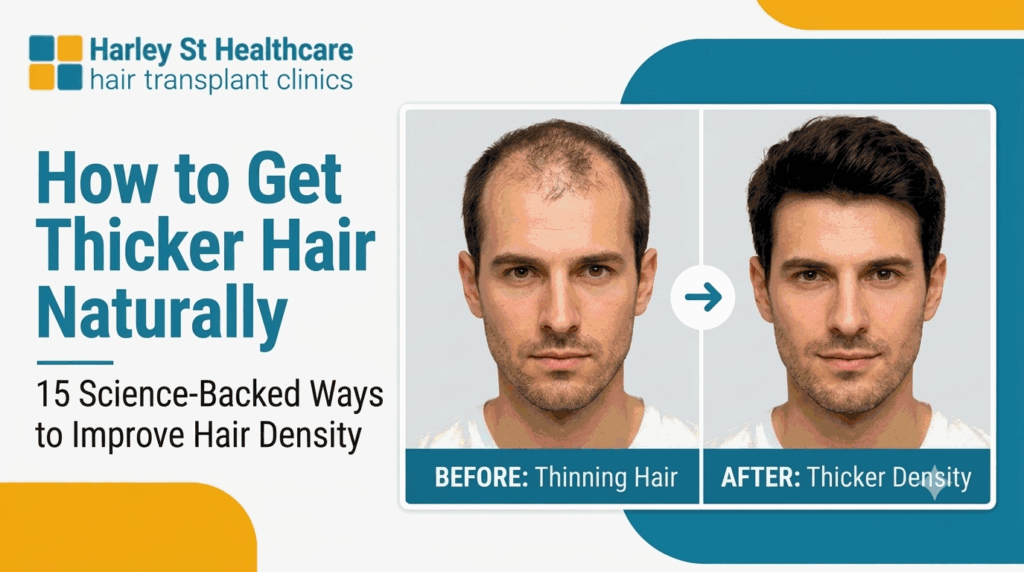
If you’ve noticed your hair becoming thinner, you’re not alone. Hair thinning affects millions of men and women and can happen at almost any age. Whether you’ve started seeing more hair in the shower, a widening parting, or reduced volume, it’s natural to wonder how to get thicker hair and whether it’s possible to restore your hair’s fullness naturally.
The good news is that while genetics and ageing play a role, several evidence-based strategies may help improve hair thickness, support healthier growth, and reduce excessive shedding. From optimising your diet to using clinically studied natural ingredients like rosemary oil, many approaches can strengthen existing hair and create the appearance of fuller, healthier strands.
In this guide, we’ll explain why hair becomes thinner, explore 15 science-backed ways to get thicker hair naturally, and discuss when professional treatment may be the right next step if home remedies aren’t delivering the results you want.
Table of Content
ToggleWhy Is Your Hair Becoming Thinner?
Losing around 50–100 hairs per day is a normal part of the hair growth cycle. However, if your hair appears noticeably thinner, your scalp becomes more visible, or your ponytail feels less dense than before, an underlying factor may be affecting your hair growth.
Some of the most common causes include:
Genetics
Hereditary hair loss (androgenetic alopecia) is the leading cause of thinning hair in both men and women. Over time, hair follicles gradually shrink, producing finer and shorter hairs until growth slows significantly.
Ageing
As you age, hair follicles naturally become less productive. Hair grows more slowly, individual strands become finer, and overall hair density decreases.
Hormonal Changes
Hormonal fluctuations caused by pregnancy, menopause, thyroid disorders, or conditions such as PCOS can contribute to increased hair shedding and thinning.
Nutritional Deficiencies
Hair follicles require a constant supply of nutrients to grow healthy hair. Low levels of iron, vitamin D, zinc, protein, or biotin may contribute to weaker, thinner hair.
Stress
Physical illness, surgery, emotional stress, or rapid weight loss can trigger telogen effluvium, causing more hairs than usual to enter the shedding phase.
Scalp Conditions
Problems such as dandruff, psoriasis, seborrhoeic dermatitis, or fungal infections can affect scalp health and contribute to hair thinning if left untreated.
Can Thin Hair Become Thick Again?
The answer depends on what’s causing your hair thinning.
If hair loss is related to temporary factors such as stress, poor nutrition, illness, or hormonal imbalance, improving those underlying issues may allow your hair to regain density over time.
However, if thinning is caused by genetic male or female pattern baldness, natural methods may help maintain existing hair and improve its quality, but they are unlikely to completely reverse advanced hair loss.
The earlier you address thinning hair, the more treatment options are usually available.
15 Science-Backed Ways to Get Thicker Hair Naturally
Many products claim to deliver thicker hair overnight, but very few are supported by scientific evidence. The following methods have shown encouraging results in clinical studies or are widely recommended by hair restoration specialists.
1. Use Rosemary Oil Regularly
One of the most researched natural remedies for improving hair thickness is rosemary oil.
Studies have found that consistent use of rosemary oil may promote hair growth comparable to low-strength topical minoxidil in some individuals with androgenetic alopecia.
Potential benefits include:
- Supporting healthier hair follicles
- Improving blood circulation to the scalp
- Reducing inflammation
- Helping slow pattern hair loss
For best results, dilute rosemary essential oil with a carrier oil before applying it to the scalp several times each week.
2. Improve Your Protein Intake
Hair is primarily made from keratin, a structural protein. Without adequate protein, your body may struggle to produce strong, healthy hair.
Include protein-rich foods such as:
- Eggs
- Fish
- Chicken
- Greek yoghurt
- Lentils
- Beans
- Lean beef
- Tofu
A balanced, protein-rich diet supports stronger strands and may reduce hair breakage.
3. Correct Vitamin and Mineral Deficiencies
Certain nutrient deficiencies are commonly associated with hair thinning.
Important nutrients include:
- Iron
- Vitamin D
- Zinc
- Biotin
- Vitamin B12
- Vitamin C
- Selenium
Before taking supplements, it’s advisable to speak with a healthcare professional or have blood tests if you suspect a deficiency.
4. Massage Your Scalp Daily
Scalp massage is a simple habit that may improve hair thickness over time.
Research suggests that daily scalp massage may:
- Increase blood flow
- Stretch scalp tissues
- Support healthier follicle function
- Improve overall scalp health
Spending 5–10 minutes each day gently massaging your scalp may help encourage healthier hair growth when combined with other treatments.
5. Reduce Stress Levels
Chronic stress can interrupt the normal hair growth cycle, leading to increased shedding.
Managing stress through healthy lifestyle habits may help reduce unnecessary hair loss.
Effective stress-management techniques include:
- Regular exercise
- Meditation
- Better sleep
- Yoga
- Spending time outdoors
- Mindfulness practices
Reducing stress benefits not only your hair but your overall health as well.
6. Try Pumpkin Seed Oil
Pumpkin seed oil has gained attention as a natural option for supporting hair growth, particularly in people with androgenetic alopecia. Some clinical studies suggest it may help increase hair density by reducing the effects of dihydrotestosterone (DHT), a hormone linked to pattern hair loss.
Pumpkin seed oil is available as both a topical treatment and an oral supplement. While early research is promising, larger studies are still needed to confirm its long-term effectiveness.
7. Wash Your Hair with a Caffeine Shampoo
Caffeine isn’t just for boosting energy, it may also support healthier hair growth.
Research suggests that caffeine-based shampoos and topical treatments may stimulate hair follicles and help counteract the effects of DHT, which contributes to pattern hair loss.
Using a caffeine shampoo may help:
- Support stronger hair shafts
- Reduce excessive shedding
- Improve overall scalp health
- Maintain healthier-looking hair
While caffeine shampoos are not a cure for hair loss, they can be a useful addition to a healthy hair care routine.
8. Use Peppermint Oil Carefully
Peppermint oil is another natural ingredient that has shown encouraging results in early research.
Its cooling effect may improve blood circulation to the scalp, allowing hair follicles to receive more oxygen and nutrients. This may support healthier hair growth over time.
Always dilute peppermint essential oil with a carrier oil before applying it to the scalp to avoid irritation.
9. Follow a Hair-Healthy Diet
If you’re wondering how to make your hair thicker, your diet plays a major role.
Hair follicles require a steady supply of nutrients to produce healthy strands. Eating a balanced diet rich in vitamins, minerals, and protein supports stronger, thicker hair.
Focus on foods rich in:
Nutrient | Good Sources |
Protein | Eggs, chicken, fish, beans |
Iron | Spinach, red meat, lentils |
Zinc | Pumpkin seeds, seafood, nuts |
Vitamin D | Oily fish, eggs, fortified foods |
Vitamin C | Citrus fruits, berries, peppers |
Omega-3 Fatty Acids | Salmon, walnuts, flaxseeds |
Staying hydrated is equally important, as dehydration can leave hair dry, brittle, and more prone to breakage.
10. Stop Smoking
Smoking affects much more than your lungs, it can also impact your hair.
Research suggests smoking may:
- Reduce blood flow to hair follicles
- Increase oxidative stress
- Damage hair-producing cells
- Accelerate pattern hair loss
Quitting smoking benefits your overall health while also supporting healthier hair growth.
11. Reduce Heat and Chemical Damage
Even naturally healthy hair can become thinner if it’s regularly damaged.
Try to limit:
- Excessive heat styling
- Frequent bleaching
- Harsh chemical treatments
- Tight hairstyles that pull on the hair
- Overexposure to sunlight
Gentle hair care helps preserve existing hair and reduces unnecessary breakage.
12. Try Natural Hair Masks
Although research is limited, several natural ingredients may improve the condition of your hair.
Popular home remedies include:
- Coconut oil
- Egg masks
- Onion juice
- Aloe vera gel
These treatments won’t create new hair follicles, but they may help reduce dryness, improve shine, and minimise breakage, making hair appear fuller.
13. Improve Your Sleep
Poor sleep increases stress hormones, which can disrupt the normal hair growth cycle.
Aim for 7–9 hours of quality sleep each night to support healthy hair growth, hormone regulation, and overall wellbeing.
14. Stay Consistent with Your Hair Care Routine
Many people expect immediate results, but hair growth takes time.
To improve hair thickness naturally:
- Be consistent with treatments.
- Eat a balanced diet.
- Avoid switching products too frequently.
- Give new routines at least 3–6 months before judging their effectiveness.
Patience is essential, as hair grows slowly.
15. Speak to a Hair Restoration Specialist
If you’ve tried natural remedies but continue to experience noticeable hair thinning, professional advice may be the best next step.
A specialist can identify the underlying cause of your hair loss and recommend evidence-based treatments such as:
- Prescription medications
- PRP therapy
- Low-Level Laser Therapy (LLLT)
- Hair transplant surgery
- Personalised treatment plans
Early intervention often leads to better long-term outcomes.
Natural Remedies vs Medical Treatments
Treatment | May Improve Hair Thickness | Best For |
Rosemary oil | ✅ Yes | Mild pattern hair loss |
Pumpkin seed oil | ✅ May help | Early thinning |
Caffeine shampoo | ✅ Supports healthier hair | Ongoing maintenance |
Healthy diet | ✅ Yes | Nutritional deficiencies |
Scalp massage | ✅ May improve circulation | General hair health |
Hair transplant | ✅ Permanent restoration | Advanced hair loss |
When Natural Remedies May Not Be Enough
Natural methods can improve hair health and reduce shedding, but they cannot restore hair follicles that have stopped producing hair altogether.
You should consider seeking professional advice if you notice:
- Rapid or severe hair loss
- A widening parting
- A receding hairline
- Bald patches
- Thinning that continues despite lifestyle changes
Identifying the cause early gives you access to more treatment options and may improve long-term results.
Why Choose Hair Transplant Clinics?
At Hair Transplant Clinics, we connect patients with experienced UK hair restoration specialists who provide personalised treatment plans based on your unique hair loss pattern.
Whether you’re experiencing early thinning or more advanced hair loss, our specialists can help you explore the most suitable options, including medical treatments and modern hair transplant procedures designed to achieve natural-looking results.
Final Thoughts
Learning how to get thicker hair naturally starts with understanding what’s causing your hair to thin. While no natural remedy can completely reverse every type of hair loss, evidence suggests that healthy lifestyle habits, a nutrient-rich diet, scalp care, and ingredients such as rosemary oil and pumpkin seed oil may help improve hair quality and support healthier growth.
If your hair thinning persists or becomes more noticeable, consulting a qualified hair restoration specialist can help you identify the cause and choose the most effective treatment. Combining early intervention with proven therapies offers the best chance of maintaining fuller, healthier hair over the long term.
Frequently Asked Questions
Yes. Research suggests that ingredients such as rosemary oil, pumpkin seed oil, caffeine, and minoxidil may help improve hair growth in certain individuals. A healthy diet and treating nutritional deficiencies can also support thicker, healthier hair.
Yes. Eating a balanced diet, managing stress, massaging your scalp, using rosemary oil, avoiding excessive heat styling, and maintaining a healthy hair care routine may all help improve hair thickness naturally.
Hair thinning among younger adults can result from genetics, chronic stress, poor nutrition, hormonal changes, frequent heat styling, and certain medical conditions. Lifestyle factors often play a significant role.
Although Elon Musk has never publicly confirmed the treatment he underwent, many experts believe he likely had one or more hair transplant procedures based on the noticeable improvement in his hairline over the years.
Traditional Chinese medicine often recommends herbal remedies, scalp massage, and dietary changes to support hair health. However, scientific evidence supporting these approaches is limited compared with clinically studied treatments.
It depends on the cause. Hair thinning caused by stress, illness, or nutritional deficiencies may improve once the underlying issue is treated. Genetic hair loss can often be managed, but advanced cases may require medical treatments or hair transplantation.