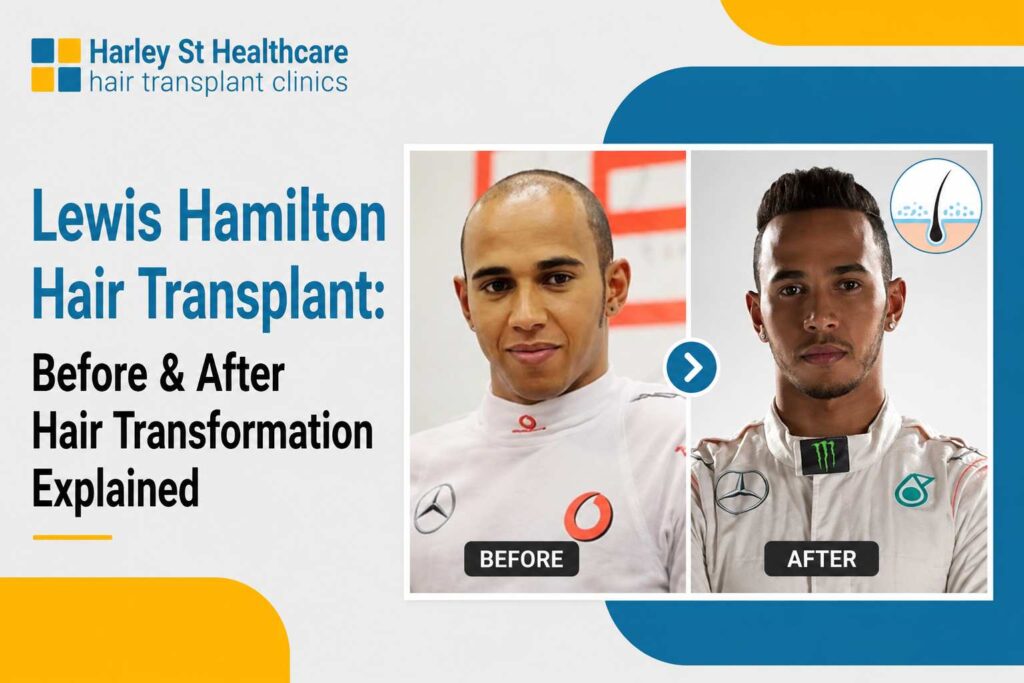
Lewis Hamilton is one of the most recognisable figures in global sport, known for his record-breaking Formula 1 career, fashion influence, and ever-evolving public image. Alongside discussions about his racing achievements, many fans have become increasingly curious about one particular topic: the Lewis Hamilton hair transplant rumours. Over the years, Hamilton’s appearance has changed significantly. Early photographs appeared to show signs of thinning hair and a receding hairline, while more recent images reveal noticeably fuller hair and greater density. This visible change has led many people to ask questions such as: Did Lewis Hamilton have a hair transplant? Has he undergone Lewis Hamilton hair replacement treatment? Or could there be another explanation for his impressive hair transformation? In this article, we examine Lewis Hamilton’s hair journey, the evidence behind the speculation, possible treatment options, and what his transformation can teach people considering hair restoration.
Table of Content
ToggleWho Is Lewis Hamilton?
Sir Lewis Hamilton is a British Formula 1 driver widely regarded as one of the greatest racing drivers in history. Throughout his career with McLaren and Mercedes, he has won multiple world championships and broken numerous records.
Beyond racing, Lewis Hamilton hair discussions have become surprisingly common online. His changing hairstyles, including braids, longer hair, and fuller hairlines, have attracted significant attention from fans and hair restoration experts alike.
As a public figure constantly photographed from every angle, even subtle changes in his appearance are quickly noticed and analysed.
Lewis Hamilton Hair Loss: What Happened?
Looking back at photographs from the early stages of his career, some observers believe Hamilton showed signs of Lewis Hamilton hair loss.
Images from the late 2000s and early 2010s appeared to show:
- A slightly receding frontal hairline
- Reduced density around the temples
- Thinner hair compared with later years
- Visible scalp exposure under bright lighting
These signs are commonly associated with male pattern baldness, also known as androgenetic alopecia.
Male pattern baldness affects millions of men worldwide and often begins with gradual temple recession and thinning around the hairline. If left untreated, the condition typically progresses over time.
Was Lewis Hamilton Bald?
One of the most searched questions online is whether Lewis Hamilton bald spots were ever visible.
While Hamilton was never completely bald, some photographs suggested mild to moderate thinning around the frontal scalp and temple regions. Compared to his current appearance, earlier images appear noticeably less dense.
It’s important to remember that lighting, hairstyle choices, camera angles, and hair products can significantly affect how hair appears in photographs. Therefore, it is impossible to determine the exact extent of his hair loss based solely on public images.
Did Lewis Hamilton Have a Hair Transplant?
The most common question surrounding his appearance is: Did Lewis Hamilton have a hair transplant?
The truth is that Lewis Hamilton has never publicly confirmed undergoing a hair transplant procedure.
However, many hair restoration specialists have commented on his transformation, suggesting that the improvement in hair density and hairline definition appears consistent with modern hair restoration techniques.
Because no official confirmation exists, any discussion about a Lewis Hamilton hair transplant remains speculative.
What can be observed is that his hair appears considerably fuller today than it did during certain periods of his Formula 1 career.
Lewis Hamilton Before and After: Examining the Transformation
The interest in Lewis Hamilton before and after photos stems from the apparent contrast between earlier and more recent appearances.
Earlier Appearance
In older photographs, observers noted:
- Mild temple recession
- Less defined frontal hairline
- Lower overall density
- Visible thinning in some lighting conditions
Recent Appearance
More recent photographs show:
- Fuller hair coverage
- Increased density throughout the frontal scalp
- Stronger hairline definition
- Longer hairstyles that appear healthy and thick
This dramatic Lewis Hamilton hair transformation is one reason why discussions about possible hair restoration treatments continue to generate attention.
Lewis Hamilton Hairline: Why It Attracts Attention
One of the most noticeable changes involves the Lewis Hamilton hairline.
Hair restoration specialists often focus on the hairline because it has a major impact on facial appearance and perceived age.
Comparing photographs over time, some experts believe Hamilton’s hairline appears:
- More defined
- More symmetrical
- Better framed around the temples
- Denser than in previous years
While this does not prove that a procedure occurred, it explains why many people speculate about hair restoration treatments.
Could Lewis Hamilton Have Had Hair Implants?
When discussing celebrity transformations, people often use terms such as Lewis Hamilton hair implants or Lewis Hamilton hair plugs.
Modern hair transplantation no longer uses the outdated “hair plugs” techniques that were common decades ago. Today’s procedures typically involve:
FUE (Follicular Unit Extraction)
FUE involves removing individual hair follicles from the donor area and transplanting them into thinning regions.
Benefits include:
- Minimal visible scarring
- Faster recovery
- Natural-looking results
- Precise graft placement
FUT (Follicular Unit Transplantation)
FUT involves removing a strip of donor hair before separating it into grafts.
Benefits include:
- High graft yield
- Effective for larger restoration cases
Many experts who discuss the possibility of a Lewis Hamilton hair transplant believe that, if a procedure occurred, FUE would likely have been the preferred technique due to its natural results and minimal scarring.
Lewis Hamilton Hair Replacement: Are There Other Explanations?
Not every hair transformation is caused by surgery.
Some possible explanations for Lewis Hamilton hair replacement rumours include:
Medical Hair Loss Treatments
Options may include:
- Minoxidil
- Finasteride
- Combination therapies
Scalp Micropigmentation
This treatment creates the appearance of greater density using specialised pigmentation.
Hair Systems
Non-surgical hair replacement systems can create the appearance of fuller hair.
Hairstyling and Grooming Changes
Different hairstyles, braids, hair products, and grooming techniques can significantly alter hair appearance.
Without official confirmation, it is impossible to know which factors contributed to Hamilton’s transformation.
Lewis Hamilton Hair Surgery: What Would Experts Look For?
When evaluating possible Lewis Hamilton hair surgery, specialists typically analyse:
- Hairline design
- Density changes
- Temple restoration
- Donor area appearance
- Progression over time
Experts often note that natural-looking hair restoration is characterised by gradual improvements rather than dramatic overnight changes.
The apparent evolution of Hamilton’s hair has led many observers to believe that, if treatment occurred, it was carefully planned and professionally executed.
What Can We Learn From Lewis Hamilton’s Hair Restoration Journey?
Whether Lewis Hamilton underwent treatment or not, his appearance highlights several important lessons about hair loss management.
Early Action Matters
Hair loss treatments generally work best when started early.
Modern Treatments Can Be Subtle
Today’s procedures focus on natural-looking outcomes rather than dramatic changes.
Long-Term Planning Is Essential
Hair restoration should consider future hair loss progression.
Professional Assessment Is Important
Every individual experiences hair loss differently, making personalised treatment planning essential.
Why Choose Hair Transplant Clinics?
At Hair Transplant Clinics, we connect patients with leading hair restoration specialists who focus on creating natural-looking density rather than unrealistic graft numbers.
Every treatment plan is tailored to:
- Your hair characteristics
- Donor availability
- Hair loss stage
- Long-term goals
so you can achieve the most natural and sustainable result possible.
Whether you are experiencing a receding hairline, thinning hair, or more advanced hair loss, our network of experienced specialists can help you understand your options and find the most suitable treatment approach.
Final Thoughts
The Lewis Hamilton hair transplant rumours continue to attract attention because of the remarkable difference between some of his earlier and more recent appearances.
Although Lewis Hamilton has never publicly confirmed having a hair transplant, many observers point to his fuller hairline, increased density, and overall hair transformation as evidence that some form of hair restoration may have occurred.
Whether the change resulted from surgery, medical treatment, styling techniques, or a combination of factors, his journey demonstrates how effective modern hair restoration solutions can be.
If you are concerned about hair loss and would like professional guidance, speaking with a qualified hair restoration specialist can help you understand the options available and create a treatment plan tailored to your needs.
Frequently Asked Questions
Lewis Hamilton has never publicly confirmed having a hair transplant. However, many experts have speculated that his hair transformation may be consistent with modern hair restoration procedures.
Some observers believe Lewis Hamilton experienced early signs of male pattern baldness, including temple recession and reduced density around the frontal hairline.
No. Lewis Hamilton was never completely bald, although some older photographs appeared to show mild thinning and hairline recession.
Lewis Hamilton hair replacement refers to speculation about whether he used surgical or non-surgical treatments to improve hair density and restore his hairline.
There is no confirmed evidence that Lewis Hamilton underwent hair implants. Discussions remain speculative based on visible changes in his appearance.
Possible explanations include hair transplantation, medical treatments, styling changes, hair systems, or a combination of these factors. No official details have been confirmed.